29 January 2014

Ce que j'aurais voulu dire aujourd'hui mais n'en ai pas la force

Plaque Rose VALLAND
Source: MNR
Le crime contre l’humanité est imprescriptible. Le pillage qui l’accompagne est également imprescriptible. Et c’est peut-être pour cela que les gouvernements de tous les pays concernés directement ou indirectement par la deuxième guerre mondiale et la Shoah ont vite fait de passer des lois visant à exonérer un maximum de personnes, de parties tierces. Une épuration en bonne et due forme du marché de l’art a ainsi été évitée de justesse, au grand dam des victimes. Au fond, ces lois sont immorales et constituent un outrage à la société civile. La realpolitik de l’après-1945 exigeait que les crimes d’hier soient ensevelis et oubliés au nom de l’unité de la nation. Comment peut-on unifier une nation sur les cadavres de ses propres victimes ? Là, vous avez demandé l’impossible, en demandant à la victime d’accepter son tortionnaire, le brigand qui l’a dépouillé de ses biens et l’opportuniste qui a fait fortune en les recyclant. Comme on dit en anglais, « nothing personal. It’s only business. » Dans quel monde vivons-nous donc, un monde qui encourage ces compromis, ce déni du passé, quitte à l’effacer, le réécrire pour produire une version plus douce de l’Histoire. Une version douce du génocide, une version douce du pillage et de la spoliation. Nous vous spolions avec tous nos remerciements, merci d’avance. Veuillez donc vous adresser au bureau un tel si vous avez des questions concernant le prélèvement de vos biens, occasionnés par votre malencontreux statut de juif.

Désolé, c’est la loi. On ne peut rien y faire.

Par contre, vos tableaux, votre mobilier, vos objets d’art sont d’une singulière qualitè qui intéressera sans aucun doute l’administration de nos musées. En cela, vous aidez à enrichir le patrimoine culturel de l’Etat. Soyez-en fiers, relevez donc la tête. Vous n’êtes pas une victime. Ces biens appartiennent à l’Etat dont nous sommes les garants.

Ce discours, quoiqu’hypothétique, reflète un aspect de la réalité historique : l’Etat s’arroge le droit de ne rien rendre au propriétaire lésé, surtout si l’objet spolié en lui-même plaît aux représentants culturels de l’Etat, ceux qui font les choix pour les collections.

Mais cela ne nous empêche pas de dire la vérité et d’exposer au grand jour la réalité des crimes commis contre ceux qui ne sont pas ici pour articuler leurs griefs.

C’est vrai que l’homme est cruel, que nous pouvons être cruels les uns envers les autres. L’Etat se rend cruel envers les spoliés en faisant montre d’indifférence et même d’hostilité à leur égard, et pourquoi ? parce qu’ils ont l’audace de réclamer leur bien qui languit dans ses réserves, ou pire encore, qui décore les murs de ses salles d’exposition ?

C’est de cela qu’il s’agit ici, le reste n’est qu’une farce. Pourquoi sommes-nous ici en train de débattre ce qui aurait dū être fait il y a des décennies ? pourquoi ces MNR ? la question aurait dû être réglée dans les années cinquante. Si vous les aviez tous vendus, il s’agirait d’une autre discussion. Mais non, ils vous plaisaient trop, ces tableaux, ces dessins, ces aquarelles, ces charmantes tasses, ces ivoires, ces pendants de luxe. Il fallait absolument que l’Etat les « protège » si possible ad perpetuitam. Espérons que personne ne vienne les réclamer, sinon on risque de les perdre. Donc, nous sommes ici parce que nos ancêtres en 1945 ont succombé au vice de l’avarice ? l’idée de posséder ce qui ne vous appartient pas vous donne tant de plaisir, tant de pouvoir ? En ce sens, la France ne fait pas un cas d’exception car tous les pays ont le même comportement, surtout ceux-là où l’Etat joue un rôle culturel important comme gérant et propriétaire d’œuvres et d’objets d’art et de biens culturels pour la Nation. Aux Etats-Unis, ce sont les musées privés qui jouent le rôle de Dieu comme garants et propriétaires de la Culture avec un K.

Je suis ici pour voir si vous êtes courageux. Si vous avez le courage de tourner la page et d’adopter un comportement plus éthique concernant la destinée des objets qui ne vous appartiennent pas mais qui demeurent toujours dans vos collections, et ce depuis plus de 70 ans. Avez-vous le for intérieur pour mettre fin à ce qui constitue en fait un deuxième larcin ? Vous savez bien que nous sommes sur cette terre pour un bref moment, et qu’à notre mort, il incombera à la génération suivante de vous poser les mêmes questions et de vous rappeler que vous êtes complice d’un crime contre l’humanité lorsque vous vous obstinez à ne pas restituer les objets qui sont dans vos sous-sols, vos entrepots, vos salles d’exposition, vos bureaux, vos chateaux et demeures, et qui ne vous appartiennent pas. Justice sera rendue lorsque vous accomplirez cette mission. Entretemps, mes enfants et mes petits-enfants viendront vous rappeler gentiment de vos responsabilités.

21 January 2014

The challenges of making a historically accurate film about WWII

What does it take to make an entertaining, vibrant, thrilling, moving, suspenseful film about one or more aspects of the Second World War and not betray History?

Does it take unusual talent, a sense of vision unparalleled in the annals of filmmaking, a massive budget that would bankrupt Hollywood because, you know, truth HURTS?

Let’s take a quick run-through and see what we can dig up.

Rome, Open City
Source: BFI
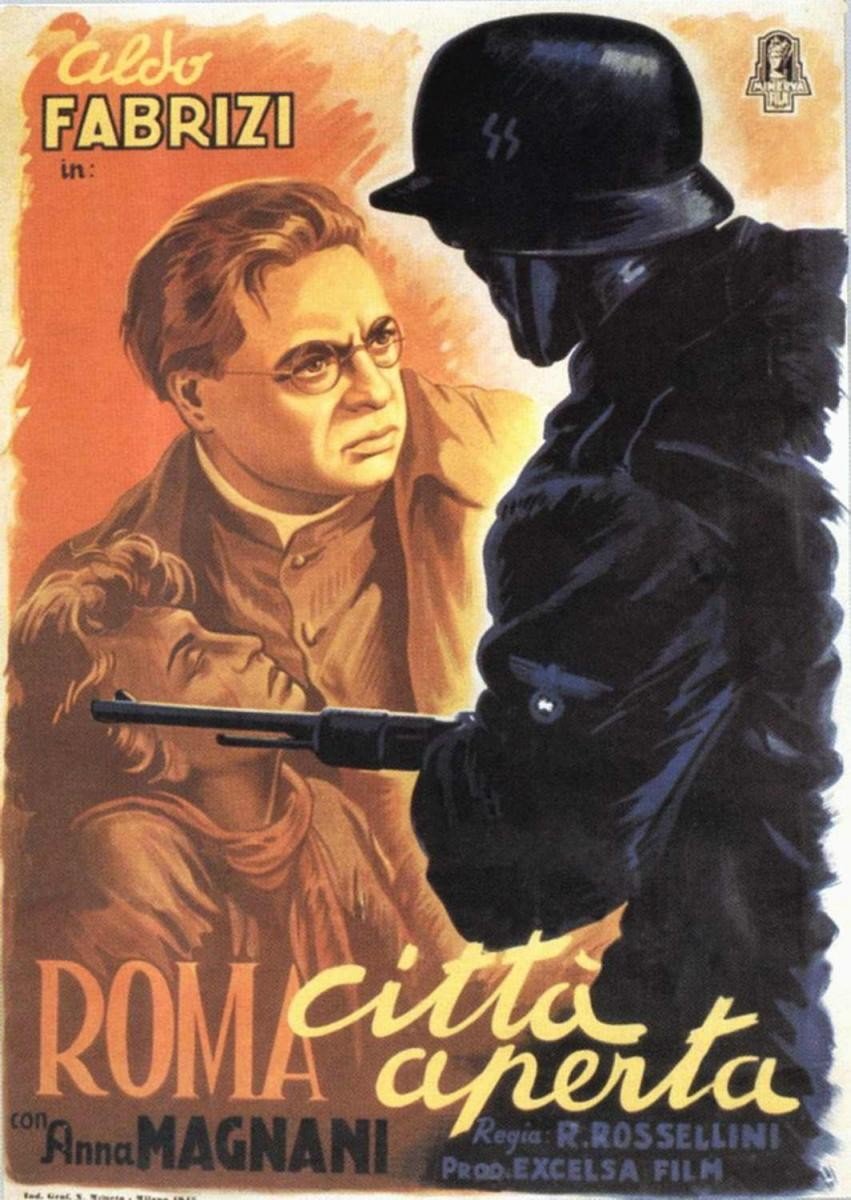
There are literally hundreds of films, in black and white, sepia, and all sorts of color starting with Technicolor, which have riveted us since even before the ink dried on the Nazi surrender to Allied forces in May 1945.(Rome, Open City, by Roberto Rossellini, is one of those rare gems of a film, shot during and after the Liberation of the Eternal City…)

In fact, one could actually teach an entire course on the Second World War just by using film—it’s been done many time actually—without sacrificing the truth. Perhaps, the following list can serve as a core curriculum:

Mr. Klein (1976), by Joseph Losey, starring Alain Delon. One of the few French films that actually addresses the ethical and moral problematic of being an art dealer in wartime Paris and dealing with Jewish identity or not. Riveting? Yes. Well written? Yes. Acting? Splendid, especially from Alain Delon, who delivered one of his best career performances. Stark? Yes. All in all, it made the point powerfully and left us with some acrid back taste in our mouths.

The Black Book (2006), by Paul Verhoeven, starring Carice van Houten. A troubling
Black Book
Source: allaboutwarmovies
Dutch film about the Resistance, sex, and the boundary lines between love and hate, or what’s it like to fall in love with the chief SD officer in town, while running errands for the Dutch Resistance? Again, moral ambiguity, the savagery and cruelty of war and occupation where most tenets of “civilized behavior” go out the window and the people whom you thought were your friends turn out to be the worst kind of traitors and opportunists.

Closely Watched Trains
Source: Wikipedia
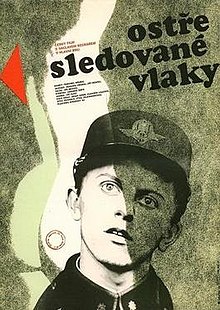
Closely watched trains (1966), by Jiri Menzel, starring Vaclav Neckar. A stark, expressionist film that focuses on the unsaid, the non-verbal about the trains, those trains, carrying victims to their deaths, while the stationmaster is desperately seeking love.

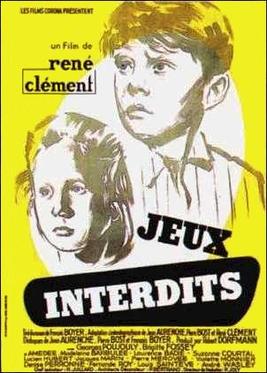
Forbidden Games (1952), by René Clément, starring Brigitte Fossey. Two children orphaned by an aerial strafing attack on a column of refugees and how the sudden loss of mother and father on a backdrop of war changes their lives forever.

Forbidden Games
Source: Wikipedia
The Train (1964), by John Frankenheimer, starring Burt Lancaster. The ultimate campy film about the August 1, 1944, train bound from Paris for the ERR depot of Nikolsburg which was intercepted by units of the French Resistance outside of Paris near Aulnay sous Bois. Although the film deviates from many aspects of the actual story, it uses the opportunity to celebrate the heroism of railroad workers against the German occupiers and French collaborators. Yes, we see crates stamped with the names of great artists inside box cars. Yes, Rose Valland makes an appearance and she is not spitting in a glass of champagne as you will see her do in the upcoming “Monuments Men” movie. It was a fun ride, an exciting film where one could suspend disbelief and still trust that History had been treated fairly well. Unlike Inglorious Bastards (2009), by Quentin Tarantino, which made no bones or scalps about shirking truth just to have a good time. Ironically, the SS officer played by Michael Fassbender who hunts down Jews was the most compelling and realistic character in this unethical romp through German-occupied France and for that reason, it barely survives the smell test.

The Longest Day, by Andrew Marton and Ken Annakin, starring John Wayne and Richard Burton, one of the best films about the Second World War. You walk out of that film understanding why Germany was on its last legs as a result of the invasion of France on June 6, 1944, better known as D-Day.

Historically accurate? Yes. Why? The filmmakers actually recruited as consultants veterans of D-Day who fought on all sides, including former German senior officers. They did not shy away from grandiosity but this epic film stands out a magisterial blend of humor, sarcasm, downright cruelty and surrealism that only war can deliver to you, cynicism, and strategic errors that cost the lives of countless men—the Saint-Lo incident, for one. One can bet anything that the total budget for the Longest Day did not exceed in real dollars the costs incurred to make the “Monuments Men”. It remains a classic, unlike this upcoming tragicomedy predicated on a historical falsehood, namely that the Nazis were about to blow up the world’s “cultural treasures.”

Say no more.

The jury is unfairly in.

Next time someone makes a movie about the Second World War, realize that it takes talent, good writing, and creativity to tell a tale anchored in TRUTH. And it also takes a tremendous amount of humility and an ego kept in check.

Let the public decide. As we all know, it can be truly fickle and still root for falsehood as long as eye candy is available on a large screen with surround sound and glitzy special effects.

20 January 2014

Teaching about looted art to ten to twelve year olds

Ten years ago, I was invited to teach a workshop in a Jewish Day School outside of Ann Arbor, Michigan. The average age of the students was eleven or twelve years old.

Where to begin? Where to end?

I thought to myself that it was best to adapt to the ways of my hosts and to deliver a message that would appear to be appropriate and simple. Theft is wrong, regardless of who commits it. Buying stolen property is wrong and it’s especially wrong if you are buying stolen property from people who are being victimized because of their faith, their ethnicity, their belief systems, and their lifestyles.

Judge me, call me names, but I dare anyone of you to do what I did.

Sometimes one has to reach for simplicity, even over-simplicity, as long as the outcome is clear and the message is left unscathed.

I leave it to you to judge but someone has to do this. And in this instance, I accepted the job.

Two days well spent with enthusiastic kids who learned about provenance research and how to detect faulty provenances in less than a day. I gave them all the equivalent of a gold star.

Time well spent.


19 January 2014

Part Two--Some of Hildebrand Gurlitt’s pals in German-occupied Paris

Dr. Erhard Göpel, representative of the Linz Museum project, accessory to acts of cultural plunder both in German-occupied Holland and France, had a “special” relationship with the Expressionist artist, Max Beckmann, while he was living in Holland during the period of German occupation.
Gopel by Max Beckmann
Source: Google
Karl Epting, anti-Semitic head of the German Historical Institute, and participant in the earliest acts of plunder conducted in Paris against leading art collectors by the German Embassy in the summer of 1940
Epting, right, with Celine
Source: Google

Otto Abetz, German Ambassador to the Reich in German-occupied Paris

Otto Abetz
Source: Google

Martin Fabiani, one of the most important collaborationist art dealers in wartime Paris and friend of Henri Matisse and Pablo Picasso.
Fabiani, by Henri Matisse
Source: Google
Walther Andreas Hofer, the official art expert on all acquisitions of works and objects of art in Axis-occupied territories, who reportedly directly to Hermann Goering.
Walther Andreas Hofer
Source: Google
Joachim von Ribbentrop, Reich Minister of Foreign Affairs, one of Hildebrand Gurlitt’s main clients.
Von Ribbentrop
Source: Google