[Editor's note: This is the third and last installment of a three-part series on The Portrait of Dr. Gachet produced by Angelina Giovani, which is inspired by Cynthia Salzman's masterful treatment of the history of van Gogh's masterpiece as it survived the Nazi era, crossed the Atlantic Ocean, only to find itself at the antipodes of the world, in Japan.]
 |
| Portrait of Dr. Gachet |
Krebs asked for assistance from Kremmers, his deputy, into looking into the circumstances of the donation to the Frankfurt Städtische Museum. The Frankfurt City Council and the city attorney sought legal avenues by which to keep the picture in Frankfurt under the New Order. Johanna Mössinger, the then owner, had donated the piece, on the condition that it be on permanent display. Should this condition not be upheld, the owner had the right to request the return of the painting.
 |
| Johanna |
It became impossible to hold on to Gachet and other paintings from her collection for much longer. Goering ordered the seizure of the Portrait of Dr. Gachet along with two other paintings, Daubigny’s Garden by Van Gogh and A Quarry by Paul Cézanne. He sold the Portrait along with the two other works, to Franz Koenigs, a German collector and banker who lived in Amsterdam and whose collection of Old Master drawings was well-known among European collectors. He had studied law in Munich and worked at a Paris bank. He began to collect Old Master drawings in 1921 and by 1933 he had 2,671 works in his collection. With the proceeds from Gachet’s sale, Goering sought to expand his own art collection, mainly with tapestries and paintings.
As soon as Koenigs received the paintings, he turned around and put them up for sale. He contacted Walter Feilchenfeldt, while he was still director of the Cassirer Gallery in Amsterdam. Outraged by Koenigs’ call, Feilchenfeldt said that he would not touch the paintings, which he considered to be stolen property. Despite objections, Koenings sent the pictures over, so that Siegfried Kramarsky, a German banker who lived in Holland, could view them. Kramarsky and Koenigs had had a business relationship since the 1920’s, and he hoped that Kramarsky would take the pictures. The three paintings presumably arrived at the Cassirer gallery in May 1938.
Siegfried Kramarsky was born in 1894, and started working at Lisser & Rosenkranz in 1917. With the help of Franz Lisser, his employer, he met and married Lola Popper, born into a middle class family. Her father was a coal broker. She was well-educated and well-grounded in art and literature. Soon after the wedding, Kramarsky and a colleague named Flörsheim bought the firm in 1922. In 1923, the couple moved to Amsterdam, and Koenings became a close family friend. Koenigs encouraged them to buy art, and since Lola preferred the Impressionists, she persuaded Siegfried to acquire them.
 |
| Franz Koenigs |
 |
| Walter Feilchenfeldt |
Siegfried Kramarsky was born in 1894, and started working at Lisser & Rosenkranz in 1917. With the help of Franz Lisser, his employer, he met and married Lola Popper, born into a middle class family. Her father was a coal broker. She was well-educated and well-grounded in art and literature. Soon after the wedding, Kramarsky and a colleague named Flörsheim bought the firm in 1922. In 1923, the couple moved to Amsterdam, and Koenings became a close family friend. Koenigs encouraged them to buy art, and since Lola preferred the Impressionists, she persuaded Siegfried to acquire them.
On June 30, 1939 Theodor Fischer, a Swiss art dealer and auctioneer based in Lucerne, Switzerland, held a big sale of so-called “degenerate art” (modern works of art in violation of Nazi esthetics which had been confiscated and de-accessioned from German public collections) at the Grand Hotel National in Lucerne. By this time the Kramarskys had moved part of their collection from Amsterdam to New York via London. The Portrait of Dr. Gachet was among them. Soon thereafter, with the threat of war coming everyday closer, the Kramarskys packed lightly, and left for the United States. Flörsheim, Kramarsky’s banking partner, remained in Amsterdam to run the bank. After the German invasion of Holland, Alois Miedl, Goering’s private banker and art broker in the Netherlands, acquired 74% of Lisser and Rosencranz. Several months after the Nazis took control of Holland, Krebs realized that Gachet had been taken to the US under new ownership.
With the advent of a global war erupting in Europe, the international center for modern art gradually shifted away from Paris to New York, a transition that Alfred Barr, director of the Museum of Modern Art, had almost single-handedly masterminded. French émigré dealers like Seligmann, Wildenstein, Rosenberg and others had resettled in New York, fleeing from the Nazi invasion of France. A plethora of modern artists, Jewish and non-Jewish alike, had fled the European continent through Portugal, with the help of Barr’s Emergency Rescue Committee under the valiant leadership of Varian Fry. Scholars and academics followed the rush to safety across the Atlantic Ocean, among them Georg Swarzenski, who obtained work as a research fellow in sculpture and medieval art at the Museum of Fine Arts (MFA) in Boston, Massachusetts.
With the advent of a global war erupting in Europe, the international center for modern art gradually shifted away from Paris to New York, a transition that Alfred Barr, director of the Museum of Modern Art, had almost single-handedly masterminded. French émigré dealers like Seligmann, Wildenstein, Rosenberg and others had resettled in New York, fleeing from the Nazi invasion of France. A plethora of modern artists, Jewish and non-Jewish alike, had fled the European continent through Portugal, with the help of Barr’s Emergency Rescue Committee under the valiant leadership of Varian Fry. Scholars and academics followed the rush to safety across the Atlantic Ocean, among them Georg Swarzenski, who obtained work as a research fellow in sculpture and medieval art at the Museum of Fine Arts (MFA) in Boston, Massachusetts.
Once in the US, the provenance of Dr. Gachet, especially its pre-Nazi presence in the collection of the Städtische Galerie in Frankfurt, vanished from the official narrative of the painting’s ownership. George Wildenstein and Paul Rosenberg held van Gogh exhibitions in the early 1940s, which allowed the Portrait of Dr. Gachet to go on display more than once. In a show organized by Paul Rosenberg in January 1942, the provenance of Dr. Gachet mentioned all previous owners, except for the Städtische Galerie, from which it had been confiscated on Goering's orders. From this point on the painting’s confiscation history was all but forgotten. When not on display it hung in the Kramarskys’ living room, in their apartment near Central Park.
By the end of WWII, van Gogh had become a household name among the wealthy and cognoscenti in the United States. The Art Institute of Chicago held a van Gogh retrospective in 1949. Kramarsky lent the Portrait for the show. In 1951, a retrospective of his works took place at MoMA, followed by a van Gogh exhibit at Houston’s Contemporary Art Museum. By the late 1950s, the Portrait of Dr. Gachet was valued at more than $200,000, twice its value in 1940.
On December 25, 1961 Siegfried Kramarsky died of lung cancer leaving his widow Lola in a difficult financial situation and forcing her to sell certain art works. Dr. Gachet was not one of these pieces. Paul Rosenberg had made it clear to her that should she decide to sell the Portrait he would gladly find her a buyer.
Speculation that the painting might soon come to market reached Frankfurt. Ernst Holzinger, the new director of the Städtische, wrote to Kramarsky expressing his interest in the painting and in the fact that should there be any inclination in selling the Portrait the museum would be interested. In 1970, the New York-based art dealer Eric Stiebel appraised the painting for a million and a half dollars.
In July 1984, the painting left the Central Park residence and was placed on a long-term loan at the Metropolitan Museum of Art, where it remained until 1990. The Portrait stood at the heart of the Post-Impressionist collection together with other works by van Gogh. Still, after so many years, the painting’s provenance failed to include its confiscation history.
Meanwhile, new millionaires from the Far East and especially from Japan, were making a splash in the global art market with a ravenous appetite for expensive conversation pieces, trophies of sorts. The Japanese economy had turned into a bubble. The nouveaux riches busily acquired “status objects” considered to be masterpieces of Western Art. Picasso and van Gogh competed for the highest prices. Middlemen brokered these record-breaking transactions for Impressionist and Post-Impressionist works.
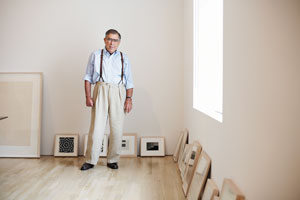
In 1984 Wynn Kramarsky had taken over the family’s financial affairs and claimed no emotional ties to the Portrait. He was well versed in the art world, with connections in the trade, and did not hesitate to denounce the hypocrisy of the art market. He recalled endless phone calls that he received from dealers and collectors expressing their interest in his collection, but mainly the Portrait of Dr. Gachet. Wynn was determined to sell it through Christie’s since his family had dealt with the auction house for many years.
On February 1, 1990, Christopher Burge, the president of Christie’s, arrived at the Metropolitan Museum of Art and picked up the painting himself. He had estimated the painting at between 40 and 50 million dollars. The reserve price for the Kramarsky family was a minimum of $40 million for the Portrait. Burge thought that it would be the greatest van Gogh piece to come to the market, its value anchored in its story, encounters and associations. It could easily match Irises by van Gogh which had sold at Sotheby’s for a record $53.9 million.
The Christie’s catalogue for the Gachet sale came out in April 1990, six weeks before the sale, and there, too, the confiscation history had been omitted. On May 15, right before the sale, the reserve for Kramarsky dropped to $35 million. 700 people showed up for the sale. Being the most important lot the painting was placed one third of the way into that day’s public sale. The bidding opened at $20 million. The price kept increasing in increments of 1 million. Once the Portrait had surpassed the $40 million mark, the race was on between Hideto Kobayashi who was in the room and Maria Reinshagen who was bidding from Zurich by telephone. At $75 million, Burge sold the painting to Kobayashi. The painting had broken the previously set record by Irises and since the time Alice Ruben had purchased the portrait in 1897, the price had increased 23.000 times. Soon it was revealed that Kobayashi had purchased the painting on behalf of Ryoei Saito who owned Japan’s second largest paper company. Three weeks after the sale the Portrait left for Tokyo.
Speculation that the painting might soon come to market reached Frankfurt. Ernst Holzinger, the new director of the Städtische, wrote to Kramarsky expressing his interest in the painting and in the fact that should there be any inclination in selling the Portrait the museum would be interested. In 1970, the New York-based art dealer Eric Stiebel appraised the painting for a million and a half dollars.
In July 1984, the painting left the Central Park residence and was placed on a long-term loan at the Metropolitan Museum of Art, where it remained until 1990. The Portrait stood at the heart of the Post-Impressionist collection together with other works by van Gogh. Still, after so many years, the painting’s provenance failed to include its confiscation history.
Meanwhile, new millionaires from the Far East and especially from Japan, were making a splash in the global art market with a ravenous appetite for expensive conversation pieces, trophies of sorts. The Japanese economy had turned into a bubble. The nouveaux riches busily acquired “status objects” considered to be masterpieces of Western Art. Picasso and van Gogh competed for the highest prices. Middlemen brokered these record-breaking transactions for Impressionist and Post-Impressionist works.
In 1984 Wynn Kramarsky had taken over the family’s financial affairs and claimed no emotional ties to the Portrait. He was well versed in the art world, with connections in the trade, and did not hesitate to denounce the hypocrisy of the art market. He recalled endless phone calls that he received from dealers and collectors expressing their interest in his collection, but mainly the Portrait of Dr. Gachet. Wynn was determined to sell it through Christie’s since his family had dealt with the auction house for many years.
 |
| Wynn Kramarsky |
The Christie’s catalogue for the Gachet sale came out in April 1990, six weeks before the sale, and there, too, the confiscation history had been omitted. On May 15, right before the sale, the reserve for Kramarsky dropped to $35 million. 700 people showed up for the sale. Being the most important lot the painting was placed one third of the way into that day’s public sale. The bidding opened at $20 million. The price kept increasing in increments of 1 million. Once the Portrait had surpassed the $40 million mark, the race was on between Hideto Kobayashi who was in the room and Maria Reinshagen who was bidding from Zurich by telephone. At $75 million, Burge sold the painting to Kobayashi. The painting had broken the previously set record by Irises and since the time Alice Ruben had purchased the portrait in 1897, the price had increased 23.000 times. Soon it was revealed that Kobayashi had purchased the painting on behalf of Ryoei Saito who owned Japan’s second largest paper company. Three weeks after the sale the Portrait left for Tokyo.
According to Japanese tradition, all precious possessions had to be hidden away. Saito spent a few hours admiring his new acquisition and left, giving directions to put the picture into a climate-controlled, high security room. The Portrait languished on a shelf out of sight, out of mind. In order to pay for the painting Saito had leveraged his real estate holdings. In November 1993, he was arrested for bribing a government official, and while serving his time under house arrest he received many offers for Dr. Gachet but rebuffed them all.
The Portrait of Dr. Gachet by Vincent van Gogh remains out of reach and out of view.
The Portrait of Dr. Gachet by Vincent van Gogh remains out of reach and out of view.


