Showing posts with label duress. Show all posts

07 January 2022

Duress revisited

by Marc Masurovsky

Duress should be a no-brainer. It’s a tangible manifestation of State-sponsored persecution and marginalization exercised against a specific group of individuals, namely the Jews in Nazi Germany. A forced sale is not conceivable without duress. It is the duress environment that makes the sale of Jewish-owned property an inevitability and a logical outcome of a Jew’s loss of prerogative in making day-to-day decisions that affects her life and her future and that of her family. Although duress is not a difficult concept to grasp, it is characterized by a loss of individual freedom in making practical and existential decisions and loss of control over one’s resources and property fueled by an oppressive regime which extolled the racial inferiority of an entire group of people (the Jews) as a basis for using all the necessary levers of State power to oppress and marginalize them. Duress foreshadows the Holocaust.

Here are some examples of duress which were highlighted during restitution proceedings over the past decade or so.

Max Stern, Düsseldorf

Max Stern

In December 2007, in a case that pitted the heirs of Max Stern, a Jewish gallery owner based in Düsseldorf, against Maria-Louise Bissonnette, a resident of Providence (Rhode Island), US District Judge Mary Lisi ruled in favor of the late Max Stern’s estate with a landmark judgment in which she equated forced sales with looting and an act of theft. She justified her decision in part on the fact that Max Stern had never received any compensation for the 1937 forced sale of his gallery’s inventory, including a painting by Xaver Winterhalter which Ms. Bissonnette had acquired. In Max Stern’s case, the duress began as soon as he received an official notification from the Nazi-sponsored Reich Chamber of Fine Arts shortly after he had inherited his father’s gallery. The Reich Chamber asserted that as a Jew he was not qualified to run such a business and he should proceed expeditiously with the liquidation of the gallery’s inventory through an approved point of sale, in this case the Lempertz auction house in Köln. Max Stern had no other choice but to proceed with the liquidation. The absence of payment was an egregious manifestation of his persecution. (See 2008sternvbissonnette)

Are price and value essential guideposts to determine whether a Jew living in Nazi Germany was subject to acts of duress? Not necessarily. In fact, if one looks solely at value and price without appreciating the importance of the socio-economic and historical context surrounding the events that produced the state of duress, one may end up deciding the fate of a contested object without giving due attention to the “why”, “how” and “when” of the sale of a claimed object.

Max Emden, Munich
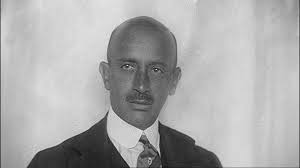
Max Emden
We see this in the case of the late Max Emden, a German Jewish department store magnate. The Nazis made Emden’s life increasingly difficult as noted by the German Advisory Commission (so-called Limbach Commission) when commenting on the 1938 sale of his three Bellotto paintings to Hitler’s Linzmuseum project, a sale that was brokered by a Munich-based dealer named Anna Caspari: “[the sale] was not undertaken voluntarily but was entirely due to worsening economic hardship… deliberately exploited by potential buyers…” However, the Houston MFA where one of the Bellotto works ended up, remained unflappable. It disagreed with the Commission’s assessment noting that Emden had obtained a fair price for the three paintings.

Houston Museum of Fine Arts

By solely looking at the price realized by the sale of 1938 and ruling it as reasonable given the time period and quality of the works, Houston essentially ruled out all other facts in making its determination, therefore implicitly denying that Emden had acted out of duress. Regardless of where one stands on the Emden case—for or against restitution—the fact is that Emden had to part with much of his property before leaving Nazi Germany. The German Advisory Commission (ex-Limbach Commission) reached this conclusion based in part on the facts surrounding the forced sale. The “worsening economic hardship” that Emden experienced as the main factor prompting the forced sale had become the bane of most Jews living under Nazi rule, especially in 1938.

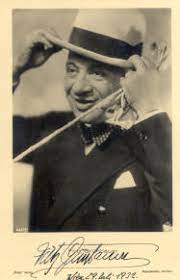
Fritz Grünbaum, Vienna and Dachau
Fritz Grünbaum

In the case of Fritz Grünbaum who died at Dachau in January 1941, once arrested in Vienna by the Nazis in 1938, he lost control over his property and assets, including a rather significant collection of modern works of art. Four months after his transfer to Dachau, he was forced to sign a power of attorney, thereby effectively finalizing under duress the surrender of his art collection as a direct consequence of prevailing circumstances—racially- and politically-motivated incarceration, physical and emotional abuse. (See Bakalar v. Vavra).

Lilly Cassirer Neubauer, Munich
Lilly Cassirer Neubauer

In a complaint filed against the Thyssen-Bornemisza Collection Foundation in 2019, the heirs of Lilly Cassirer Neubauer argued that their great-grandmother “was forced to transfer [a painting by Camille Pissarro] to Jakob Scheidwimmer, a Nazi art appraiser [in Munich], in order to obtain exit visas for herself and her husband, Otto. Scheidwimmer transferred 900 RM [or 360 US dollars in 1939] in payment for the painting which he deposited in a blocked account as Ms. Neubauer was of Jewish descent and subject to Nazi anti-Jewish discriminatory laws since the advent of National Socialism in Germany on January 1933. 

Thyssen-Bornemisza Foundation
As an art market player in Munich, Mr. Scheidwimmer was very much a part of the Nazi machinery for recycling confiscated Jewish cultural assets as attested by his direct participation in high-level meetings with local, Bavarian and Reich officials around the time of Kristallnacht (9-10 November 1938) during which thousands of Jewish apartments were raided and their male occupants corralled and interned into camps, in part, to force them to disgorge their assets and leave Germany. Ms. Neubauer did not stand a chance against Scheidwimmer and was forced to relinquish the Pissarro painting.


Are there different shades of duress like a palette of colored hues ranging from very light to very dark? Or is there just one universal expression of duress, plain and simple, equally applied to all Jews living in Nazi Germany at all times between 1933 and 1945? Was it less severe in some parts of Germany? How quickly did Jews feel the paralyzing and oppressive nature of Nazi rule in all its petty manifestations? Can we periodize duress? Did it wax and wane like the tides or was it always dispensed in equal amounts to all Jews in Germany, regardless of status, class, income and geographical location? The question may seem unfair but it goes to the heart of how we view duress in Nazi Germany and the forced sale of cultural assets by Jewish owners desperately seeking to flee Germany at all cost. Unfortunately for the heirs and descendants of Jewish victims of the Nazis, their detractors in museums, auction houses, and private collections nitpick to death the “quality of the duress” that their families experienced as if to find a flaw in their argument, implying that they might be exaggerating the circumstances under which their ancestors sold works of art. This debasement of the experience of Jewish families in Nazi Germany has led to restitution claims being denied, thus allowing current possessors to retain the object(s) in their collection. The unwillingness of cultural officials to accept and acknowledge the circumstances of a family’s duress under Nazi rule is tantamount to revisionist and constitutes an implicit recasting of the Jewish experience under Nazi rule.

We have seen this scenario unfold many times since 1945.

It is essential to study and compare all forms of duress sustained under oppressive regimes like that foisted by the Nazis on the citizens of Germany and later on most of Europe. We need to deduce, outline, define and publicize the complex manifestations of duress in the daily lives of Jews using witness statements, contemporaneous reports, legal and governmental proceedings. Duress and forced sales are real phenomena that haunted Jews from the advent to power of the Nazis in Germany in late January 1933 to their forced exit from Nazified Germany with little or nothing left to their name.


16 November 2019

Historians vs. lawyers

by Marc Masurovsky

The past two decades have witnessed hundreds of restitution cases whose purpose is to reclaim the return of objects looted during the Nazi era. Although the claimants are located around the world, the legal actions are concentrated in so-called market nations, namely in North America, Europe and occasionally in Japan.

These cases set out to fix, to repair historical wrongs. Ambassador Stuart Eizenstat came up with what turned out to be an enduring catch phrase to describe such actions: “just and fair solutions”. It’s anyone’s guess, frankly, what constitutes “fair” and “just” solutions. They vary greatly whether you are the current possessor or the victim’s heir/heiress.

Still, the wrongs being repaired took place during a historical act of genocide that spanned the greater part of 12 years, from 1933 to 1945. It was aimed principally at the citizens of European countries of Jewish descent. Thus, art restitution is an act of justice seeking to repair a historical wrong.

To establish the facts and circumstances surrounding the “historical wrong”, lawyers—who are not trained historians—rely on those who have made it their career to examine the historical past, understand its many sinews and meanders and interpret it for a larger public. Hence, lawyers need historians to compile evidence and build a persuasive case to convince a current possessor of the looted object either through mediation or before a judicial authority that the looted object should be returned to his/her client.

If lawyers need historians, historians do not need lawyers.

And yet…

The variegated ways by which art objects were forcibly removed from the ownership and control of their rightful Jewish owners can give us pause. Here are some, not all by any means:

-forced sales
-duress sales
-confiscations
-seizures
-sales while fleeing the site of persecution (flight sales or fluchtgut).

These complex “transactions” were deemed illicit by Allied powers fighting the Axis (Germany, Italy, and Japan) in a series of declarations during and after WWII making it clear that those responsible for aiding, abetting and/or provoking such illicit acts of forcible removal would be held accountable after the Allied victory over the Axis.

These illicit acts, in the eyes of those who study them—the historians—need to be clearly defined and all of their possible variations fully delineated and outlined so that their many permutations can be factored into legal proceedings.

By some perverse twist, American lawyers have increasingly opposed historians’ efforts to come up with clear definitions and delineations of these historical wrongs because any definition might impair their ability to successfully prosecute a claim against a current possessor.

The world is a strange place especially when, in order to repair a historical wrong tied to an act of genocide, a historian is asked to be silent on the exact details of these illicit acts.

Let’s be very clear here: historians need to do their jobs which is to apprehend the complexities of the past and explain them to the public in order to promote greater knowledge and enlightenment about what human beings do to other human beings so that, hopefully, we might not repeat such heinous acts in the future. Nice thought, I know.

Likewise, lawyers must do their job and protect their clients’ interests. For that, they need historians and other specialists to help them harness the facts of a case.

One thing they cannot do is order historians to censor themselves, just like historians do not ask lawyers to censor themselves.

Therefore, historians and researchers steeped in the tangled webs of persecution and exploitation of Jewish members of national communities between 1933 and 1945 will continue to study, examine, share in public and in private their findings and publish them where appropriate so that the many can have access to such knowledge.

Lawyers are intelligent people; they will surely find a way to adapt to such a state of affairs. After all, they cannot control the dissemination of knowledge anymore than governments can. And should not, under any circumstance.

Facts, ma’am, just the facts.

Some of the main Allied declarations:
"Inter-Allied Declaration on Axis Acts of Dispossession" (London Declaration) of 5 January 1943
Bretton Woods Resolution VI of 20 July 1944
 

08 November 2016

Pondering “flight assets”-Fluchtgut

by Marc Masurovsky

Not to be flip, but “flight assets” is an odd expression. Its more appropriate use applies to aviation, airplanes, anything related to a state of being in the air, hopefully in a steel structure with wings, a tail and engines.

Assets that fly…

Assets don’t leave by themselves. They require human conveyance. And the implication is that they have to cross a border, otherwise why would they be “flight assets”?

The question then becomes: where are they coming from and where are they headed?

Assets can consist of very different elements, but the word connotes value. If we are speaking in historical terms, the expression has been almost exclusively applied to the Nazi era, from 1933 to 1945.

The word “flight” also embodies the notion of “fleeing," of running away from something terrible, something that is sure to cause the owner great harm and distress. Assets fleeing? Well, they have no soul so they cannot “flee”, but they can be made to cross a border quickly in the context of a distressing set of circumstances for their owner.

In 1933 Europe and subsequent years, there were valid reasons to flee from National Socialist Germany. We do not know the exact numbers but before Hitler came to power there were those who smelled something rotten taking hold of the body politic in the dying Weimar Republic. And they left with more than their shirt and coat on their backs. So, the expression “flight assets” does not apply to them.

Come January 30, 1933, the situation changed dramatically. An anti-Semitic, racialist government had just reached the pinnacle of political power in Germany. It took some time to enforce nationwide an ideological program that was meant to exclude entire swaths of the populace. In the chaos that ensued and enveloped millions of lives, those born in the Jewish faith and those virulently and explicitly opposed to the Nazi movement, felt the noose tightening around their necks. If you had the means to flee, you did so. If you had valuables that you wanted to place in a safe place, you packed them and shipped them to a safe destination. In 1930s Europe, there were a fair number of places that were considered safe. Switzerland was one of them. It’s next door to Germany, its financial institutions welcomed all kinds of assets. The newly-established Banking Secrecy Laws made it possible to cloak one’s identity away from prying eyes.

We have now framed the contours of “flight assets” as they apply to valuables belonging to people in distress, fearing for their safety and well-being, aware of the restrictions preventing them from functioning as empowered citizens of a country-Germany-that is now denying them the right to earn their livelihood and live a good life as Germans. They are of Jewish descent, the victims of a virulent anti-Semitic program that aims to rid the new Germany of “Jewish influence”, whatever that might entail, but in the initial years after Hitler’s ascent to power, hundreds of thousands of German citizens of the Jewish faith wondered what lay in wait for them.

For those who sought asylum elsewhere, like in Switzerland, they needed to survive. Fired from their jobs, losing their homes, forced to sell belongings at any price, they secured some valuable assets and shipped them abroad where they would use them as sources of badly-needed income until they could relocate and live in relative peace, restart their broken lives.

These German citizens of Jewish descent were fleeing a desperate and threatening environment to their persons. Are the valuables that they sold in Switzerland to support themselves to be considered as “flight assets”? In other words, had they not been threatened by the New Order/Neue Ordnung in Nazi Germany, would they have shipped those valuables abroad, including to Switzerland, not as long-term investments, but as short-term fungible assets to be realized so as to sustain the equivalent of a subsistence wage while reflecting on an uncertain future? Doubtless, the answer is negative. “Flight assets” are short-term fungible assets whose realization helped the owners to survive.

So, here’s the rub: there are many people, especially in the art world and in government circles in European countries and even in North America, who honestly believe that persecution stops when the fleeing refugee crosses the border into some kind of nirvana. There is this notion that “flight assets” do not exist because the refugee sells them without any immediate pressure from the authority that propelled her to flee in the first place. Hence, there is no reason why a valuable, in this case, a work of art, should be returned to the person who sold it as a “flight asset” because she did not have a gun pointed at her head in order to sell it.

To that assertion, one might respond: would she have sold the painting in the first place had she not been forced to flee to such a haven as Switzerland? Would she have fled in the first place, had there been no immediate threat to her person? The same argument, by the way, applies to all neighboring countries—Denmark, the Netherlands, Belgium, France, even the United Kingdom, Austria (for a short time only), the United States? Canada? What about Italy? And Spain? And Portugal? Anywhere?

Let’s suppose that our Jewish refugee shipped in an understandable panic several valuable works of art, expensive jewelry, stocks and bonds, bearer shares, and other fungible goods, to the United States. She was able to make her way west with the little that she could carry with her. If she left right after Hitler’s rise to power, she would have been able to take more than the clothes on her person and a suitcase packed with goodies. But that did not last long. Soon thereafter, crates were stuck in freight forwarding houses on orders from Reich authorities, bank accounts were frozen, excessive levies were imposed on departing German citizens. One had to resort to very creative scenarios to send out “flight assets” to foreign havens. Scenarios that often involved accomplices, non-Jewish accomplices. In many instances, these go-betweens, if motivated by lucre, could earn significant sums helping to smuggle these “flight assets” into safe havens outside of Nazi Germany.

What if our refugee sold her “flight assets” once she reached New York, Boston, or even Toronto, or Montreal? Would we still consider these assets as “flight assets” and therefore restitutable? If we are faithful to the definition that we laid out above, it does not really matter where those “flight assets” ended up because it does not alter the circumstances under which they were shipped in the first place.

If we decide that “flight assets” belong in the same category as “duress” and “forced sales,” we are obligated to consider them as items subject to restitution or compensation for the same reason as assets sold under “duress” in Nazi Germany or in territories occupied or annexed by the Third Reich.

Last but not least, price should have nothing to do with the realization of a “flight asset” or a sale under “duress” at a “forced sale” and cannot be used as a reason for denying restitution to the aggrieved party seeking the return of the “flight asset.” It is the circumstance under which the asset is sold which should determine whether or not this asset should be restituted to the person or her family, obligated to sell it in order to survive.

In the constantly contentious debate over restitution of Nazi looted art, a “flight asset” is a fungible asset which has been shipped across state borders to a safe place by an individual under severe distress in her place of residence whose government has imposed threatening, discriminatory, restrictive measures upon her as a result of her faith and beliefs. This dire state of affairs has compelled this individual to seek refuge outside the borders of her native land and to use whatever valuables she was able to ship or transfer to her new home as a short-term source of revenue to allow her to survive until she figured out what her next move would be.

Switzerland is not the only country that received “flight assets.” That thought is absurd through and through. The “flight asset” could end up anywhere, and could be sold anywhere as long as it served the purpose of providing critical means of subsistence to the persecuted owner.

06 November 2016

Buehrle haunts Zurich


by Marc Masurovsky

In August 2015, a new book co-authored by Swiss historian and journalist, Thomas Buomberger, and art historian, Guido Magnaguagno, has called into question the ethics of Swiss arms manufacturer and major art collector, Emil Buehrle, in his wartime purchases of major paintings stolen by the Nazis in neighboring countries, mostly France and also from the Netherlands and from Germany.
Emil Buehrle

The book “Schwarzbuch Buehrle—the Buehrle Black Book” goes into great details regarding the dubious histories of many of the paintings, mostly Impressionists, which Buehrle had bought after they had been brought into Switzerland by dubious means, sometimes involving the German diplomatic pouch, other times, simply being shipped to Swiss dealers by who would then resell them to Buehrle.
Foundation Buehrle

The book’s publication coincided with the gradual transfer of the bulk of the Buhrle collection from the E. G. Buhrle Foundation to the Kunsthaus Zurich, to be displayed in a new wing of the Zurich museum completed in 2020. The question raised by the press is: can one morally defend the display of these works tainted by acts of genocide, especially in museums like the Museum of Fine Arts of Zurich that receive state subsidies?

According to contemporaneous press accounts, the Kunsthaus’ spokesperson, Bjoern Quellenberg, opposed a spirited defense of his institution against Mr. Buomberger’s criticism of the Zurich Museum’s policy regarding the Buehrle collection. Quellenberg dissented on several points with Buomberger’s critique:

On the one hand, he considered any works sold under duress as being different from “looted art” and therefore, legally, they should be treated differently. He emphasized that the Washington Principles of 1998 do not cover duress and only refer to works “confiscated by the Nazis.”

Technically, Quellenberg is right; the greatest failing of the Washington Principles is that they made no explicit reference to duress and forced sales, thereby endangering all claims for cultural objects displaced and misappropriated during the early years of the Third Reich within Germany proper. However, he is wrong in that subsequent international conferences and declarations on Nazi looted art have referred to duress or forced sales as constituting theft. Moreover, legal decisions outside of Switzerland have confirmed that duress sales are tantamount to State-sanctioned theft of property [Vineberg v. Bissonnette, involving a painting belonging to a Düsseldorf dealer, Max Stern, forced to sell his collection by orders of the Reich between 1935 and 1937.] Moreover, Swiss courts have never recognized as valid restitution claims involving works of art in Swiss institutions or collections which were misappropriated through duress or forced sales.

“Fluchtgut” or flight assets, according to Quellenberg, have no definitional legal basis, thus implying that objects falling under this category—sales out of necessity outside of Germany prompted by acts of persecution—cannot be considered as looted assets and should not be protected as restitutable property. At an international conference held in Winterthur, Switzerland, in 2014, the subject of “flight assets” was debated without any conclusive outcome. Opinions appeared to split along “party” lines—plaintiffs’ lawyers and their researchers leaning towards a more lenient reading of property sold by necessity in countries not under any short-term threat of invasion or occupation by the Nazis, as similar to “duress” sales, while others, mostly German and Swiss officials and museum professionals, feeling that this equation is a stretch.

A favorable reading on “flight assets” would affect thousands of objects having been sold out of necessity in Switzerland and pre-invasion Western Europe to help support fleeing German Jewish refugees who had been stripped of all of their property before their expulsion from the Third Reich.

With regard to the responsibility of the Kunsthaus to provide more background into the history of these displaced objects and how they entered Buehrle’s collection, Quellenberg was unequivocal: “we mainly focus on the works. We do not deal with the family history at all…”  This contention goes at the heart of museums’ responsibilities to re-contextualize in their proper historical framework objects under their care whose paths intersect with traumatic societal events during which the lives and fates of the owners of these objects change dramatically, affecting the ownership of these works; a subject worth sharing with the public.
Kuntdhaus Zurich
As we can see, there is a lot more work to be done in Switzerland and other countries, as far as the treatment of art objects is concerned. Once again, words carry an incredible amount of weight. The retelling of a story involving persecuted owners, broken chains of ownership owing to acts of persecution and other State-sponsored discriminatory policies, are an indelible part of the story of objects that we admire and study. It is the responsibility, both ethical and pedagogical, of museums to share these stories with museumgoers feasting their eyes on what they tout as “treasures.” In turn, these “treasures” should not be treated as “toxic material.”

Finally, it is unfortunate that there is still no consensus over definitions of “looted art,” “duress sales” and “flight assets.” Perhaps, 2017 should be the year when clear definitions are adopted, standardized and implemented by the international community in their respective nations.