Showing posts with label heirless property. Show all posts

07 November 2019

The “heirless” game update.

by Marc Masurovsky

One would have thought that this matter of who owns what object stolen during the Nazi era would have been settled by now. After all, either one can identify the owner or not.

Simple? Not quite.

The identification process of the rightful owner of an art object which was looted between January 30, 1933 and May 9, 1945, requires research. That effort is tedious and laborious in personnel days stretching into months and in other ancillary costs—travel, lodging, and other related indirect expenses associated with the collection of information located in remote sites far away from the site of discovery of the looted object.

When there are umpteen thousand objects whose owners are not readily identifiable, the problem becomes compounded and requires a political solution at the international level.

During the worst humanitarian tragedy of the 20th century, namely the Holocaust and the genocidal campaign against the Jews of Europe, every Jewish household on the European continent which lay in the path of the Nazis and their local henchmen was subjected to plunder, seizure, and, oftentimes, destruction. Where did the contents of these Jewish households go? Everywhere.

When the Second World War ended, Jewish-owned property was strewn all across Europe. The more appealing items, those with acknowledged value, could be found in commercial outlets everywhere. Those with appreciable value because of their authorship and aesthetic quality entered private and public collections, crossed international borders, and became fully incorporated into the cultural heritage of numerous nations (read State-owned museums) and a host of private and public collections.

On 3 December 1998, at the Washington Conference on Holocaust-era assets, a set of 11 non-binding principles were put forth, largely inspired by the American museum community, to guide nations and their cultural sector in the treatment of objects shown to having been displaced during the Nazi era.

Principle #9 addressed the unidentifiable ownership issue:

“If the pre-War owners of art that is found to have been confiscated by the Nazis, or their heirs, cannot be identified, steps should be taken expeditiously to achieve a just and fair solution.” I referred to this as “diplomatic hogwash.”

We are now nearing the end of 2019 and, still, there is no comprehensive approach to the disposition of art objects deemed “heirless.”

First, let’s go back to the wording. An object is “heirless” if there is no one around today to claim it as his/her rightful property by descent. To determine that the object is “heirless”, one has to conduct extensive research into its pre-Holocaust ownership. No research, no “heirless” verdict. The object remains in limbo land. After all, you have to prove, beyond a reasonable doubt, that a person of Jewish faith owned the object. How can you tell if an object was owned by someone Jewish? Does it exude some mysterious aura which is reminiscent of something “Jewish”? That is preposterous. We saw this egregious behavior with the Gurlitt scandal. And yet, intelligent people walk into German museums and proclaim that all objects in their collections with uncertain ownership which were accessioned after 1933 are, most likely, the property of Jewish owners. To that, I say categorically: “No!”.

What to do?
Back in June 26-30, 2009, I attended the official follow-up conference to the Washington Conference on Holocaust-era Assets. There, I spoke and suggested that the international community should establish “an international entity responsible for the return of such objects to their rightful owners and to dispose of so-called heirless objects in a manner that is of ultimate benefit to the families of victims, and which underwrites and promotes further research into the fate of such objects.”

Much ink has been spilled since June 2009. Looking back, it is clear that a proper resolution of the “heirless” problem is to conduct systematic provenance research in public and private collections worldwide. The likelihood of art objects with uncertain provenance which might have been the property of a Jewish owner is high in European, Israeli, and American collections. That’s where the research focus should be placed. To conduct such research, funds are required. A timeline should be established to research these objects and determine, once and for all, whether or not they are heirless. Once that decision is made, all concerned groups and governments should hammer out an acceptable solution to the final disposition of these objects.

I am clearly opposed to the following:
1/ wholesale liquidation through auction sales;
2/ wholesale transfer of these objects to Israeli institutions.
Point 2 is not feasible simply because it places an unacceptable burden on Israeli cultural institutions to welcome a potential tens of thousands of objects affected by this process. No institution can absorb them. And what good does it do to place these objects in warehouses? And, in any event, they do not belong to Israel. To apply the language of international pronunciamentos on cultural rights, they belong to “humankind.”

The solution that I favor is to ask museums which host these objects, most likely to tell their story as accurately as possible in order to educate the public. Their mission is in part to educate and share knowledge with their visitors, rather than cherry pick which objects should be discussed, at the expense of those objects with tortured histories. This reasoning also applies to looted antiquities, indigenous objects, ritual and sacred artifacts plundered from communities worldwide.

There are many other ways by which to honor “heirless” objects and their unknown owners. But the first step is to stop the political posturing and to come up with a scientific, rational approach to clear up the ownership issue. For that to happen, it requires a substantial investment, but it is an investment that all concerned nations need to share.

04 November 2018

Washington Principle #9: A Critique

by Marc Masurovsky

[Editor's note: Due to the momentous nature of the upcoming international conference in Berlin, Germany, on November 26-28, 2018 and entitled "20 years Washington Principles: Roadmap for the Future," it would be worthwhile to revisit these Principles and to put them through a linguistic, methodological and substantive meat grinder, and see what comes out of this critique. There will be eleven articles, each one devoted to one of the Principles enacted in a non-binding fashion in Washington, DC, on December 3, 1998.]

Principle #9
If the pre-War owners of art that is found to have been confiscated by the Nazis, or their heirs, can not be identified, steps should be taken expeditiously to achieve a just and fair solution.

There are several elements in this principle which require our full attention.

1/ unidentifiable pre-war owners of looted cultural assets:

No cultural, artistic or ritual object is produced out of thin air. It requires one or more creators and one or more owners. In other words, every object is owned by someone. The question is to find out who owns what. Ownership records are, most oftentimes, generic, fragmentary or they do not exist, because the people owning objects possessing a recognized esthetic quality and value which can be passed off as “art” do not necessarily feel compelled to record the fact that they own the object in question. When falling victim to acts of State-sponsored and sanctioned persecution and terror accompanied by thievery and plunder, the strands of ownership, however weak they might have been at the outset, are gone forever. Out of the millions of objects which changed hands illegally during the Nazi years across Europe, one can argue that a high percentage of those objects ended up in 1945 as having “unidentifiable” owners, not because they were all murdered, but because ownership traceability proved to be a daunting task which Allied planners and Jewish relief organizations alike were in no measure to pursue. Instead of looking for owners, procedures and policies were put in place across post-1945 “liberated territories” to consider those objects as “heirless”, not likely to be claimed and, therefore, they should be sold to benefit postwar governments and Jewish survivors. The speed at which the decision to sell off those assets was made is simply vertiginous.

Today, the discussion over the fate of “heirless” assets, those for whom no pre-war owners can be found, continues to divide and produce acrimony on both sides of the Atlantic Ocean and as far as Israel.

2/ just and fair solution

How can one achieve a “just and fair solution” when there are no owners around who can speak for themselves and, in their absence, those deciding on the fate of such "heirless" assets do not take seriously the arguments of specialists in matters pertaining to cultural plunder and restitution? 

This principle was conceived to establish a framework within which Jewish organizations could negotiate, as successor organizations to the victims of the Holocaust, with auction houses and museums a mechanism by which objects in their collections or consigned to them could be singled out and transferred to Jewish organizations. No thought was given to finding alternative, non-monetary, solutions to the question of “heirless” assets. In the case of a museum, whether private or public, the objects designated as “heirless” in their collection could be highlighted as such and their histories, or at least, how they ended up in the museum’s collection, could be revealed and presented to the public as a pedagogical, teachable opportunity, to discuss the fate of such objects during periods of mass conflict and persecution. It would also outline for the public the ways in which these objects evolved over time and space during and after WWII, in order to help museum patrons understand how art travels and survives war, plunder, genocide.

In sum, the fate of Principle #9 rests with how Jewish groups, governments, museums, auction houses, lawyers, lawmakers diplomats and historians wrestle with what constitutes "heirless property" and how best to treat heirless cultural objects. The work has barely begun.

Principle #9 could be rewritten as follows:If the pre-1933 owners of artistic, cultural and ritual objects confiscated, misappropriated, sold under duress and/or forced sales, subjected to other forms of illicit acts of dispossession by the Nazis, their supporters, profiteers and Fascist allies across Europe between 1933 and 1945 that are found to have been confiscated by the Nazis and not subsequently restituted, or their heirs, cannot be identified, processes shall be put into place with all stakeholders so as to find an equitable solution as to how to treat these objects with due consideration to their artistic relevance and to their individual history.


13 January 2017

What is to be done?

by Marc Masurovsky

Locating looted art in public and private collections, auction houses, galleries, is one thing; recovering these plundered objects is quite another.

The search for looted cultural assets is extremely tedious. Some people get lucky with “low-hanging fruits” like well-defined provenance information for objects being offered for sale or being displayed in a museum, which contains critical information that might lead to a match between the object and a plundered owner.

Those instances are rare.

The tedium of research concerns all other objects—weeks, months, sometimes years of research, often led by one or two people, most of the time on a part-time basis because there is no reliable source of money to underwrite such an investigative and analytical effort.

If progress has been made on documenting cultural losses at the hands of the Nazis and their collaborators over the past twenty years, there has been no progress in establishing a solid, long-term funding mechanism to ensure that research into the ownership histories of countless objects and their location is sustained over a long period of time.

To remedy this chronic shortage of funds for research into the looted cultural heritage of the Jewish people, historians, investigators, researchers, even curators, have tended to focus their attention on single collections and/or a small clutch of plundered objects. These efforts aim to clarify the history of objects coming from a single owner, or located in a single museum or collection. But even those efforts are lengthy, arduous, and end up yielding few fruits, for all sorts of reasons, the main ones being lack of capital and legal and logistical obstacles to gain access to relevant data.

How does one resolve this paltry state of affairs?

One cannot locate any looted object if one does not devote the needed resources to conduct solid, forensic, investigative research into its whereabouts, ensuring that it is the correct one, locating its potential owners, and if there are none, declaring the looted object to be heirless property.

What does one do with objects deemed heirless? Remember that heirless property is simply unclaimed property for which no owners have been found ---yet. Since there are no well-funded research organizations or institutions in the business of searching for these objects’ rightful owners, they remain to a large extent heirless, deprived of their history, their context and their identity.

For instance, Jewish museums are stocked with heirless objects, coming from communities that have been systematically erased from the face of the earth. But not all displaced objects in Jewish museums are heirless. The mission of Jewish museums is to safeguard these objects, not necessarily restitute them. Hence, when faced with a restitution claim, a Jewish museum is more likely to behave like most art museums by opposing the act of restitution which would require deaccessioning the claimed object from its collection.

Governments of nations that were subjected to the horrors of Nazi and Fascist policies and global war, hold untold numbers of objects which were “found” at war’s end.  So far, little to no information has been released which can help apprehend the true extent of this seventy-year old problem.

The Russian puzzle is the most egregious. So-called “trophy art” picked up by specialized Soviet military units in all territories that the Red Army “liberated” in the months before the end of WWII is stored in museums across the ex-Soviet Union. Most of the objects that the Red Army “repatriated” as compensation for Soviet losses are presumably concentrated in what is now the Russian Federation, Byelorussia and the Ukraine. But there is also looted cultural material belonging to exterminated Jewish communities in the custody of governments in Latvia, Lithuania, and Estonia, to name a few.

In an ideal world, the most logical way to address the question of researching and documenting the complete history of cultural plunder between 1933 and 1945 is to orchestrate a massive inflow of research monies and establish an international research and documentation infrastructure. Only in this way can one address systematically the full scope of looted cultural heritage (outside of Judaica which has attracted significant attention over the past decades) of the Jewish people, identify the location of plundered objects, figure out which ones have still not been restituted, match them with their rightful owners. If there are none, then the question of heirless property comes into the picture.

A vast international, even transcontinental, network or infrastructure of research institutions facilitated and nurtured by a mix of government agencies, independent organizations, and academic centers across the Americas and Europe should coordinate this effort. This is not a one-or three-person job. In order to get a handle on what was stolen, where, when, by whom, sold and resold to whom and where and when, one needs a small army of intelligent, motivated, educated, trained, PAID, worker bees.

There is a strong likelihood that “heirless” objects having once belonged to Jewish owners before the Holocaust era ended up in the permanent collections of museums, be they State-controlled or privately owned.

How does one persuade these cultural institutions to deaccession heirless objects which they argue were acquired in good faith and have no owner?

How does one convince governments which control cultural institutions holding such objects to return them? And to whom? Even in Israel, this policy is controversial.

The solutions to the above have always been complicated and laced with political overtones. Art makes people irrational. For an institution to part with an object is fraught with strong emotions and potent defenses against such an act, even it is for a good cause, even if restitution through deaccession is meant to heal wounds and provide a small gesture towards an act of justice. It goes against the grain of museum practices worldwide to restitute.

To end on a less negative note, it is worth exploring the different ways that exist to restore a modicum of justice to the victims of cultural plunder. But those approaches need to be anchored in victims’ rights, not in private property law and antiquated notions of cultural patrimony. In and of itself, such an approach could open new doors on how to manage in a more ethical way tomorrow’s museums and the global art trade.

And above all, a massive amount of money is needed in order to rewrite the history of looted objects, return them to their rightful owners, and establish much better practices in the global art market, the museums that display objects, the galleries and auction houses that buy, display, and sell, and the collectors and dealers who do the same.

Higher ethics, stringent due diligence, thorough provenance research and true transparency, transparently clear (as opposed to less opaque), like a sheet of cellophane or saran wrap, your choice. That is the goal.

21 August 2011

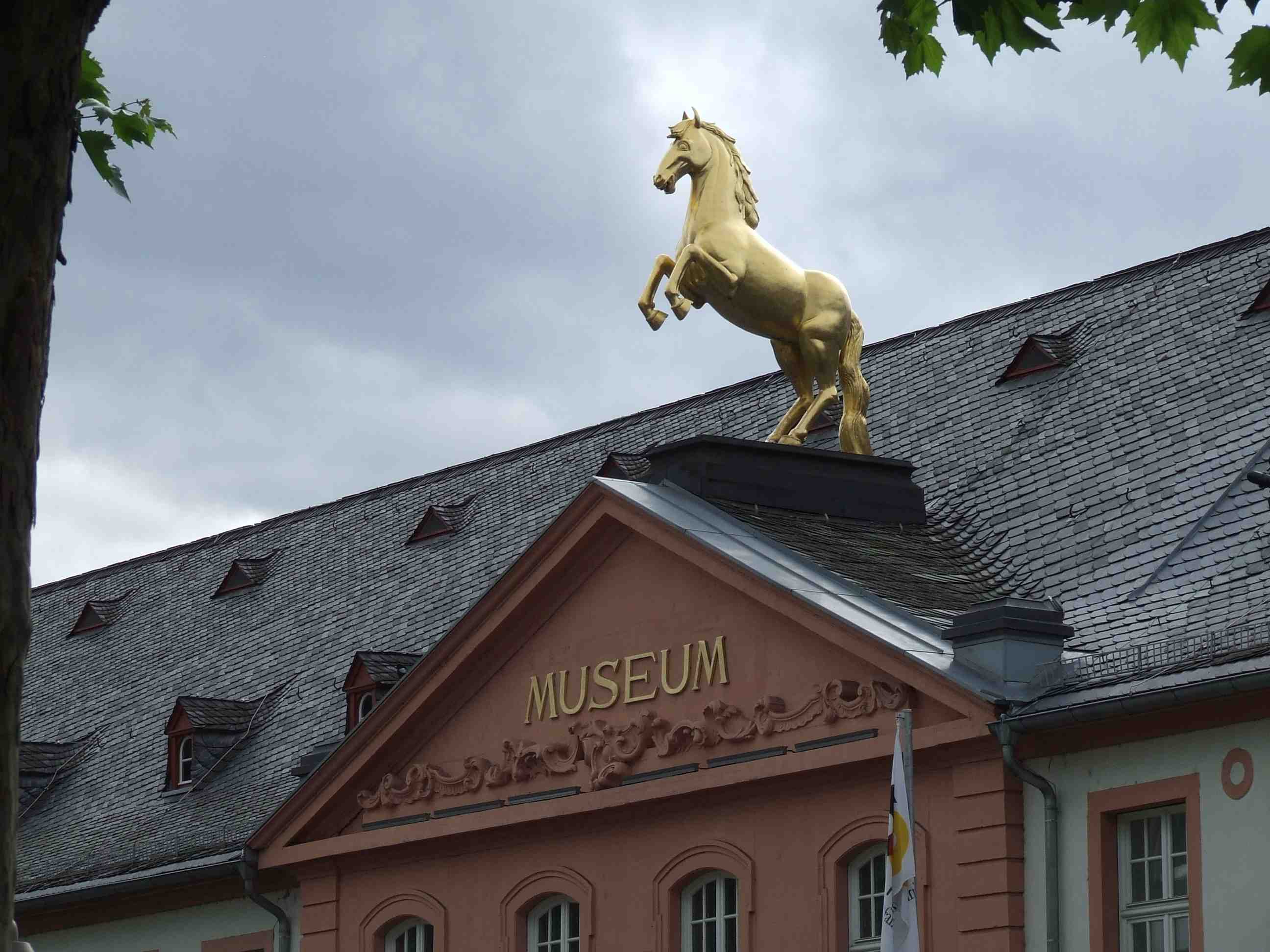
Custodian of plundered Jewish collections: the Landesmuseum in Mainz, Germany

Landesmuseum, Mainz
Source: Wikipedia
Like many museums in Germany, the Landesmuseum in Mainz holds in its collection hundreds of items that once belonged to German-born and foreign-born Jews alike living in and around Mainz.

These works ended up at the Landesmuseum Mainz in part as a result of confiscations orchestrated by Nazi fiscal authorities, especially the “Staatl. Finanzamt Mainz”, in 1941 and 1942 and the transfer of those confiscated cultural objects to the museum.  

Nazi authorities did not bother to associate the works with their victims which renders these cultural assets, a direct result of “internal” looting or plunder, as “heirless” or “unidentifiable”, until someone recognizes them and claims them on behalf of their family. Therefore, they are labeled as “Jüdischer Besitz” (Jewish collection). One can find a listing of these items in the Lost Art Internet Database overseen by the Koordinierungsstelle Magdeburg.

For the record, the vast majority of the Jewish population of Mainz was deported "nach dem Osten" by October 1942.

These orphaned works represent a wide range of topics and artistic styles. They consist largely of oil paintings, etchings, aquatints, and drawings.

Here are some of the artists’ names whose works were owned by these unknown Jewish owners, victims of Nazi persecution:
Last but not least: one oddity that is featured on the website of the Landesmuseum Mainz—a 1908 gouache on paper by Pablo Picasso (Frauenkopf/Tête de femme/Head of a woman). In and of itself, it is not an anomaly, but the partial history behind its entry into the Mainz Museum’s collection begs for additional research. It was a gift made by Raymond Schmittlein, former director of educational programs and culture in the French zone of Occupation of Germany, in 1952. A detailed provenance of the work might clarify how Schmittlein came into possession of the object so that one need not worry about its status.

Head of a woman, Pablo Picasso
Source: Landesmuseum, Mainz

31 July 2011

Heirless Jewish property and treasure hunting in the Czech Republic

Ever since the end of the Second World War, politicians, diplomats, officials and bureaucrats in leading international Jewish organizations, non-governmental organizations, scholars, and historians alike have butted heads on what to do with so-called “heirless” property, or property for which no rightful owner can be found because, for the most part, the family line was extinguished by genocide and war.

There still is no resolution as to how to treat this problem that spreads discomfort and awkwardness across continents, especially among cultural institutions that are the custodians or owners of objects that can be described as “heirless.” What to do? Do we leave them where they are in display cases or on shelves in museum or gallery warehouses as mute witnesses to the horrors of a recent genocidal past? What if they can be connected to a specific geographic location? Do we then return them to the place from which they might have been collected before their owners were wiped off the face of the earth?

Or do we sell them and use the proceeds of the sales to help needy survivors and their families? A solution that has long been advocated by many Jewish groups and Israeli officials.

Meanwhile, back at the ranch—so to speak—treasure hunters are busy searching for the fruits of plunder abandoned or left behind in secret hideaways by fleeing and highly-resourceful Nazi officers and officials in the waning hours of the Second World War. One set of enterprising Nazis presumably buried over 500 crates filled with treasure and documents inside shafts and underground galleries near Štěchovice, about 30 miles from Prague (Praha). A Florida-based treasure-hunting firm, Assets Restitution International (ARI), has struck a deal with the Czech government to acquire “20% of the value of assets recovered...” This agreement includes a right of first refusal “on all heirless assets.”

While the Czech government makes it nearly impossible for the heirs of Jewish victims to recover property that was stolen by the Nazis and their sympathizers between March 1939 and May 1945, it sees fit to allow treasure hunters to garner their pockets with recovered Jewish property, whether identifiable or not. According to ARI, the potential value of recoverable property might exceed one billion dollars.

Perhaps, the Czech government should steer clear of these fun projects and abide by its international commitments to aid the remaining group of Holocaust survivors recover their property instead of harassing them by erecting countless legal and political roadblocks to prevent them from recovering anything under the sham pretext that the State has superior rights to all of those assets.

To be continued...

09 April 2011

“A new paradigm for restituting looted cultural property?”, by Marc Masurovsky

by Marc Masurovsky

This presentation was delivered during the Prague Conference of June 26-30, 2009. Although somewhat strident, it captures a number of basic points regarding the present state of affairs regarding the handling of art looted during the Second World War.


First, I would like to dedicate this presentation to the memory of Officer Stephen Johns who lost his life on June 10, 2009, at the hands of an American neo-Nazi, while protecting the US Holocaust Memorial Museum in Washington, DC.

Second, I regret the absence of a number of veterans of art restitution like Willi Korte, Ori Soltes, Konstantin Akinsha, Randy Schoenberg and many others.

Third, I would like to restate the obvious:
  1. The Holocaust is a very personal matter. It engulfed the lives of six million Jews and five million non-Jews across continental Europe and North Africa. Those men, women, and children died in a network of 20000 prisons, ghettos, camps and extermination centers, stretching from the Channel Islands to the far reaches of Estonia and the shores of Tunisia.
  2. The Holocaust, in particular, and the Second World War, in more general terms, went hand in hand with the forcible transfer and seizure of property of all kinds belonging to the victims of Nazi/Fascist persecutions.
  3. These forcible transfers and seizures reshaped the wartime economies of Europe and laid the foundations of a new economic order that stretched into the postwar era.
  4. The highly selective punishment of collaborators and war criminals prevented the victimized populations from achieving a badly-needed measure of justice and closure, which is one reason why we meet here in Prague, 64 years later.
  5. All in all, after war’s end, 55 million people were dead, one third of Europe’s infrastructure lay in tatters, in some countries, like the Soviet Union, a third of the male population had been decimated, creating a multi-generational trauma with severe consequences on the social, cultural, economic and spiritual life of the survivors.
The artistic legacy of all nations under Nazi/Fascist occupation or control was amputated, embodied in the loss of creative power of thousands of visual and performing artists, most of them Jewish or belonging to groups targeted for special treatment by the occupiers and their collaborators. Those left to survive were for a large part either collaborators themselves or whose styles conformed to the needs of the regimes in place.

The works of art stolen by the Nazis and their local henchmen belonged to these persecuted artists, as well as to collectors, dealers, and institutions. If we look only at the Jewish community and accept a broad definition of cultural property, several million objects were looted. If we add cultural property forcibly removed from all other victimized households across occupied Europe, we can easily think of at least 5 million objects, excluding books, silverware and accessories.

Where are those objects? What are those objects? Who owned them? Who took them? Where did they go? Were they sold? Who acquired them? For those seeking restitution of their cultural losses, the answers lie in part in historical archives. It comes as no surprise, therefore, that restitution and documentation are organically linked. Ultimately, no one can argue against the fact that open access to historical archives can only facilitate the reconstruction of a racially- and politically-motivated criminal act associated with mass murder, genocide and persecution on a continental scale. Restricting access to those records would thus signal an avowed reluctance to come to terms with an obvious historical reality, an attempt to rewrite history through concealment of documentary proof of crimes which occurred over a twelve-year period.

Every nation on the continent of Europe is implicated because it is in the very nature of bureaucratic societies to build walls of silence and secrecy around the historical truth.

What is there to hide that is so dangerous after 64 years? For starters, the names of collaborators, their ties to ruling elites, their illegal and immoral transactions on wartime art markets, the protections they sought then and in the postwar, murky tie-ins with intelligence agencies, government bureaucrats, war criminals seeking refuge in safe havens. Cynical dealers, museum curators, and directors, politicians from right, left and center who profited from illicit acts. In sum, the many facets of a highly corrupt art world and its attendant coterie of politicians, businessmen and oddities from fading aristocracies.. I guess that might pose a problem, although it is a historical problem, but it might resonate today only because the sins of the fathers, mothers and uncles are transferred to their progeny and subsequent generations. It is true then: access to information is dangerous, at least for those who have built their careers on deceit, secrecy and the protection of their privileges.

Let’s go back to the end of the Second World War.

Although we’re not here to debate the pros and cons of Allied restitution policies, I would argue that, all in all, Allied officials—American, British, French, Soviet and others—were unable to address the full extent and scope of the plunder, despite valiant attempts by individual officials to mitigate the horrors of the war. For the Soviets, the solution was relatively simple. Faced with massive destruction at home, their armed forces resorted to wholesale removals of property under their care with some notable exceptions and they proceeded to appropriate those items manu militari. However, what was true on the west bank of the Oder River equally applied to the east bank of the Oder River. Cultural property from Russia, Poland, and Latvia ended up in the Western Allied zones of occupation, while Dutch, Belgian, and French collections found their way into Slovakia, Silesia and as far as the Ukraine, deep within the Soviet sphere of influence and control. Similarly, German and other administrative records pertaining to the special handling of cultural property in occupied territories ended up in hundreds of depots, administrative buildings, and bunkers scattered about battlefields. Those documents either went east or were apportioned like a deck of cards among the Allied powers. One could spend half a lifetime untangling the tortured path of those archives seized by military units, and my colleague, Pat Grimsted, is an extraordinary living example of such an endeavor.

When searching for information on stolen cultural property, Allied transfers and removals of property and records have only complicated the task of restitution-minded individuals to find the evidence needed to facilitate the return of stolen objects to their rightful owners.

And yet, documents in governmental archives only provide us with a partial understanding of how objects were seized, where they may have ended up, and who might have been their owners after war’s end. The rest of the story is buried in the records created by private owners, gallery directors, museum officials, art historians, insurance executives, corporate officers, foundations, auction houses and so forth.

When we speak of access to archives we must emphasize all archives, public as well as private.

In retrospect, the postwar era was characterized by the wholesale recycling of millions of stolen cultural objects, through private hands, institutions and corporate entities. Each transaction produced some kind of record, however flimsy, at some point in time. And yet, nothing has really been done to demand an accounting of such transactions since 1945.

Those who bought, sold, traded stolen cultural property in the immediate postwar years, did so oftentimes knowingly with the consent of public officials in all countries involved in the Second World War. The double standard which has shielded the art market from inconvenient scrutiny in the postwar era prevails even today with the silent consent of public officials, even those who clamor for restitution. It is a type of hypocrisy that should end here in Prague, but for that to occur, decision-makers need to display a modicum of courage.

I spoke about a new paradigm for restitution. A paradigm is a fancy way of saying that a number of conditions have to be met in order to produce a tectonic shift in the way we approach restitution.

For starters, there has to be a willingness to engage in such a process. Rather than using concerns over privacy rights of individuals as an excuse for denying access to historical records that are over 64 years old, each national government present today must examine ways in which historical research on racially and politically motivated thefts of cultural property can proceed without viewing these efforts as infringements on the rights of individuals who, for the most part, are long dead.

As hinted earlier, most of the negative fallout from any opening of archives pertaining to stolen property may result in embarrassment and red faces for those who are implicated in thefts that occurred two generations ago, assuming that they are still alive.

Added to a willingness to engage in such a process, there needs to be a recognition and acceptance that access to specific archival collections is inextricably tied to restitution

Any movement to open an archive must go hand in hand with a national commitment to enact laws to permit restitution or to enforce existing laws or establish new mechanisms to return stolen objects to their rightful owners.

An arrangement needs to be reached with the players—major and minor—of the private art market whereby access to information pertaining to the present whereabouts of a stolen object can be guaranteed without compromising sources.

Where institutions are the custodians of stolen cultural property which their governments view as war reparations, another discussion needs to take place between consenting adults who are mature enough to hold such a discussion. After all, 64 years have elapsed since the Allied victory brought to its knees the National Socialist behemoth and its fascist cohorts. For 64 years, an untold number of objects have been sitting in a netherland of omission, neither exhibited nor destroyed, just sitting. Once in a while, some surface. What does it take to obtain the release of these objects so that they can be identified, and returned to their rightful owners whoever they might be, Jew, non-Jew, private individual, institution?

The first baby step or Level 1 towards such an ambitious goal is the inventory. Inventories are important documents because they tell us something about content and scope of cultural property, sometimes value, identification of the work, and perhaps even something about an owner. Inventories also help recreate itineraries of works of art forcibly removed from homes, offices, display cases, walls.

If the inventory of the objects sitting in netherland exists, we should discuss ways of making that inventory available for consultation and study so that we can all understand what we are dealing with here. Without the inventory, we won’t know what is in storage, thereby continuing to deny restitution to someone and preventing that someone from achieving a painful closure after so many decades. If the inventory does not exist, then I would like to propose that a mechanism be put into place by impartial, fair-minded people to draw up such an inventory under the watchful eye of the current custodian, with the proviso that the contents of the inventory can be carefully studied with a view to matching works with owners.

It’s a baby step, but a necessary one if we are to engage in an irreversible process of putting the past behind us and moving on. We cannot move on without justice.

Such an inventory becomes a powerful tool, the basis for level 2—a discussion amongst fair-minded, pragmatic individuals who seek only to do the right thing, acknowledging past wrongs and traumas, founded on mutual empathy and desire to move forward in the name of justice for all. In other words, a dream. Level 2 consists in drawing up a plan of restitution of those objects that have been readily identified as rightfully belonging to someone, somewhere. Level 3 consists in drawing up a plan to dispose of property that is not identifiable. And there is the rub. Traditionally, back in the late 40s and early 50s, organizations responsible for heirless property took the simple way out and said: let’s sell! And assign proceeds to needy survivors. However, we might run into some serious opposition here since the custodian might want some type of compensation for having ‘held on’ to those objects for 64 years. This task might best be left to lawyers to hash out, but then, we might never get out of the barn, that’s assuming that we can even enter the barn… But, as in all dreams, we are in the barn, and we are discussing among individuals who may or not become friends, how best to handle so-called heirless or unidentifiable property. In today’s mercenary, hyper-materialistic and insensitive world, one approach is to share the proceeds of sales of heirless property along carefully delineated lines. It’s just an idea, but the issue of looted cultural property from the Second World War will never, and I mean never, go away without some form of global political and financial settlement of those stolen works that have been left in netherland.

So, when I speak arrogantly of a new paradigm for restitution, that paradigm requires the following elements before we even register a semblance of a tectonic shift on our restitution seismograph:

A will to act

Giving exclusive primacy to ethical and moral considerations, laying all legalistic and bureaucratic considerations aside.

Unfettered access to private and public archives that are directly relevant to the thefts of which we speak.

Cooperation with the private sector to locate and confirm the present whereabouts of stolen objects

Negotiated solutions with custodian institutions holding stolen works of art as war reparations, which might include financial or other incentives.

Cooperation of law enforcement agencies, national and international, in locating and recovering stolen cultural property

Creation of an international entity responsible for the return of such objects to their rightful owners and to dispose of so-called heirless objects in a manner that is of ultimate benefit to the families of victims, and which underwrites and promotes further research into the fate of such objects.

The least attractive solution is the one that no one dares to contemplate:

Regulating the art market to ensure cooperation in locating, identifying, and returning stolen cultural property to rightful owners.

I work for an institution in Washington, DC, called the United States Holocaust Memorial Museum. Its archives hold more than 120 collections of documents pertaining to the persecution of the Jews and other groups. These documents come from Europe, North Africa, Central Asia, and even Shanghai. There is no other institution of its kind in the world today which provides access to so much information under a single roof.

Why can’t such a similar but far more modest establishment exist that is solely devoted to the documentation of Nazi-Fascist plunder and spoliation of cultural property? If it were to be created, the history of plunder could be easily rewritten, the pace of restitutions substantially accelerated, as well as giving a quantum boost to badly-needed scholarship in an area stymied by continual obstructions on all fronts.

That is my dream and I hope that part of it will unfold before my dying breath.

Remember, historical archives help us write the story of wrongs committed against people as much as they help us right the wrongs committed against people.