Here’s a question: How did I get here?
Well, I will do my best to answer this impudent query of mine.
My story begins in the summer of 1967 when I visited Auschwitz-Birkenau with my
parents while trekking through Poland in a red 2 CV Citroen, which was a real
hit amongst our esteemed Polish friends. While I was astounded and fascinated
by the massive concentration camp, my parents wanted to leave as quickly as
possible. Needless to say, I was marked for life. I should take a short break
here and tell you that both my parents are/were American expatriate artists who
sought the Bohemian life in 1950s Paris after escaping from New York City and
their respective families. They settled down in and around Montparnasse on the
left bank and spent their lives painting, drawing, socializing, and plying
their craft until death did them part.
Fast forward to the 1970s: I spent my adolescent years cutting my teeth on the hardscrabble political turmoil of the Parisian student movement. Not much needs to be said about three long years dodging nasty neo-Fascist gangs. That was enough for my political awakening and a constant reminder that some people take their Fascist politics very seriously even three decades after the death of Adolf Hitler and the onset of the Cold War.
In 1980, several years after graduating from Antioch College, in Yellow Springs, Ohio, I became a consultant for the Office of Special Investigations at the US Department of Justice in Washington, DC. Although my main duties were to help with lawyers’ investigations into the past activities of war criminals living in the United States—mostly Belorussians—I also focused on the postwar recruitment of Nazi war criminals by Allied intelligence, and especially American agencies. I found myself more often than not sifting through documents in the dusty stacks of the National Archives at 7th street and Pennsylvania Avenue, NW, in downtown Washington. There, every day, I would peruse documents drafted by agents and analysts of the Office of Strategic Services describing how war criminals were escaping detection in the mid-to late 1940s and finding freedom and refuge in safe havens across Europe, the Middle East and the Americas. This was my first introduction to looted art—the trading of plundered art by Nazi criminals and collaborators to obtain exit papers, visas, forged identities, passports, so that they could enjoy the fruits of their plundering ways in faraway places. I was hooked, I was fascinated, I could not stay away.
Fast forward to 1995: The Swiss banks are being pummeled by Edgar Bronfman, the
scion of the Seagram’s fortune and a leader of the American Jewish community.
He has recruited Senator Alphonse d’Amato to lead the charge against these
banks for their systematic misappropriation of funds and assets deposited by
individuals of Jewish descent during the 1930s and early 1940s in the vaults of
hundreds of financial institutions across Swiss territory. Many of the account
holders died during the Holocaust or never reclaimed their accounts and the
bankers made away with their money and valuables. The Swiss bank litigations
re-opened the wounds of the failed restitutions of the postwar era. And they
paved the way for art restitution claims. A key element of the negotiations
with the Swiss banks was the exclusion of cultural assets deposited in those
banks from any settlement reached between the plaintiffs’ lawyers and the
banks’ representatives. I joined a committee of experts at the law firm of
Cohen, Milstein, Hausfeld and Toll, to come up with a realistic estimate of the
Swiss banks’ liability towards Holocaust victims. I was in good company: Willi
Korte, the doyen of looted art investigations in the US; Sydney Zabludoff, a
former CIA analyst specializing in black markets and money laundering; Fritz
Oppenheimer, a Swiss banking specialist who taught us how to bill law firms;
and Cees Wiebes, a Dutch expert on corporate cloaking during the Second World
War. Three months of hard work yielded the following result: Swiss banks would
have to pay 10 billion dollars in compensation to Jewish victims. The ultimate
settlement reached several years after our finding: $1.25 billion. In other
words, a toothbrush settlement.
In the spring of 1997, Willi Korte and I thought it would be a great idea to house a looted art database project at the US Holocaust Memorial Museum in Washington, DC. The answer that we received was a resounding “NO” qualified as: “This project does not fit within the mandate of the US Holocaust Memorial Museum.” Dejected but not defeated, we turned to Ori Z. Soltes, then director of the Klutznick National Jewish Museum at B’nai B’rith. We met with his board members and they greeted us with open arms. What a relief! The Holocaust Art Restitution Project (HARP) was born.
No sooner had we announced publicly in early September 1997 HARP’s creation
than Ronald Lauder made a similar announcement and established the Commission
for Art Recovery (CAR) under the auspices of the World Jewish Congress, of
which he was the Secretary-Treasurer. Four months later, Lauder, in his
capacity as chairman of the board of the Museum of Modern Art, faced the wrath
of two Jewish families whose paintings were on loan from the Leopold Collection
in Vienna, for an exhibit of Egon Schiele’s works at MOMA in late 1997. In
early January 1998, spurred by HARP’s research into the provenance of those
works and the odd way in which the show had been mounted, the New York Police
department was ordered by then District Attorney of Manhattan, Robert
Morgenthau, son of the late Henry Morgenthau, Roosevelt’s Treasury Secretary,
to seize the two incriminated paintings by Egon Schiele—Night City III and
Portrait of Walli—and prevent them from leaving the United States so as to
give the aggrieved families a fair hearing and a reasoned shot at pleading
their case for restitution.
The Walli case dragged on for another 13 years while Night City III returned to Austria. However, the seizure of the two paintings struck the Austrian government broadside and provoked an unprecedented debate about cultural plunder and restitution in the homeland of Ruth Jarai, rightful owner of “Walli” and of Marie Altmann, rightful owner of “Portrait of Adele Bloch-Bauer” by Gustav Klimt. The seizure led to the enactment of a series of restitution laws aimed at righting some of the wrongs of Austria’s post-Anschluss Nazi past.
Direct action—Drastic circumstances require drastic remedies even if it means forcing the hands of foreign governments, shaking up the international art market but not enough to rattle it into compliance. After several years, the status quo returned quickly, all was well, the fear of subsequent seizures waning as lawyers and diplomats ran roughshod over the renewed debate on restitution of looted cultural assets.
Although the Washington Conference of December 1998 had convened representatives and delegates from more than 47 countries to discuss how to resolve these decades-old problems of property returns to Jewish victims, the pundits went home, satisfied that they had done their duty to pledge to ‘do something.’ National commissions emerged in many European countries to investigate the wrongs of that war with limited impact on the quest for historical truth and the imposition of equitable remedies for spoliated families and their heirs. In the absence of meaningful public policies aimed at righting those historical wrongs, national governments across Europe and the American government, left it to the ‘market’ to adjudicate the merits of Holocaust-era cultural claims, thus handing over to the legal community an inherently political debate requiring political solutions. In the United States, the Clinton Administration was beholden to its donors and was reluctant to investigate the ill-doings of American museums during the life of the Presidential Advisory Commission on Holocaust-Era Assets (PCHA) which had been voted into existence by an act of Congress in June 1998. The Commission proved quickly to be ineffectual in carrying out its Congressional mandate and, in essence, violated the terms of the legislation that had empowered it, content to rehash the usual mantras of wartime plunder and avoid the thorny questions of looted cultural assets entering the United States. Those stolen, unrecovered assets entered countless museums, which receive substantial Federal fiscal advantages in the form of tax-exemptions. A largess unmatched in the rest of the world where cultural institutions are mostly run by national governments. Surprisingly, the PCHA ruled that there was no looted art problem in the United States and that further research would be needed to ascertain the opposite. How convenient! The Commission went out of business in the spring of 2000, as quietly as it had come into existence.
Fast forward to the Holocaust-era Assets Conference of June 2009 in Prague: this follow-up to the 1998 Conference in Washington, DC, was born to fail, especially as pertains to the question of looted art. Pre-conference planning was secretive, heavily politicized, did not involve claimants and their representatives, nor did it tap into the pool of international experts in art restitution matters, relying instead on government representatives overseeing questions pertaining to looted art or trophy art in their respective countries. Hence, despite some token input from groups like the European Commission on Looted Art (ECLA), the fate of claimants’ cultural assets rested almost exclusively in the hands of museums’ representatives and government civil servants with international Jewish organizations unwilling to commit themselves to a meaningful strategy aimed at restituting looted cultural assets. Not a pretty picture. The end result is well-known: a diluted declaration of intent known as the Terezin Declaration which serves as a basis for future discussions. It is left up to each conference stakeholder (governments and NGOs) to interpret and apply the Declaration as they see fit, which is not saying much at all.
Hopeless? Maybe. Really hopeless? Not quite. But much time and energy has been lost in endless, sterile debates which do not address the core issues centered on the identification and restitution of looted cultural assets.
The offspring of the June 2009 Prague Conference is the European Shoah Legacy Institute (ESLI), based in Prague and overseen by the Czech Ministry of Foreign Affairs. After muddling along for two years, ESLI has finally gotten a sense of itself as an organization with a mission that has 46 foreign stakeholders and NGOs to bring about proposals for lasting solutions to reach some form of closure regarding the compensation of Holocaust victims, the restitution of looted art and Judaica, the provision of care to needy survivors, and the settlement of immovable property questions especially in Eastern Europe.
Its advisory council is comprised of five working groups that address those
areas, including one for looted cultural assets and one for Judaica. The
mission of ESLI is open-ended and it will be as effective as its participants
are willing to make it despite the fact that there is great skepticism as to
its capacity to survive and make any meaningful contribution to the general state
of things.
At this point, ESLI is the only organization of its kind in the world which can address issues pertaining to Holocaust-era looted property within the framework of an international forum. Its reach can be wide and extensive only if its members allow it to be. We will see.
Meanwhile, restitution efforts continue to be focused on expensive works of art, a small unrepresentative percentage of the vast numbers of works and objects of art still to be identified and located around the world.
True, it is true that for the past ten years or so dozens of very expensive works of art have been returned to their rightful owners. More often than not, though, settlements have been reached with the current owners who retained title to those stolen cultural items with cash allotments to the victims’ families as compensation. Hence, the new justice, cloaked under the pretense of restitution, has become a vehicle for accommodating current owners at the expense of the claimants’ rights to recover their property. That’s what happens when governments fail in their fiduciary and humanitarian duties to come to the aid of those who need it the most.
Here we are in late 2011 wondering if mechanisms can be put into place to ensure that victims of Nazi thefts of cultural assets can and will have their day in court to recover what is rightfully theirs.
The complication lies mostly in the identification of those looted cultural items. Indeed, with the passage of time and the disappearance of those who witnessed or suffered directly from the thefts, the subsequent generations have lost the knowledge that their families had owned works of art, objects of art, furniture, accessories that had been forcibly removed from former residences in troubled Europe. Thus, the tables have turned. It is not so much up to claimants to speak up about their losses, but instead, the onus falls on those whose task it is to research those cultural crimes and uncover the identity of the stolen objects. In other words, the knowledge of these crimes has waned from the memories of the victims and the responsibility to ensure that those crimes are documented and brought to justice falls on those whose specialty it is to uncover the evidence and study the circumstances under which those crimes were committed, the paths taken by those objects from owner to owner and the possible whereabouts of those stolen objects. The research is overwhelming and cannot be accomplished by lone individuals. It must be grounded in an institutionalized, international undertaking whereby archival materials are systematically searched, analyzed, and relevant data are extracted from them and placed in digital repositories which allow for sophisticated searches of objects, owners, collectors, perpetrators, locations of thefts, dates, and descriptions, to name a few of those categories.
In other words, the future of art restitution efforts lies in systematic historical research and analysis. The research produces the information on unrestituted objects of art which triggers investigations and the search for victims’ heirs. Until such research efforts are put into place, the most effective tools of restitution at the disposal of claimants, at least in the United States, is for Federal authorities to intervene on their behalf, seize objects from current owners and return them to the rightful owners, assuming, of course, that the research underlying the cases is flawless.
An uncompromising position, you might say? What is the alternative then? More of the same? Upholding the sacred rights of current possessors when everyone knows that theft does not convey good title to the next owner? As Steven Bibas wrote in his thoughtful 1994 essay on statutes of limitations, traditional legal defenses as invoked by current owners only abet art thefts at the expense of the rights of claimants. Justice trumps all other considerations when it comes to righting the wrongs wrought by acts of genocide more than seven decades ago. There is no statute of limitations on genocide or any other forms of mass slaughter and crimes against humanity. That’s the plain truth.
Well, I will do my best to answer this impudent query of mine.
 |
| Main Gate at Birkenau Source: Wikipedia |
Fast forward to the 1970s: I spent my adolescent years cutting my teeth on the hardscrabble political turmoil of the Parisian student movement. Not much needs to be said about three long years dodging nasty neo-Fascist gangs. That was enough for my political awakening and a constant reminder that some people take their Fascist politics very seriously even three decades after the death of Adolf Hitler and the onset of the Cold War.
In 1980, several years after graduating from Antioch College, in Yellow Springs, Ohio, I became a consultant for the Office of Special Investigations at the US Department of Justice in Washington, DC. Although my main duties were to help with lawyers’ investigations into the past activities of war criminals living in the United States—mostly Belorussians—I also focused on the postwar recruitment of Nazi war criminals by Allied intelligence, and especially American agencies. I found myself more often than not sifting through documents in the dusty stacks of the National Archives at 7th street and Pennsylvania Avenue, NW, in downtown Washington. There, every day, I would peruse documents drafted by agents and analysts of the Office of Strategic Services describing how war criminals were escaping detection in the mid-to late 1940s and finding freedom and refuge in safe havens across Europe, the Middle East and the Americas. This was my first introduction to looted art—the trading of plundered art by Nazi criminals and collaborators to obtain exit papers, visas, forged identities, passports, so that they could enjoy the fruits of their plundering ways in faraway places. I was hooked, I was fascinated, I could not stay away.
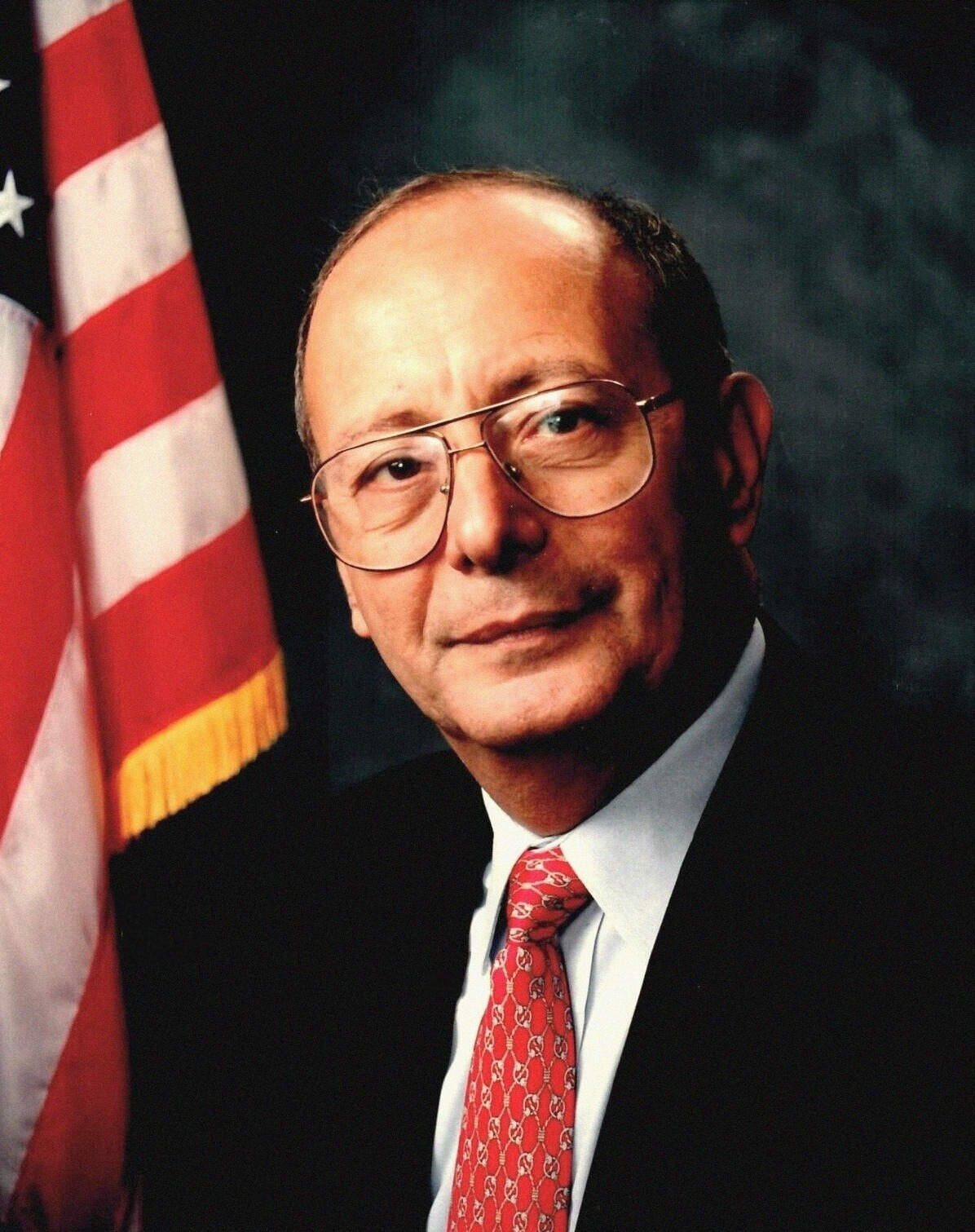 |
| Alphonse d'Amato Source: Wikipedia |
In the spring of 1997, Willi Korte and I thought it would be a great idea to house a looted art database project at the US Holocaust Memorial Museum in Washington, DC. The answer that we received was a resounding “NO” qualified as: “This project does not fit within the mandate of the US Holocaust Memorial Museum.” Dejected but not defeated, we turned to Ori Z. Soltes, then director of the Klutznick National Jewish Museum at B’nai B’rith. We met with his board members and they greeted us with open arms. What a relief! The Holocaust Art Restitution Project (HARP) was born.
 |
| Robert Morgenthau Source: Wikipedia |
The Walli case dragged on for another 13 years while Night City III returned to Austria. However, the seizure of the two paintings struck the Austrian government broadside and provoked an unprecedented debate about cultural plunder and restitution in the homeland of Ruth Jarai, rightful owner of “Walli” and of Marie Altmann, rightful owner of “Portrait of Adele Bloch-Bauer” by Gustav Klimt. The seizure led to the enactment of a series of restitution laws aimed at righting some of the wrongs of Austria’s post-Anschluss Nazi past.
 |
| "Of course I'm back: I just nipped out for a bit of wall decoration" Art Theft, Stanley Arthur Franklin, 1967 Source: The Book Palace |
Direct action—Drastic circumstances require drastic remedies even if it means forcing the hands of foreign governments, shaking up the international art market but not enough to rattle it into compliance. After several years, the status quo returned quickly, all was well, the fear of subsequent seizures waning as lawyers and diplomats ran roughshod over the renewed debate on restitution of looted cultural assets.
Although the Washington Conference of December 1998 had convened representatives and delegates from more than 47 countries to discuss how to resolve these decades-old problems of property returns to Jewish victims, the pundits went home, satisfied that they had done their duty to pledge to ‘do something.’ National commissions emerged in many European countries to investigate the wrongs of that war with limited impact on the quest for historical truth and the imposition of equitable remedies for spoliated families and their heirs. In the absence of meaningful public policies aimed at righting those historical wrongs, national governments across Europe and the American government, left it to the ‘market’ to adjudicate the merits of Holocaust-era cultural claims, thus handing over to the legal community an inherently political debate requiring political solutions. In the United States, the Clinton Administration was beholden to its donors and was reluctant to investigate the ill-doings of American museums during the life of the Presidential Advisory Commission on Holocaust-Era Assets (PCHA) which had been voted into existence by an act of Congress in June 1998. The Commission proved quickly to be ineffectual in carrying out its Congressional mandate and, in essence, violated the terms of the legislation that had empowered it, content to rehash the usual mantras of wartime plunder and avoid the thorny questions of looted cultural assets entering the United States. Those stolen, unrecovered assets entered countless museums, which receive substantial Federal fiscal advantages in the form of tax-exemptions. A largess unmatched in the rest of the world where cultural institutions are mostly run by national governments. Surprisingly, the PCHA ruled that there was no looted art problem in the United States and that further research would be needed to ascertain the opposite. How convenient! The Commission went out of business in the spring of 2000, as quietly as it had come into existence.
Fast forward to the Holocaust-era Assets Conference of June 2009 in Prague: this follow-up to the 1998 Conference in Washington, DC, was born to fail, especially as pertains to the question of looted art. Pre-conference planning was secretive, heavily politicized, did not involve claimants and their representatives, nor did it tap into the pool of international experts in art restitution matters, relying instead on government representatives overseeing questions pertaining to looted art or trophy art in their respective countries. Hence, despite some token input from groups like the European Commission on Looted Art (ECLA), the fate of claimants’ cultural assets rested almost exclusively in the hands of museums’ representatives and government civil servants with international Jewish organizations unwilling to commit themselves to a meaningful strategy aimed at restituting looted cultural assets. Not a pretty picture. The end result is well-known: a diluted declaration of intent known as the Terezin Declaration which serves as a basis for future discussions. It is left up to each conference stakeholder (governments and NGOs) to interpret and apply the Declaration as they see fit, which is not saying much at all.
Hopeless? Maybe. Really hopeless? Not quite. But much time and energy has been lost in endless, sterile debates which do not address the core issues centered on the identification and restitution of looted cultural assets.
The offspring of the June 2009 Prague Conference is the European Shoah Legacy Institute (ESLI), based in Prague and overseen by the Czech Ministry of Foreign Affairs. After muddling along for two years, ESLI has finally gotten a sense of itself as an organization with a mission that has 46 foreign stakeholders and NGOs to bring about proposals for lasting solutions to reach some form of closure regarding the compensation of Holocaust victims, the restitution of looted art and Judaica, the provision of care to needy survivors, and the settlement of immovable property questions especially in Eastern Europe.
 |
| Source: WRJO |
At this point, ESLI is the only organization of its kind in the world which can address issues pertaining to Holocaust-era looted property within the framework of an international forum. Its reach can be wide and extensive only if its members allow it to be. We will see.
Meanwhile, restitution efforts continue to be focused on expensive works of art, a small unrepresentative percentage of the vast numbers of works and objects of art still to be identified and located around the world.
True, it is true that for the past ten years or so dozens of very expensive works of art have been returned to their rightful owners. More often than not, though, settlements have been reached with the current owners who retained title to those stolen cultural items with cash allotments to the victims’ families as compensation. Hence, the new justice, cloaked under the pretense of restitution, has become a vehicle for accommodating current owners at the expense of the claimants’ rights to recover their property. That’s what happens when governments fail in their fiduciary and humanitarian duties to come to the aid of those who need it the most.
Here we are in late 2011 wondering if mechanisms can be put into place to ensure that victims of Nazi thefts of cultural assets can and will have their day in court to recover what is rightfully theirs.
The complication lies mostly in the identification of those looted cultural items. Indeed, with the passage of time and the disappearance of those who witnessed or suffered directly from the thefts, the subsequent generations have lost the knowledge that their families had owned works of art, objects of art, furniture, accessories that had been forcibly removed from former residences in troubled Europe. Thus, the tables have turned. It is not so much up to claimants to speak up about their losses, but instead, the onus falls on those whose task it is to research those cultural crimes and uncover the identity of the stolen objects. In other words, the knowledge of these crimes has waned from the memories of the victims and the responsibility to ensure that those crimes are documented and brought to justice falls on those whose specialty it is to uncover the evidence and study the circumstances under which those crimes were committed, the paths taken by those objects from owner to owner and the possible whereabouts of those stolen objects. The research is overwhelming and cannot be accomplished by lone individuals. It must be grounded in an institutionalized, international undertaking whereby archival materials are systematically searched, analyzed, and relevant data are extracted from them and placed in digital repositories which allow for sophisticated searches of objects, owners, collectors, perpetrators, locations of thefts, dates, and descriptions, to name a few of those categories.
In other words, the future of art restitution efforts lies in systematic historical research and analysis. The research produces the information on unrestituted objects of art which triggers investigations and the search for victims’ heirs. Until such research efforts are put into place, the most effective tools of restitution at the disposal of claimants, at least in the United States, is for Federal authorities to intervene on their behalf, seize objects from current owners and return them to the rightful owners, assuming, of course, that the research underlying the cases is flawless.
An uncompromising position, you might say? What is the alternative then? More of the same? Upholding the sacred rights of current possessors when everyone knows that theft does not convey good title to the next owner? As Steven Bibas wrote in his thoughtful 1994 essay on statutes of limitations, traditional legal defenses as invoked by current owners only abet art thefts at the expense of the rights of claimants. Justice trumps all other considerations when it comes to righting the wrongs wrought by acts of genocide more than seven decades ago. There is no statute of limitations on genocide or any other forms of mass slaughter and crimes against humanity. That’s the plain truth.


