by Marc Masurovsky
A Parisian curator once said about the Vichy regime: It was the revenge of good taste. You could apply this statement to Nazi cultural policy from 1933 to 1945. Restoring good taste in a society corrupted by Jews, Freemasons, Bolsheviks and sexual perverts, according to Nazi propaganda. La revanche du goût. The leitmotiv for State-sponsored plunder of art objects from collectors and dealers mainly of Jewish origin. This plunder lasted for 12 years and stretched throughout Europe, going hand in hand with persecution, racial extermination, and world war.
Why are we still talking about looted art today? Because there really was no justice at the end of WWII for the vast majority of victims of cultural plunder.
Why was there no justice at war’s end? Because the emphasis of restitution was on “cultural treasures”, on those art objects that reflected “good taste” and the cultural heritage of the despoiled nations at the hands of the Nazis and their local collaborators. Who owned those items, those “treasures”? The elite vicims of Nazism. All told, 5 to 10 per cent of the population of victims. What happened to the rest? They either received a check in the mail or their claims were never honored. Simple. It was not worth the effort of postwar governments, then and now, to search for their works of art because they did not rise to the standard of “treasure.” Who was in charge of the investigations? Curators, directors of museums, art historians, culture ministry officials, even art market players. Those responsible for shaping the cultural sphere of postwar societies.
What does that tell us about justice following a genocide?
If your art did not rise to the esthetic standard set by the government and the leadership of the art world and cultural institutions, it would never be recovered and instead would recirculate in the private art market with no chance for you to recover your family’s treasures.
The law protects the current possessor. No law has ever been passed to treat victims of genocidal plunder with respect. There are no laws today that allow victims to recover their property. As it turns out, government officials and museum professionals are beholden to collectors and private art market operators. They refuse to take actions against them that might disrupt the free flow of art within and across borders.
What does this tell us? Theft of art in the context of mass killings and genocide pays for itself. Restitution policies are shaped by perceptions of art and belie governments and elites’ obsession with what they perceive to be “high art” as the highest form of expression of who we are as “civilized” human beings. What really is an art “treasure” ? To date, no one can actually come up with an answer to that question.
Art ownership is forever transformed by acts of plunder and genocide. The demand for restitution clashes with dominant ideas about the value and meaning of art in society, especially for those who have been given the power to shape the esthetics of our society. Woe on those who dared own art objects that did not fit the ruling definition of acceptable art which was then plundered and becomes forever lost in the maelstrom of the global art market for others to enjoy at the expense of the victims. We can legitimately posit that the global art market has been contaminated since the late 1930s with looted, unrestituted art,, coming from both Europe and the Far East.
Can we then deduce that the art world tolerates plunder in the name of beauty and its possession? Perhaps, because, more than 30 billion of euros worth of unprovenanced art changed hands without anyone worrying whether it was stolen or not.
We need to ask ourselves, therefore. Why do we behave in this manner with art? Why do we tolerate the worst excesses and abuses in order to own, view, and enjoy art objects?
What is so complicated about the physical return of a stolen object to its rightful owner? Why does that very act generate so much passion, so much venom especially from the irate current possessor who feels more victimized than a survivor of genocide and victim of cultural plunder?
Is it a symptom of irrepressible narcissistic behavior that seems to pervade today’s elites?
What is it about art that it can generate so much irrationality amongst those who own it, those who curate it, those who steward it? Why does their ethical compass go haywire in the presence of an object that they covet, even if it origins clearly betray acts of illicit transfers of ownership due to conflicts, social upheavals, international conflagrations or outright acts of genocide?
WHY?
Why do governments do nothing to set examples and enforce ethical behavior in the art world?
Thou shall not possess, display, or trade in stolen art. That should be the mantra and yet it is rarely applied.
Showing posts with label Nazis. Show all posts
Showing posts with label Nazis. Show all posts
04 February 2024
04 May 2022
Myrtil Frank: An introduction
by Marc Masurovsky1945 Holland

At the end of WWII, the Allied powers investigating crimes against humanity committed by Nazi agents and their supporters had to contend with the enormity of the human losses inflicted on the Jewish communities of Europe and the sheer scope of their material losses. A subset of these material losses consisted of millions of artistic and cultural objects forcibly taken from the Nazis’ preferred victims—namely Jewish owners—which were then set aside for private or public collections, sold at auction, displayed in galleries and recirculated through intricate networks branching throughout Europe and their overseas tendrils. Thus, the problem of locating plundered goods having once belonged to Jews persecuted by the Nazi regime, became global; Allied investigators and researchers were not equipped to apprehend its fullest measure.
The art market and its many players-- merchants, dealers, collectors, auctioneers—provided the Nazi occupiers with the networks needed to disperse confiscated Jewish property as long as there was a general willingness in the European art world to do their bidding—inside the Reich, in occupied territories, and even in and through the so-called “neutral” countries which opted not to side with the Allies or the Axis, instead did business with both, often favoring one over the other when it suited them to do so.
One persistent problem was to identify those men and women responsible for aiding and abetting the plunder of the Nazis’ victims. The Allies had to ascertain their degree of involvement with the Nazis as agents and participants.
This is the context in which Myrtil Frank, a German-Jewish businessman turned art dealer, operated during the years of German occupation of Holland (1940-1945).
Myrtil Frank’s case is peculiar because he is Jewish. For the Allies, that seemed secondary since they were chiefly interested in understanding what his activities were during the German occupation of Holland and how he survived four years of brutal Nazi rule, what he did to achieve that result and emerge untouched with his family after war’s end.
It would be easy to succumb to 20-20 hindsight and call Myrtil Frank a collaborator of the Nazis. But we know better. The reason why we chose to tell Frank’s story is because there were many like him who, because of their faith, had a target on their front and back. But they managed to survive those years of persecution, oppression and exploitation, highlighted by the betrayal of their neighbors and business associates, not knowing who to trust from one day to the next, while staying safe and ensuring the survival of one’s family.
Myrtil Frank was a secondary figure in the constellation of individuals who cast their lot with Nazi plundering agencies. For that reason, he has fallen under the radar of inquiry of most researchers and historians who have simply ignored him except when his name appears in the provenance of an object which may have been looted. Even the Dutch Restitution Committee was unaware of his importance in the machinery of plunder established in Holland by Nazi agents.
Who was Myrtil Frank?
Myrtil Frank was born on 27 December 1893 in Breitenheim, in the Rhineland-Palatinate region of Germany. After serving in the German Army during WWI he married Flora Marburger in Frankfurt in 1919 (Flora was also known as Flory and was born October 23, 1895, in Frankfurt am Main). In those days, Frank sold equipment used in dentists’ offices. The Franks’ daughters, Dorrit and Sybil, were born respectively in 1920 and 1925. Myrtil Frank died in 1968 and his wife Flory in 1981. According to Myrtil Frank’s grandson, Gordon Sander, he had been a wealthy grain merchant living in Berlin, Germany although a 1945 Allied report described him as “a German Jewish refugee who had made money in the Rheinland in the textile industry.”
It is unclear when Myrtil Frank’s interest in the art trade became more than just a hobby. By the time the Germans invaded Holland on May 10, 1940, Myrtil Frank seemed well-acquainted with art dealers and collectors in his midst. The Frank family first lived at Mechelsestraat 6 in Scheveningen, on the outskirts of Den Haag (The Hague). They then moved to Frans Halslaan 18, in Hilversum.
According to Gordon Sander, the Franks were eventually forced to move to Amsterdam. Sander argues that Myrtil Frank saw the proverbial writing on the wall and made plans for him and his family to hide from Nazi persecutions and deportation to the East. He contacted Anie van der Sluis, a Dutch teacher who had taught Dutch to the Frank family after their arrival in the Netherlands. A July 1942 notice (more like a summons) for Frank’s daughters, Dorrit (22) and Sybil (17), to report to the transit camp of Westerbork, accelerated the process and the family went into hiding on or about 14 July 1942 (Pieter van den Zandenstraat 14). Was Myrtil with them?
 |
| Kajetan Mühlmann, courtesy of europeana.eu |
Was Myrtil Frank forced to abet the Nazis’ search for art and Jewish art collections? Depending on what sources you consult, there are two scripts needing to be reconciled: Myrtil Frank, the Jewish victim of Nazi persecution desperately trying to stay one step ahead of his persecutors, and Myrtil Frank the dealer who made himself useful to the Nazi plunderers working side by side with Dutch art dealers who did consistent business with the Germans and their agents from 1940 to 1944.
Sources:
2.05.303_71_Muhlmann, NIOD, Den Haag, Netherlands,
Police report on Myrtel Frank, CABR inv.nr: 91578 file 32657, Central Archives Special Justice, Den Haag
www.fold3.com: RG 239 M 1944 Roll 8 NARA; RG 260 M1946 Roll 121 NARA
https://www.gordonsander.com/the-frank-family-that-survived

07 January 2022
Duress revisited
by Marc Masurovsky
Duress should be a no-brainer. It’s a tangible manifestation of State-sponsored persecution and marginalization exercised against a specific group of individuals, namely the Jews in Nazi Germany. A forced sale is not conceivable without duress. It is the duress environment that makes the sale of Jewish-owned property an inevitability and a logical outcome of a Jew’s loss of prerogative in making day-to-day decisions that affects her life and her future and that of her family. Although duress is not a difficult concept to grasp, it is characterized by a loss of individual freedom in making practical and existential decisions and loss of control over one’s resources and property fueled by an oppressive regime which extolled the racial inferiority of an entire group of people (the Jews) as a basis for using all the necessary levers of State power to oppress and marginalize them. Duress foreshadows the Holocaust.
Here are some examples of duress which were highlighted during restitution proceedings over the past decade or so.
Max Stern, Düsseldorf
In December 2007, in a case that pitted the heirs of Max Stern, a Jewish gallery owner based in Düsseldorf, against Maria-Louise Bissonnette, a resident of Providence (Rhode Island), US District Judge Mary Lisi ruled in favor of the late Max Stern’s estate with a landmark judgment in which she equated forced sales with looting and an act of theft. She justified her decision in part on the fact that Max Stern had never received any compensation for the 1937 forced sale of his gallery’s inventory, including a painting by Xaver Winterhalter which Ms. Bissonnette had acquired. In Max Stern’s case, the duress began as soon as he received an official notification from the Nazi-sponsored Reich Chamber of Fine Arts shortly after he had inherited his father’s gallery. The Reich Chamber asserted that as a Jew he was not qualified to run such a business and he should proceed expeditiously with the liquidation of the gallery’s inventory through an approved point of sale, in this case the Lempertz auction house in Köln. Max Stern had no other choice but to proceed with the liquidation. The absence of payment was an egregious manifestation of his persecution. (See 2008sternvbissonnette)
Are price and value essential guideposts to determine whether a Jew living in Nazi Germany was subject to acts of duress? Not necessarily. In fact, if one looks solely at value and price without appreciating the importance of the socio-economic and historical context surrounding the events that produced the state of duress, one may end up deciding the fate of a contested object without giving due attention to the “why”, “how” and “when” of the sale of a claimed object.
Max Emden, Munich
We see this in the case of the late Max Emden, a German Jewish department store magnate. The Nazis made Emden’s life increasingly difficult as noted by the German Advisory Commission (so-called Limbach Commission) when commenting on the 1938 sale of his three Bellotto paintings to Hitler’s Linzmuseum project, a sale that was brokered by a Munich-based dealer named Anna Caspari: “[the sale] was not undertaken voluntarily but was entirely due to worsening economic hardship… deliberately exploited by potential buyers…” However, the Houston MFA where one of the Bellotto works ended up, remained unflappable. It disagreed with the Commission’s assessment noting that Emden had obtained a fair price for the three paintings.
By solely looking at the price realized by the sale of 1938 and ruling it as reasonable given the time period and quality of the works, Houston essentially ruled out all other facts in making its determination, therefore implicitly denying that Emden had acted out of duress. Regardless of where one stands on the Emden case—for or against restitution—the fact is that Emden had to part with much of his property before leaving Nazi Germany. The German Advisory Commission (ex-Limbach Commission) reached this conclusion based in part on the facts surrounding the forced sale. The “worsening economic hardship” that Emden experienced as the main factor prompting the forced sale had become the bane of most Jews living under Nazi rule, especially in 1938.
Fritz Grünbaum, Vienna and Dachau
Duress should be a no-brainer. It’s a tangible manifestation of State-sponsored persecution and marginalization exercised against a specific group of individuals, namely the Jews in Nazi Germany. A forced sale is not conceivable without duress. It is the duress environment that makes the sale of Jewish-owned property an inevitability and a logical outcome of a Jew’s loss of prerogative in making day-to-day decisions that affects her life and her future and that of her family. Although duress is not a difficult concept to grasp, it is characterized by a loss of individual freedom in making practical and existential decisions and loss of control over one’s resources and property fueled by an oppressive regime which extolled the racial inferiority of an entire group of people (the Jews) as a basis for using all the necessary levers of State power to oppress and marginalize them. Duress foreshadows the Holocaust.
Here are some examples of duress which were highlighted during restitution proceedings over the past decade or so.
Max Stern, Düsseldorf
 |
| Max Stern |
In December 2007, in a case that pitted the heirs of Max Stern, a Jewish gallery owner based in Düsseldorf, against Maria-Louise Bissonnette, a resident of Providence (Rhode Island), US District Judge Mary Lisi ruled in favor of the late Max Stern’s estate with a landmark judgment in which she equated forced sales with looting and an act of theft. She justified her decision in part on the fact that Max Stern had never received any compensation for the 1937 forced sale of his gallery’s inventory, including a painting by Xaver Winterhalter which Ms. Bissonnette had acquired. In Max Stern’s case, the duress began as soon as he received an official notification from the Nazi-sponsored Reich Chamber of Fine Arts shortly after he had inherited his father’s gallery. The Reich Chamber asserted that as a Jew he was not qualified to run such a business and he should proceed expeditiously with the liquidation of the gallery’s inventory through an approved point of sale, in this case the Lempertz auction house in Köln. Max Stern had no other choice but to proceed with the liquidation. The absence of payment was an egregious manifestation of his persecution. (See 2008sternvbissonnette)
Are price and value essential guideposts to determine whether a Jew living in Nazi Germany was subject to acts of duress? Not necessarily. In fact, if one looks solely at value and price without appreciating the importance of the socio-economic and historical context surrounding the events that produced the state of duress, one may end up deciding the fate of a contested object without giving due attention to the “why”, “how” and “when” of the sale of a claimed object.
Max Emden, Munich
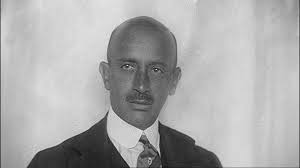 |
| Max Emden |
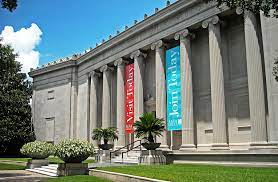 |
| Houston Museum of Fine Arts |
Fritz Grünbaum, Vienna and Dachau
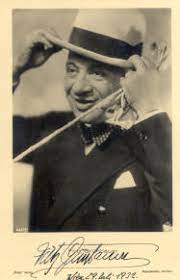 |
| Fritz Grünbaum |
In the case of Fritz Grünbaum who died at Dachau in January 1941, once arrested in Vienna by the Nazis in 1938, he lost control over his property and assets, including a rather significant collection of modern works of art. Four months after his transfer to Dachau, he was forced to sign a power of attorney, thereby effectively finalizing under duress the surrender of his art collection as a direct consequence of prevailing circumstances—racially- and politically-motivated incarceration, physical and emotional abuse. (See Bakalar v. Vavra).
Lilly Cassirer Neubauer, Munich
In a complaint filed against the Thyssen-Bornemisza Collection Foundation in 2019, the heirs of Lilly Cassirer Neubauer argued that their great-grandmother “was forced to transfer [a painting by Camille Pissarro] to Jakob Scheidwimmer, a Nazi art appraiser [in Munich], in order to obtain exit visas for herself and her husband, Otto. Scheidwimmer transferred 900 RM [or 360 US dollars in 1939] in payment for the painting which he deposited in a blocked account as Ms. Neubauer was of Jewish descent and subject to Nazi anti-Jewish discriminatory laws since the advent of National Socialism in Germany on January 1933.
As an art market player in Munich, Mr. Scheidwimmer was very much a part of the Nazi machinery for recycling confiscated Jewish cultural assets as attested by his direct participation in high-level meetings with local, Bavarian and Reich officials around the time of Kristallnacht (9-10 November 1938) during which thousands of Jewish apartments were raided and their male occupants corralled and interned into camps, in part, to force them to disgorge their assets and leave Germany. Ms. Neubauer did not stand a chance against Scheidwimmer and was forced to relinquish the Pissarro painting.
Are there different shades of duress like a palette of colored hues ranging from very light to very dark? Or is there just one universal expression of duress, plain and simple, equally applied to all Jews living in Nazi Germany at all times between 1933 and 1945? Was it less severe in some parts of Germany? How quickly did Jews feel the paralyzing and oppressive nature of Nazi rule in all its petty manifestations? Can we periodize duress? Did it wax and wane like the tides or was it always dispensed in equal amounts to all Jews in Germany, regardless of status, class, income and geographical location? The question may seem unfair but it goes to the heart of how we view duress in Nazi Germany and the forced sale of cultural assets by Jewish owners desperately seeking to flee Germany at all cost. Unfortunately for the heirs and descendants of Jewish victims of the Nazis, their detractors in museums, auction houses, and private collections nitpick to death the “quality of the duress” that their families experienced as if to find a flaw in their argument, implying that they might be exaggerating the circumstances under which their ancestors sold works of art. This debasement of the experience of Jewish families in Nazi Germany has led to restitution claims being denied, thus allowing current possessors to retain the object(s) in their collection. The unwillingness of cultural officials to accept and acknowledge the circumstances of a family’s duress under Nazi rule is tantamount to revisionist and constitutes an implicit recasting of the Jewish experience under Nazi rule.
We have seen this scenario unfold many times since 1945.
It is essential to study and compare all forms of duress sustained under oppressive regimes like that foisted by the Nazis on the citizens of Germany and later on most of Europe. We need to deduce, outline, define and publicize the complex manifestations of duress in the daily lives of Jews using witness statements, contemporaneous reports, legal and governmental proceedings. Duress and forced sales are real phenomena that haunted Jews from the advent to power of the Nazis in Germany in late January 1933 to their forced exit from Nazified Germany with little or nothing left to their name.
Lilly Cassirer Neubauer, Munich
 |
| Lilly Cassirer Neubauer |
In a complaint filed against the Thyssen-Bornemisza Collection Foundation in 2019, the heirs of Lilly Cassirer Neubauer argued that their great-grandmother “was forced to transfer [a painting by Camille Pissarro] to Jakob Scheidwimmer, a Nazi art appraiser [in Munich], in order to obtain exit visas for herself and her husband, Otto. Scheidwimmer transferred 900 RM [or 360 US dollars in 1939] in payment for the painting which he deposited in a blocked account as Ms. Neubauer was of Jewish descent and subject to Nazi anti-Jewish discriminatory laws since the advent of National Socialism in Germany on January 1933.
 |
| Thyssen-Bornemisza Foundation |
Are there different shades of duress like a palette of colored hues ranging from very light to very dark? Or is there just one universal expression of duress, plain and simple, equally applied to all Jews living in Nazi Germany at all times between 1933 and 1945? Was it less severe in some parts of Germany? How quickly did Jews feel the paralyzing and oppressive nature of Nazi rule in all its petty manifestations? Can we periodize duress? Did it wax and wane like the tides or was it always dispensed in equal amounts to all Jews in Germany, regardless of status, class, income and geographical location? The question may seem unfair but it goes to the heart of how we view duress in Nazi Germany and the forced sale of cultural assets by Jewish owners desperately seeking to flee Germany at all cost. Unfortunately for the heirs and descendants of Jewish victims of the Nazis, their detractors in museums, auction houses, and private collections nitpick to death the “quality of the duress” that their families experienced as if to find a flaw in their argument, implying that they might be exaggerating the circumstances under which their ancestors sold works of art. This debasement of the experience of Jewish families in Nazi Germany has led to restitution claims being denied, thus allowing current possessors to retain the object(s) in their collection. The unwillingness of cultural officials to accept and acknowledge the circumstances of a family’s duress under Nazi rule is tantamount to revisionist and constitutes an implicit recasting of the Jewish experience under Nazi rule.
We have seen this scenario unfold many times since 1945.
It is essential to study and compare all forms of duress sustained under oppressive regimes like that foisted by the Nazis on the citizens of Germany and later on most of Europe. We need to deduce, outline, define and publicize the complex manifestations of duress in the daily lives of Jews using witness statements, contemporaneous reports, legal and governmental proceedings. Duress and forced sales are real phenomena that haunted Jews from the advent to power of the Nazis in Germany in late January 1933 to their forced exit from Nazified Germany with little or nothing left to their name.
27 November 2019
Pots and pans
by Marc Masurovsky
Since the first Holocaust memorial was built in Europe, soon followed by dozens of others, the story line that these venerable institutions have conveyed to a global public has been exemplified by the Holocaust is not about property but about people.
This stale stereotyping of Jews as living in substandard poverty across Europe has gone hand in hand with a stubborn refusal by Jewish communities worldwide to address the more complex question of property loss as one of the keystones of 20th century anti-Jewish behavior. If we follow this line of reasoning, there were only two classes of Jews-on top, the wealthy who had enough disposable income to collect fineries of all sorts including lavish furniture and expensive art, and the “shtetl” Jews, the peddlers, the pieceworkers who lived “on the other side of the tracks”, the inhabitants of the Jewish Pale in Eastern Europe. Forgotten or ignored are the lower middle class, artisans, skilled workers, cultural and intellectual workers, the midde class whom we find in every community, town, city, region of Europe. What of them? Do they fit in this story? They do but their property does not count. It’s not part of the Holocaust story. Or so we are told.
In short, it is too convenient and shameful to oversimplify in order to deflect attention from the real problem:
-Culture is an integral part of the discussion on National Socialism, anti-Jewish policies and the Holocaust;
-Jewish culture was thriving in the interwar years;
-The Nazis and their local Fascist allies nearly extinguished it;
-Human beings—Jewish and non-Jewish alike—are attracted to objects that please them and, if they can, they acquire them so that they can live with them, appreciate them and share them with family, friends, acquaintances and complete strangers.
Since the first Holocaust memorial was built in Europe, soon followed by dozens of others, the story line that these venerable institutions have conveyed to a global public has been exemplified by the Holocaust is not about property but about people.
Put another way, the vast majority of the six million Jewish men, women and children who lost their lives in the Holocaust were so downtrodden that all they owned were pots and pans and the clothes that they wore. Or so the conventional story goes. Those lucky enough to collect art were people of means who hailed for the most part from Central and Western Europe. The facts speak for themselves: 75 per cent of Jews lived in Eastern Europe; 90 per cent of them were murdered. In other words, the Holocaust is for the most part an Eastern European Ashkenazi story.
This stale stereotyping of Jews as living in substandard poverty across Europe has gone hand in hand with a stubborn refusal by Jewish communities worldwide to address the more complex question of property loss as one of the keystones of 20th century anti-Jewish behavior. If we follow this line of reasoning, there were only two classes of Jews-on top, the wealthy who had enough disposable income to collect fineries of all sorts including lavish furniture and expensive art, and the “shtetl” Jews, the peddlers, the pieceworkers who lived “on the other side of the tracks”, the inhabitants of the Jewish Pale in Eastern Europe. Forgotten or ignored are the lower middle class, artisans, skilled workers, cultural and intellectual workers, the midde class whom we find in every community, town, city, region of Europe. What of them? Do they fit in this story? They do but their property does not count. It’s not part of the Holocaust story. Or so we are told.
Fast forward to November 15, 2019, to the 20th anniversary celebration of the Paris-based CIVS—Commission for indemnification of Victims of Spoliation during WWII. Participants to that conference heard from some speakers that most Jews living in France were of “humble backgrounds” and did not collect any art. They were more about “pots and pans.” That did not stop the Vichy authorities and their Nazi friends In the Paris region alone, from confiscating and transferring to non-Jewish owners (a process known as “Aryanization”) the intangible and tangible property of 31000 owners. Moreover, close to 70000 residences where Jews lived were literally emptied during the so-called “M-Aktion” between March 1942 and the summer of 1944 in France, Belgium and the Netherlands. I doubt that those responsible for this wholesale campaign of ransacking Jewish dwellings would have committed so many resources and logistics if it were just about “pots and pans.”
You do not have to be an “art collector” or “art dealer” to amass works and objects of art. There are multiple tiers of value in the art world and the art market whereby individuals can amass an impressive amount of esthetic objects of small value---paintings, works on paper, even sculpture, decorative objects, books, musical instruments, Judaica, produced by talented artists and craftsmen whose names are not Bellini, Tintoretto, Fragonard and Rembrandt.
-Culture is an integral part of the discussion on National Socialism, anti-Jewish policies and the Holocaust;
-Jewish culture was thriving in the interwar years;
-The Nazis and their local Fascist allies nearly extinguished it;
-Human beings—Jewish and non-Jewish alike—are attracted to objects that please them and, if they can, they acquire them so that they can live with them, appreciate them and share them with family, friends, acquaintances and complete strangers.
Thousands of artists, writers, poets, musicians, craftsmen from close to twenty nations lost their livelihood and their lives between 1933 and 1945, their property was seized, never to be seen again. The cumulative impact of those losses triggered a lessening, an impoverishment of the cultural heritage of Europe from which we have not fully recovered.
These losses were part of a well-orchestrated State-sponsored attempt (2/3 successful) by the Third Reich and its allies to erase all traces of Jewish life and activity across Europe—a continental form of “Aryanization” which witnessed a multi-billion dollar transfer of property from Jewish ownership into the hands of non-Jews and their businesses which powered the wartime and postwar economies of European countries.
So, no, it was not about “pots and pans.” It was about much more. To deny this fact is to deny and rewrite history.
The time is long overdue for these longstanding revisionist trends in the teaching of the Holocaust to come to an end.
09 October 2018
Washington Principle #1: A critique
by Marc Masurovsky
[Editor's note: Due to the momentous nature of the upcoming international conference in Berlin, Germany, entitled "20 years Washington Principles: Roadmap for the Future," it would be worthwhile to revisit these Principles and to put them through a linguistic, methodological and substantive meat grinder, and see what comes out of this critique. There will be eleven articles, each one devoted to one of the Principles enacted in a non-binding fashion in Washington, DC, on December 3, 1998.]
Washington Principle #1
I. Art that had been confiscated by the Nazis and not subsequently restituted should be identified.
“Art”:
Principle #1 could be rewritten and expanded as follows:
Artistic, cultural and ritual objects confiscated, misappropriated, sold under duress and/or forced sales, subjected to other forms of illicit acts of dispossession by the Nazis, their supporters, profiteers and Fascist allies across Europe between 1933 and 1945, and not subsequently restituted to their rightful owners shall be identified using the highest standards of scientific and empirical research and analysis.
[Editor's note: Due to the momentous nature of the upcoming international conference in Berlin, Germany, entitled "20 years Washington Principles: Roadmap for the Future," it would be worthwhile to revisit these Principles and to put them through a linguistic, methodological and substantive meat grinder, and see what comes out of this critique. There will be eleven articles, each one devoted to one of the Principles enacted in a non-binding fashion in Washington, DC, on December 3, 1998.]
Washington Principle #1
I. Art that had been confiscated by the Nazis and not subsequently restituted should be identified.
“Art”:
In conventional terms, we think of “art” as paintings, works on paper, and sculpture, especially of the highest quality, museum-worthy pieces. This definition would be consistent with the overall approach applied by the United States, the United Kingdom, France, and other countries in the immediate postwar years as their agencies searched for looted “art.” But in reality, “art” covers many disciplines and media, many forms of expression and purposes whose quality varies greatly in content, style and esthetics. Most of the “art” that had been “confiscated” by the Nazis did not consist solely of paintings, works on paper, and sculpture. It included furniture, accessories, other kinds of decorative objects, any object that, although functional, and even ritualistic presents esthetic values which would earn it the label of “art.” The ERR database, for instance, is clear proof of this broad expanse known as “art.”
“confiscated by the Nazis”:
“confiscated by the Nazis”:
the word connotes an order from on high to seize someone’s property. Hence, we are to understand that the Nazi government or authorities order the “confiscation” of “art” from their designated victims. This narrow definition of how “art” changed hands illicitly begs for clarification as it is historically reductionist and therefore conveys a skewed vision of the historical reality. The word “confiscated” excludes other forms of dispossession brought about as a consequence of the Nazi seizure of power in January 1933 and does not reflect the myriad ways in which property owned by Jews could be forced out of their hands.
“not subsequently restituted”:
“not subsequently restituted”:
what does “restituted” really mean in this context? Physically returned to the aggrieved individual or entity whose “art” was “confiscated”? Does it mean “returned” to the country of origin? The lack of clarity fills this word with ambiguity.
“should be identified”:
“should be identified”:
it’s not an obligation, mind you. But just in case the thought crossed your mind, would you be so kind and identify “art” confiscated” by the Nazis which sits in your midst? And to whom is this Principle addressed? To museums—public and private? To art galleries and auction houses? To individual private owners? To institutional owners? To religious entities? It’s hard to know. And how does “identified” work? Is it simply a question of spotting the item in a collection, taking notes of its presence, and leaving for lunch? The mission inherent in Principle #1 is narrow in scope. What do you do once the object is identified? And how is it identified? Using what methods, exactly?
In June 2011, we wrote that “the process of identification, in and of itself, is known as a Catch-22—it contains its own paradox. In order to identify looted art, one must understand the concept of looting. Looting, per se, can be as simple as forced removal of property at the point of a gun and/or with the assistance of local law enforcement and judicial authorities working in tandem with the occupation authority. It can also be the result of so-called forced sales or duress sales. There, too, we run into problems because not every country that attended the Washington Conference even acknowledges that such sales occurred on its territory during those fateful dark years.” And so it goes. After 20 years or so, “there are no firm standards by which to move forward on identification…Moreover, this Principle does not make it explicit that such efforts should be exhaustive and definitive. Hence, each country can produce an ‘ad minima’ effort and feel that it has abided by Principle I. How diplomatic!”
In June 2011, we wrote that “the process of identification, in and of itself, is known as a Catch-22—it contains its own paradox. In order to identify looted art, one must understand the concept of looting. Looting, per se, can be as simple as forced removal of property at the point of a gun and/or with the assistance of local law enforcement and judicial authorities working in tandem with the occupation authority. It can also be the result of so-called forced sales or duress sales. There, too, we run into problems because not every country that attended the Washington Conference even acknowledges that such sales occurred on its territory during those fateful dark years.” And so it goes. After 20 years or so, “there are no firm standards by which to move forward on identification…Moreover, this Principle does not make it explicit that such efforts should be exhaustive and definitive. Hence, each country can produce an ‘ad minima’ effort and feel that it has abided by Principle I. How diplomatic!”
Principle #1 could be rewritten and expanded as follows:
Artistic, cultural and ritual objects confiscated, misappropriated, sold under duress and/or forced sales, subjected to other forms of illicit acts of dispossession by the Nazis, their supporters, profiteers and Fascist allies across Europe between 1933 and 1945, and not subsequently restituted to their rightful owners shall be identified using the highest standards of scientific and empirical research and analysis.
18 October 2017
Different shades of recovery
by Marc Masurovsky
The process of recovery of looted cultural, artistic and religious objects is daunting for several reasons:
If action is not taken right away to recover a looted object, it becomes exponentially difficult to identify its current location. In the case of losses during the Third Reich, “recovery” was an absurd notion since the perpetrators of the thefts controlled the reins of political, legal, and economic power. Hence, the process of tracing the object could only occur after a regime change and with rules in place that would facilitate such searches. Moreover, if the works confiscated or plundered by the Nazi regime ended up in neighboring countries, what rights did the claimants have to recover such works, since Nazi Germany was a recognized nation in the community of nations, for better or for worse? What rights do they have now? Since most of the domestic losses suffered by Jews living in Germany were State-sponsored, there was no mechanism in place in other nations to deem the actions of the Nazi state illegal and the confiscated property subject to restitution. Therefore, if you lost your property in 1934 and if you survived all of the subsequent events provoked by the Nazis’ fury against the Jews and others, you would have to wait for at least 12 years to assert a claim of restitution.
If your missing object is located in the hands of a new owner, regardless of how that person or institution acquired the victims’ property, the laws governing property rights and title to “legally acquired” property prevent the plundered owner from obtaining restitution of his/her looted property without going through a complex tangle of legal and political maneuvers. In the absence of explicit mechanisms put in place by the national governments of nations where such looted objects have ended up, it is extremely difficult, if not impossible, to recover them. This state of affairs endures to this day and has been a continual source of frustration for victims of plunder with minimal accommodations made by governments and courts to facilitate the process of recovery.
If the looted object is declared part of the cultural patrimony of the nation from where it ended up, the recovery process involves a direct negotiation with that nation’s government, a very laborious discussion which usually ends in utter failure. What is the word of a dispossessed Jewish owner against that of an official who upholds the notion of cultural patrimony and inalienability of art objects located in State collections, whether those objects were looted during genocidal acts? Culpable countries hiding behind such imperialistic arguments are: France, Germany, Belgium, the Netherlands, Spain, Italy, to cite the worst, Eastern European nations, all of the nations that once formed the Soviet Union.
When source nations seek the return of their looted patrimony which usually consists of antiquities illegally extracted from archaeological sites or illegally removed from religious and other sacred edifices, the wait can last for an eternity; it can also be circumscribed to anywhere from a year to several decades if the aggrieved nation is willing to compromise, accept trade offs like offer commercial advantages to the withholding nation, or agree to symbolic returns with a promise never to come back and ask for anymore as in the case of South Korea and the shabby treatment it received from France over a set of priceless manuscripts.
Aggrieved source nations include but are not limited to Greece, Turkey, Italy, South Korea, China, Egypt, Nigeria, Mali.
In other words, we have not made much progress in the past several decades. As provenance continues to become optional in art market transactions and most nations do not encourage their cultural institutions to be more forthcoming in publicizing the history of the objects that are part of their “patrimony,” nothing short of a cultural revolution will sway them to change course and become, god forbid, ethical.
The process of recovery of looted cultural, artistic and religious objects is daunting for several reasons:
If action is not taken right away to recover a looted object, it becomes exponentially difficult to identify its current location. In the case of losses during the Third Reich, “recovery” was an absurd notion since the perpetrators of the thefts controlled the reins of political, legal, and economic power. Hence, the process of tracing the object could only occur after a regime change and with rules in place that would facilitate such searches. Moreover, if the works confiscated or plundered by the Nazi regime ended up in neighboring countries, what rights did the claimants have to recover such works, since Nazi Germany was a recognized nation in the community of nations, for better or for worse? What rights do they have now? Since most of the domestic losses suffered by Jews living in Germany were State-sponsored, there was no mechanism in place in other nations to deem the actions of the Nazi state illegal and the confiscated property subject to restitution. Therefore, if you lost your property in 1934 and if you survived all of the subsequent events provoked by the Nazis’ fury against the Jews and others, you would have to wait for at least 12 years to assert a claim of restitution.
If your missing object is located in the hands of a new owner, regardless of how that person or institution acquired the victims’ property, the laws governing property rights and title to “legally acquired” property prevent the plundered owner from obtaining restitution of his/her looted property without going through a complex tangle of legal and political maneuvers. In the absence of explicit mechanisms put in place by the national governments of nations where such looted objects have ended up, it is extremely difficult, if not impossible, to recover them. This state of affairs endures to this day and has been a continual source of frustration for victims of plunder with minimal accommodations made by governments and courts to facilitate the process of recovery.
If the looted object is declared part of the cultural patrimony of the nation from where it ended up, the recovery process involves a direct negotiation with that nation’s government, a very laborious discussion which usually ends in utter failure. What is the word of a dispossessed Jewish owner against that of an official who upholds the notion of cultural patrimony and inalienability of art objects located in State collections, whether those objects were looted during genocidal acts? Culpable countries hiding behind such imperialistic arguments are: France, Germany, Belgium, the Netherlands, Spain, Italy, to cite the worst, Eastern European nations, all of the nations that once formed the Soviet Union.
When source nations seek the return of their looted patrimony which usually consists of antiquities illegally extracted from archaeological sites or illegally removed from religious and other sacred edifices, the wait can last for an eternity; it can also be circumscribed to anywhere from a year to several decades if the aggrieved nation is willing to compromise, accept trade offs like offer commercial advantages to the withholding nation, or agree to symbolic returns with a promise never to come back and ask for anymore as in the case of South Korea and the shabby treatment it received from France over a set of priceless manuscripts.
Aggrieved source nations include but are not limited to Greece, Turkey, Italy, South Korea, China, Egypt, Nigeria, Mali.
In other words, we have not made much progress in the past several decades. As provenance continues to become optional in art market transactions and most nations do not encourage their cultural institutions to be more forthcoming in publicizing the history of the objects that are part of their “patrimony,” nothing short of a cultural revolution will sway them to change course and become, god forbid, ethical.
Subscribe to:
Posts (Atom)