Showing posts with label Art Institute of Chicago. Show all posts

30 May 2018

Provenance research can be challenging

by Marc Masurovsky

In the two decades since the now-infamous Washington Conference on Holocaust-era Assets of December 1998 which produced the "Washington Principles." many American museums were placed quite naturally on the defensive since they became the focal point of attention of lawmakers, Jewish organizations, an emerging motley group of art restitution experts, including attorneys, researchers, claimants and assorted historians and NGOs.

In the years following the issuance of the above-mentioned Principles, declarations of faith made by American museum associations--the then-American Association of Museums (AAM) and the Association of Art Museum Directors (AAMD) to the effect that they had the "Nazi-era" provenance problem under control were rarely taken seriously, if at all. The specialized public associated either directly or indirectly with questions of art restitution and Holocaust-related thefts of Jewish-owned property, believed--rightly or wrongly--that a vast majority of museum professionals, including their curators, directors and trustees, held the view that whatever entered their collections was there to stay.  Moreover the threshold of evidence needed to consider returning an object was so high that no one on earth could rightfully claim to meet that standard. Hence, all was good in their minds; restitution would remain a dead letter. So they thought.

Since the late 1990s, Holocaust victims and their heirs have challenged American cultural institutions by asking their representatives for the restitution of their families'  objects which they believed had been spoliated, plundered, misappropriated during the commission of an act of genocide. In response to those claims, museum professionals and their legal representatives have tried to show publicly their "good faith" in meeting these historic claims on a solid footing of historical and forensic inquiry leading to some kind of reasonable outcome even if it meant, in the extreme cases, that they would have to part ways with the claimed objects in their collections.

In that spirit, a number of American museums have gone out of their way to convince the public that the research is challenging. The act of documenting the historical path of these claimed objects for the purpose of unearthing misdeeds which would call into question the museum's ownership of these objects poses challenges.  Here are three examples:
Provenance research can prove challenging as records may have been lost or destroyed in the upheaval of war. In addition, the passage of time and world events often make important information difficult to locate. Gaps in the provenance of a particular work may be attributable to different causes, from an owner's desire for anonymity to the unavailability of records of purchase and sale. Thus, incomplete provenance information does not necessarily mean that a work has been tainted by the events of the Nazi era. In addition, in some cases, a work may have been seized by the Nazis but later restituted to its original owners and subsequently donated or sold by them.

Stanford University
This research can be very complex and challenging due to a number of factors, including changes in the attribution and title; physical alteration of a work; the absence, loss, or destruction of transfer documents and other records; ambiguities in family histories; an owner’s desire for anonymity; societal and political upheaval; natural disasters; and poor record-keeping over time. Consequently, gaps in provenance are common and do not necessarily mean the object has a problematic past.

Walters Art Museum, Baltimore, MD

Provenance research is conducted by museum staff, fellows, and interns, and information generated by this work is continually added to individual object records. Although the museum seeks to verify and expand the provenance information associated with individual works of art in its collection, establishing a complete history of ownership can often prove challenging. The museum therefore encourages the sharing of information that might help to clarify the provenance of objects in its collection.

Live and learn...

04 April 2016

Provenance research on display--Part Three

by Marc Masurovsky

This is the third installment in a series of articles on provenance research as presented to the general and specialized public through digital communications in the form of websites and other displays accessible through search engines on the Internet.

Before we shift to cultural institutions outside the United States and examine how they present “provenance research” to their public, it would be good to consider for a while the notion of “challenge" that many museums express on their websites when describing provenance research.

Here are some ways that challenges are expressed to us, the general public, so that we can appreciate the seriousness of the task at hand—provenance research—and appreciate how complicated, tedious, arduous, laborious, thankless, and, yes, perhaps, even impossible the task might be. I ran out of adjectives.

One obvious reason for such challenges is to blame the lack of relevant documentation to physical loss and fading memories and the fact that previous generations were not as litigious as ours and not as obsessed with private property ownership and did not commit every iota of information about objects sold, purchased, loaned, bequeathed, on paper. Yes, that lack of concern for maintaining complete audit trails, registers and other forms of documentation, has worked to our detriment, perhaps, but it was then, and now is now. Hence, the challenge.

Oh, and there is that terrible situation where you cannot trust everything you read. What if you are being deliberately misled, three, four generations later, by some conniving seller who will withhold the truth about an object. Don’t trust anything that you read. This argument can be used malevolently by all parties involved in determining the ownership of an object and/or its authenticity.

And, yes, there is that timeless practice whereby owners, sellers and lenders of art objects under scrutiny want to remain anonymous. This is where provenance writing gets to be creative and enters the fictional house through the front door. History as fiction has found its nest.

Seriously...

Princeton University wants us to know that, for most of the above-cited reasons and many more, no provenance can be complete and there will always be some gap, as narrow as a thread or as wide as the Nile River.

The Art Institute of Chicago reminds us that, just because there is a gap, it does not mean that something bad and illicit occurred. Even if it did, the problem of ownership might have gotten fixed and therefore the object in its collection is FINE. So, no need to worry. There is always another document to demonstrate licit ownership. Or is there? In other words, we are now in the middle of the contentious debate whereby provenance research enters a subjective arena, where research is unfortunately tailored to suit the legal needs and requisites of the institution holding the object at hand or the person claiming it which will do whatever is necessary to demonstrate that it cannot leave the building or that it is in fact THE object being claimed as lost.  Both sides to ownership disputes have been found to be lacking in this area and reluctant to acknowledge that the facts at hand might dispute their arguments. It is an unfortunate state of affairs, even for me, to have to make this clear but the intellectual process that accompanies the research must be inviolate and not subject to our desires and expectations. Humility is a virtue not necessarily found everywhere, especially when we are proven wrong.

Stanford University correctly points out that the complexity of the challenge facing those who “do” provenance research can be ascribed to the physical nature and attributes of the object at hand, through mislabeling, multiple titles and dimensions that are dissonant with one another over time and space. Actually, this is one of the most common problems faced by anyone researching the object at hand. The researcher must always keep in mind when reading documents from long ago: are these documents describing the object that I am interested in or is it one that resembles it but is not exactly the same one? Every artist has produced different versions of at least one piece which she created, often driving researchers to the brink of madness in their efforts to ascertain whether or not their object is the correct variant of the other twenty versions of the Madonna with Child, Adam and Eve, the same still life, the same interior, or the same casting.

The Yale University Library (not the Art Gallery) recommends that the needed information to ascertain the authenticity of the object at hand can be found in documents having nothing to do with art history—wills, insurance policies, especially when no images are available.

While many institutions stress that curators perform the research into an object’s history, the Walters Museum in Baltimore, MD, and the Carnegie Museum of Art inform us that “museum staff, fellows, and interns” perform research tasks. This is wonderful news for those who are thinking of entering the museum world and do so through internships, mostly unpaid. But one has to wonder whether the training underlying the complexity of such research is provided to fellows and interns by either museum staff or outside consultants, in order to ensure optimal result. This comment is not meant to disparage the many graduates from art history and museum studies programs and anyone interested in historical research and art history and their skill sets. Everyone has to start somewhere. Since there are no systematic training programs in the United States to prepare those interested in provenance research, and especially to help them overcome the challenges inherent to such endeavors, the onus falls on those seasoned practitioners, like the sole curator of provenance in the nation, at the Museum of Fine Arts in Boston, to ensure a framework for how research is conducted. Pressure, pressure.

To remedy the challenge of obtaining rather obscure documents to fill provenance gaps, the Carnegie Museum of Art in Pittsburgh, PA, also recommends more sharing of information between researchers and their institutions. Such sharing does occur but to what extent is unclear except through anecdotal testimonials provided by museums staff or outside researchers and professionals who have been contacted to provide needed information on objects.

In sum....

Research requires intellectual effort, critical thinking skills, the ability to correlate and assess, objectively and critically without any hidden agendas whatsoever, the content, value and relevance of documents and pieces of information from disparate sources that one gathers in order to apprehend the framework and inner workings of a story, in this case that of an object. The more in-depth the research becomes, the more time is needed to delve into the story, partly hidden, fragmented like a broken vase which shatters into dozens of pieces. Maybe that is the best analogy that I can come up with: provenance research involves the reassembly of a broken history, and sometimes we just cannot. But we have to do our best. Cultural institutions oftentimes treat art objects the way that emergency room personnel operate a triage center: one pile of objects is ‘verschtunken’, condemned, useless, no one can save them, research is futile.  Another pile of objects might be salvageable and some research should be done enough to have something to say about them because the research itself might be less complex than for the "vershtunken" ones, and the pile that everyone loves is the one where objects’ histories and stories are simple enough to stitch together, You know, the vase that breaks in only three pieces is the one we like the most, even if there is just a tiny fragment that you cannot find but, what the hell, the story line is saved and so is your reputation and the world turns as smoothly as it ever did. As for the other objects, they were “challenging.” Some are rescued, most are not. Let’s just hope that cultural institutions, writ large, do not really approach research as if they operated (no pun intended) a triage center with an implicitly acceptable casualty rate.

Museums come in different sizes and shapes. Their content varies widely and wildly and so do their stated purpose and mission. The one task that should be common to all of them is research into objects for which they are responsible either as owners or as borrowers. One obvious reason why research cannot take place is the absence of financial and human resources mustered and allocated to support such research and assist these institutions in doing their due diligence and providing their public with the added benefit of as complete a history as possible for the objects in their care. Who knows? Visitors might actually be interested in the objects that they view.  The fault for this lies squarely, in my view, in the lap of those who direct and fund cultural institutions, for whom, research does not rise to the level of a necessity but rather remains in that non-essential category as a luxury, fit to be cut at a moment's notice. Museum boards and those beholden to them should bear the ultimate responsibility for this miserable state of affairs of research in cultural institutions. Local, State and Federal governmental agencies in the US and ministries of culture in all other countries, share in that responsibility and should be held accountable for such a scandalous withholding of research funding.

31 July 2011

Provenance research becomes political

by Marc Masurovsky

Before there was any talk of restitution of looted art to families of individuals whose cultural assets had been stolen and misappropriated in Axis-controlled Europe between 1933 and 1945, provenance research did not even exist as a specialty, let alone as a concept worthy of address. When works or objects of art were suspected of having a less than savory past, it was incumbent upon civil servants in State-owned museums to look into the ownership history of these objects in search of that piece of information which might determine its plundered origin and, most importantly, ascertain who the rightful owner was and if that person or entity had recovered the suspected object.

Landscapes with Smokestacks, 1890,  Edgar Degas
Source: Art Now and Then
Ownership history, but not provenance research. Provenance was a pro forma addition to the description of an object, that never extended beyond the previous owner, if that. Should that person be of a certain rank or status or evoke historical resonance—Duke of Marlborough, Joseph Bonaparte, Count Lubomirsky, Edouard de Rothschild—it was worth mentioning and fleshing out.

Daniel Searle
Source: Northwestern University
Ever since the controversial recovery in the mid-1990s of a pastel by Edgar Degas from the clutches of Daniel Searle, a billionaire who sat on the board of trustees of the Art Institute of Chicago which led to a bitter civil suit between the Goodman heirs—the spoliated party—and Daniel Searle, the then current owner--, provenance took on a completely different turn and meaning. All of a sudden, while historians had not yet caught up with the complexities associated with Nazi-ordered plunder and spoliation and their implications in the postwar world, lawyers, judges and government officials were forced to weigh in and assess the credibility of long-past historical data in an area where they probably knew something about Hitler, Mussolini, D-Day, and the bridges at Arnhem, but not much more.  Let's not even mention curators and museum directors whose knowledge of the war and Nazi looting was reduced to movies, newsreels, and a handful of general books that they might have read on the subject.

Art Institute of Chicago
Source: Wikipedia
Jest aside, provenance research for the defense meant that historical evidence had to support the rights of the current owner, or, to put it in blunt terms, historical evidence, much like forensic evidence at a criminal trial, would be presented insofar as it supported the case for the defense. Similarly, historical evidence was introduced to buttress the claims of the purported victims who sought the return of their property some sixty odd years after the crime.

Historical documents should never be made to serve either parties. Historical accuracy is all that is required and let the chips fall where they may.  For instance, cases of duress or forced sales are the most contentious to date, because the evidence is complex and the stakes are high as the pieces under scrutiny are worth millions of dollars and museums are fighting tooth and nail to prevent them from being returned, while claimants are seeking to establish that a misappropriation occurred during the formative years of the Third Reich.

George Grosz
Source: Wikipedia
In the lawsuit opposing the heirs of German satirist and Expressionist artist, Georg Grosz, to the Museum of Modern Art in New York, new lows have been reached in the presentation and argumentation of historical evidence central to the issues of the case—did Georg Grosz receive adequate compensation for works that his heirs claim were illegally sold at a time of increasing persecution in Nazi Germany?

The experts for the Museum of Modern Art needled the plaintiffs about how to interpret the relationship between Grosz and his dealer, while the plaintiffs’ expert asserted that Grosz had never been compensated for the works under question and that MOMA had obtained them knowing full well that Grosz might actually be the rightful owner but passed over critical aspects of the historical evidence.

Although a separate article is required to explore the depths of this significant case which was settled in favor of MOMA in 2010, the case was rife with accusations from the plaintiffs alleging withholding of key documents by MOMA and unethical behavior by its senior staff, while MOMA’s experts questioned the fact that Grosz had been plundered and suggested that he could go outside of Nazi Gemany to find a buyer for his works and that perhaps he had been compensated by his dealer, Flechtheim, who himself was spoliated by the Nazis.

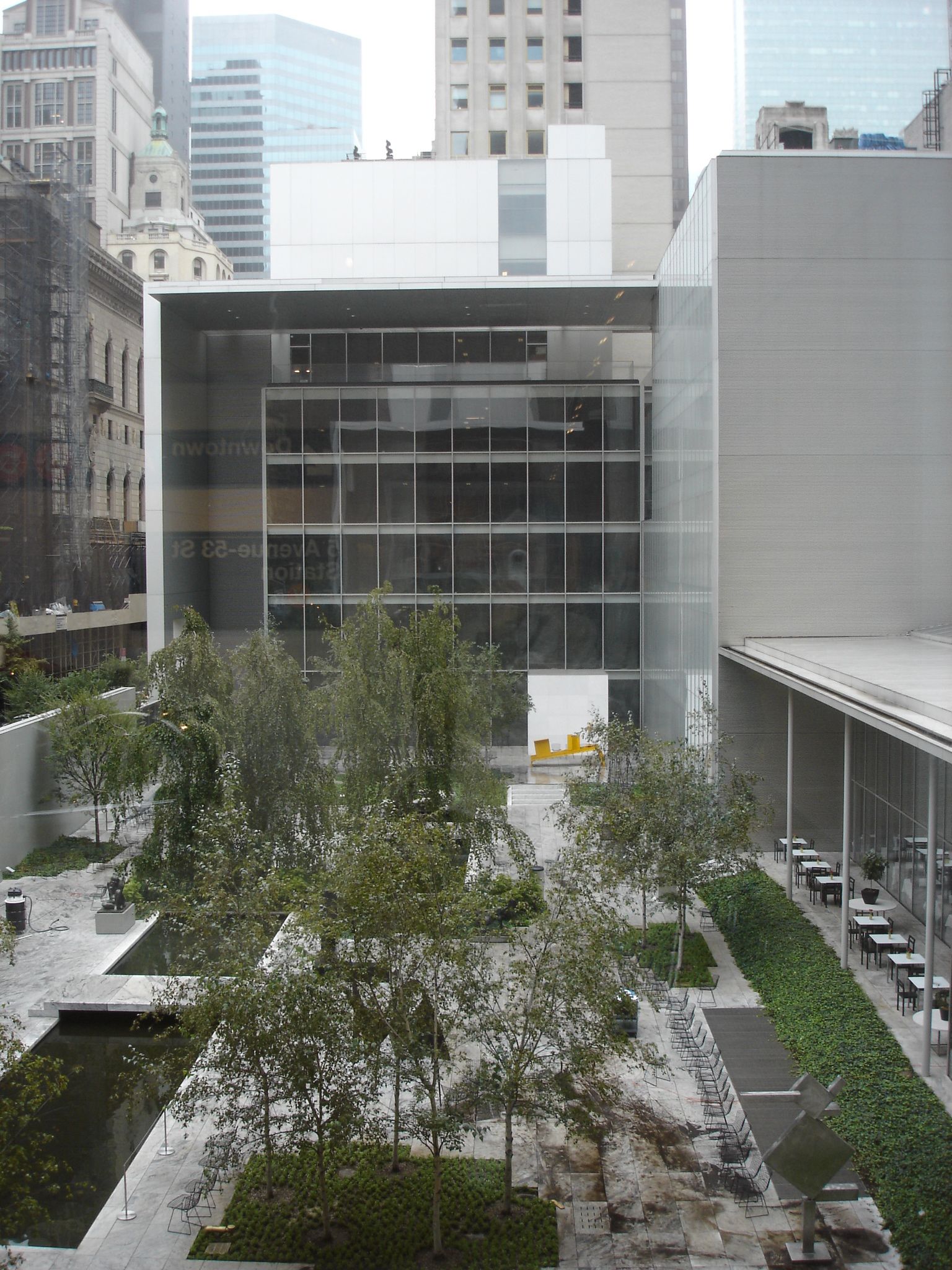
Museum of Modern Art (MoMA), New York
Source: Wikipedia
As interest grows exponentially amongst university and college students in North America and Europe who contemplate a career as provenance research specialists and who wish to specialize in this complex field which is highly inter-disciplinary, there is a correlative ethical question that accompanies such specialization: will they be able to treat historical evidence in an objective manner within the framework of litigation opposing a so-called good faith purchaser (current owner) to a claimant purporting to be the rightful owner? Will provenance research become like any area of specialty where legal conflicts divide experts between pros and cons over the same body of evidence, fueling potential misuse of historical documentation, testimonials, to suit the restrictive context of a litigation?

It is critically important for academic institutions, publishers, and individuals alike to produce detailed and unimpeachable analyses of the dynamics, mechanics, and processes of plunder as they evolved in each country under Axis control, the interrelationship between the market and State-sponsored plunder, the role of art professionals in the abetting of State-sponsored plunder and looting in territories occupied by the Nazis, and the postwar evolution of the art market within the framework of a failed policy of cultural restitution.