Showing posts with label Vincent van Gogh. Show all posts

25 May 2015

Happy birthday, Vincent van Gogh! Part Two


by Angelina Giovani

[Editor’s note: This is the second installment of the story of the “Portrait of Dr. Gachet” by Vincent van Gogh. The first part, entitled “Happy Birthday, Vincent van Gogh: Portrait of Dr. Gachet, a book review” was posted on March 30, 2015.] 

Paul Cassirer
In 1904 Paul Cassirer, born in 1871 to an upper middle class family, displayed van Gogh’s Portrait of Dr. Gachet, at his Berlin Gallery, strategically situated next to other modern dealers such as Fritz Gurlitt, Keller & Reiner, and Schulte. Unlike other dealers, Cassirer had managed to establish a working connection with Johanna van Gogh-Bonger, mainly because he never argued with her high prices. Committed to introducing the French avant-garde in Germany, he had borrowed nineteen canvases from Johanna van Gogh-Bonger in 1901 and organized Germany’s first substantial van Gogh exhibition. Cassirer sold The Portrait of Dr. Gachet to Count Harry Kessler who also bought Maurice Denis’ Mother and Child which Ballin had consigned at the same time as Dr. Gachet. Kessler paid Cassirer 3,378 German marks for both works.

The arrival of the Portrait of Dr. Gachet coincided with a transition period during which Berlin was replacing Munich as a primary market for contemporary art in Germany. Unlike other places the Berlin bourgeoisie had a liberal taste for the modern, and proved to be a perfect audience for van Gogh’s work. At the time that Kessler bought Dr. Gachet, there were altogether seven paintings by van Gogh’s in German private collections: Karl Osthaus, Hugo von Tschudi and Julius Meier-Graefe. After the sale of Dr. Gachet to Kessler, the Stedelijk in Amsterdam and the Salon des Indépendants in Paris held van Gogh retrospectives. Sales picked up and, in 1905, Cassirer sold a total of twenty paintings by the Dutch master. Prices doubled in as many years, however, Johanna van Gogh-Bonger did not grant Cassirer the honor of being her ‘sole agent for Germany’. Up until the outbreak of World War I in 1914, Cassirer enjoyed continuous success. He signed a contract to publish van Gogh’s letters, and bought 151 works. Other collectors were also expanding their collections, such as Helene Kröller, a wealthy art history major from Essen, and an American-born pharmaceutical magnate, Alfred C. Barnes, the first American to own a van Gogh. 
Count Harry Kessler

Count Harry Kessler was born in Paris in 1868. He was the son of Adolf Kessler, a Hamburg banker, and Alice Blosse-Lynch, an Irish explorer’s daughter. He was educated in England and Germany, traveled a lot and wrote for Pan, an Art Nouveau journal, Pan. In 1903 he was appointed director of the Grossherzogliches Museum für Kunst un Kunstgewerbe in Weimar. He brought the Portrait of Dr. Gachet to his house in Cranachstrasse, Weimar, which was designed by Henry van de Velde. The house itself was impeccably conceived to entertain and display the Count’s collection, the perfect vehicle through which to introduce The Portrait of Dr. Gachet to critics, artists, writers, and other members of the intelligentsia. For many, it was their first encounter with a van Gogh. As director of the Grossherzogliches, Count Kessler strove to turn Weimar into a center of modern culture. He organized monthly public exhibitions of Impressionists and neo-Impressionists which eventually drew rebukes from Weimar’s conservative circles. 

Four years after acquiring the picture, Kessler consigned Dr. Gachet with Eugène Druet, in Paris. A specialist in Postimpressionists, Druet had started out as a photographer of Auguste Rodin’s sculptures and made significant purchases of van Gogh works. The Paris art market was in constant evolution. After Cézanne's death, Ambroise Vollard organized Matisse’s first one-man show, Picasso completed Les Demoiselles d’Avignon, while Georges Braque produced his first collage. Collectors from Europe and North America dominated the Paris art market, driving Impressionist prices higher than ever before. Duet exhibited Dr. Gachet in 1908 together with thirty-five other pictures, and although the exhibition ran for twelve days, he did not sell a single painting. Despite this, the Portrait of Dr. Gachet stayed with Druet until February 1910, when he purchased it himself, for 14.000 francs. Then he lent it to Roger Fry, the British art critic and a leading painter in the Bloomsbury circle. Just like with the French, the British were not ready for van Gogh. A critic with the Daily Express called van Gogh’s works "unintelligible". Seeing how "England had no use for Dr. Gachet" the portrait returned to France.

The following year, on February 20, 1911, Druet shipped the painting to Georg Swarzenski, the director of the Städelsches Kunstinstitut in Frankfurt since 1906, an institution renowned for its Old Master collection. Prior to acquiring the picture, Swarzenski had seen it in Kessler’s house in Weimar and also at Galerie Druet in Paris. This was the first postimpressionist canvas to enter the Städel. Swarzenski planned to transform the museum into a shrine for modern art.
Georg Swarzenski
Swarzenski was barely thirty years old when he became director of the museum. He was born in Dresden to a Jewish merchant, and was initially trained as a lawyer before switching to the study of art history. His goals were not only that the Städel should expand its collection, but also that it compete with other great museums of Europe. The only way to do this was to expand the collection with Impressionist works. As a result he removed all plaster copies of Roman and Greek art from the museum floor, and within 2 years he acquired over 350 pieces of sculpture both from Europe and Asia.

By 1911, the tendency to buy Impressionist works from France stirred a protest called “A protest of German Artists” fueled by 140 participants consisting of conservative artists, critics and museum directors.  Swarzenski asked Victor Mössinger, a businessman who later became his father-in-law, to purchase Dr.Gachet and donate it to the Städel.

On August 3, 1914 Germany declared war on France. Communication between art world figures in France and Germany became more complicated. The advent of war severed ties between Johanna van Gogh-Bonger and Paul Cassirer who was inducted into military duty as was Swarzenski. At war’s end in 1918, Swarzenski ordered that construction resume on the modern galleries, which were completed in 1923. By 1928, Swarzenski wore many hats in the Frankfurt art world, as head of the Städel and the Städtische Galerie but also of the Museum of History, and the Museum of Art and Crafts. Until the mid 1930, van Gogh and his works gave rise to new art historical writings as well as treatments in psychological and psychoanalytical literature.

In Spring 1933, months after Adolf Hitler rose to power in Germany and, with him, the Nazi Party, Swarzenski removed Dr. Gachet from the walls of the Städel and locked it in a room under the museum’s roof together with a lot of Expressionist paintings. On March 12, the Reich Ministry for Public Enlightenment and Propaganda was established under Dr. Joseph Goebbels. His mission was to align German culture with the ideology of the Nazi party. In September 1933, he established the Reichskulturkammer (Reich Chamber of Culture) which among other things imposed strict controls on the production of art in the Reich as well as on art exhibitions and the art market. Nazi ideology condemned modern art and labeled as ‘degenerate’ all forms of German and French Expressionism.

On March 13, 1933, Frankfurt’s Socialist mayor was replaced by Göring, and within weeks Swarzenski was suspended from his position as director at the Museum of History, the Museum of Arts and Crafts, the Städtische and his position as professor at the University of Frankfurt. Yet, Swarzenski managed to remain as director of the Städel, which was a private foundation and technically the Nazis had no jurisdiction. Still, he was summoned before a commission, and only managed to hold on to his position thanks to the Lord Mayor, Friedrich Krebs, who had been an early member of the Nazi party and oversaw the closing of over 500 Jewish-owned businesses in Frankfurt during the first year of the Third Reich. Krebs also belonged to Alfred Rosenberg’s Combat League for German Culture, a rival of Goebbels’ Ministry to promote Nazi-approved art and attack modernism. Krebs did not consider Swarzenski as a threat.
Friedrich Krebs
In 1935, Swarzenski met Alfred Barr, director of the Museum of Modern Art of New York (MoMA), at the Parisian gallery of Paul Rosenberg.  At this meeting, Barr asked to borrow Dr. Gachet for a van Gogh retrospective that he was organizing at MoMA. Upon his return to Frankfurt, Swarzenski wrote to the "Ministry in Berlin" requesting permission to lend the painting. The Ministry denied the request. Alfred Wolters, the Nazi-designated successor of Swarzenski as director of the Städtische, dispatched a photograph of Dr. Gachet to Goebbels, at his request. Communication between Wolters and the Ministry focused on paintings in the museum’s collection that could be sold for a profit. Wolters, a close friend of Swarzenski, explained that selling Dr. Gachet would be a terrible loss for the city of Frankfurt. Moreover, it had not been acquired with city funds, but had been a gift of a private citizen, Victor Mössinger. Friedrich Krebs, a vocal opponent of modern art, also wrote to Berlin, asking that the Frankfurt collections should be spared. Dr. Gachet remained safe for the time being, while eleven paintings acquired by Swarzenski for the Städel were confiscated and taken to Munich and displayed at the Degenerate Art show which opened on July 19th, 1937.

On December 1st, 1937, Adolf Ziegler, one of the chief organizers of the Degenerate Art exhibit and a rabid anti-Semite, met Wolters and demanded five more paintings to be delivered to the Propaganda Ministry, including Dr. Gachet.  Stalling for time, Wolters asked the Ministry for an official written request. Wolters was able to buy only a few days. The Portrait of Dr. Gachet was taken out of storage.  It left the museum on December 8, 1937, a move reported in an article published by the Frankfurter Allgemeiner Zeitung (FAZ). Johanna, Victor Mössinger ’s wife, read the article and inquired about the painting’s whereabouts. No one knew that the painting had ended up at a Berlin museum depot for "degenerate art" on Köpernickusstrasse, along with tens of thousands of other art works slated to be destroyed. The Portrait of Dr. Gachet by Vincent van Gogh was number 15,677.

30 March 2015

Happy birthday, Vincent van Gogh! Portrait of Dr. Gachet, a book review

by Angelina Giovani 

Portrait of Dr. Gachet, van Gogh (1890) First version

[Editors' note: One way to celebrate Vincent van Gogh's birthday is to reminisce about one of this most important works of art, Portrait of Dr. Gachet. Angelina Giovani reviews Cynthia Saltzman's captivating history of a painting executed by van Gogh shortly before his untimely death in mid-1890.]

The Portrait of Dr. Gachet, by Cynthia Saltzman, came out in 1998. This unusual book traces the provenance history of a portrait that Vincent van Gogh painted of his doctor in 1890, shortly before he took his own life. Saltzman provides us with the context and circumstances of the portrait’s creation, focusing on the first of two versions which van Gogh painted, the profiles of the people involved in the many transactions that marked its history and the state of the art market in Western Europe at the beginning of the 20th century.

The story begins when Vincent van Gogh is 37 years old and had already created a large body of work, amounting to over 600 paintings and drawings. Even though he had not made any profit from his paintings, his brother Theo received his works, while he was based in Paris, acting as Vincent’s dealer. Their close relationship comes out clearly in the letters that Vincent and Theo exchanged during the years, which also shed light on other close relationships that van Gogh had built with other artists of his time, such as Gauguin, Signac, Pissarro, etc. Pissarro recommended that Dr. Gachet look after Vincent’s health which had deteriorated. There are still many theories on van Gogh’s diagnosis. Although we will probably never know exactly what he suffered from, the more plausible theories center on acute mania with hallucinations, depression and melancholia. He met Dr. Gachet on May 20, 1890 and immediately realized that Gachet could not help him; at times Vincent was concerned that the doctor might be more ill than he was. Nevertheless, by June 3, van Gogh had started painting his portrait. Art historical analysis and research into the iconography and history of styles tells us that the portrait is not a simple objective portrait of the doctor. Van Gogh drew his inspiration for this work from two sources. The first one was Delacroix’s Tasso in the Hospital of St. Anna, Ferrara (1839) and the other was Puvis de Chavannes’s Portrait of Eugène Benon (1882). Ever since its conception, the painting has never been viewed as just a portrait. It embodies the artist’s philosophy regarding his work. The general consensus is that it should be read on a symbolic level.
Vincent van Gogh

The period from January to July 1890 was a troubled time for Van Gogh. His condition worsened in the days that led up to July 28th when he shot himself with a revolver. Van Gogh died the next day, soon after Theo had reached Auvers-sur-Oise, a small town north of Paris. Theo inherited approximately 600 works produced by his brother, from which about 70 were produced during his time in Auvers. The Portrait of Dr. Gachet was among them. Theo moved the Auvers paintings to Paris, together with the 600 paintings and 350 drawings already in his possession. Theo struggled between trying to sell his brother’s works and trying to get him the recognition he believed he deserved while keeping his own health. Paul Durand-Ruel refused to help Theo sell any paintings, so Theo’s only option was to hang the works in hi
s apartment at 54, Rue Lepic. With the help of Emile Bernard, Theo managed to hang 350 paintings. A list of the works was compiled by Theo’s brother in law, Andries Bonger. As the story goes, Theo did not live to see these paintings sold, as he passed away, six months after his brother’s death on January 25, 1891.
Theo van Gogh


Johanna van Gogh-Bonger
After Theo’s death, his wife Johanna van Gogh-Bonger inherited all of Van Gogh’s works. Troubled and uncertain about what would come next, she decided to leave Paris and together with her son, Vincent Willem van Gogh, moved to the Netherlands. In the span of a few months she managed to bring most of the paintings with her. She was convinced that the paintings would find a broader audience and that the local art scene would embrace van Gogh ‘as a painter in the Dutch tradition’. Her instinct proved right, since by February 1890, Van Gogh’s work had already seeped into the Dutch art market. Ten paintings were on display at Buffa Galleries in Amsterdam and another twenty at the Oldenzeel Gallery in Rotterdam. A few months later in 1892, a retrospective of forty-five paintings was organized at the Hague and in 1893 an even larger show took place at the Kunstzaal Panorama, in Amsterdam. Finding a market for the paintings was an immense undertaking, but it came second to Johanna’s most major undertaking which was collecting and transcribing Theo’s and Vincent’s correspondence, which amounted to over 600 letters. She put the letters in chronological order and organized them in an edition which she completed on July 28th 1914 a few days before the outbreak of World War I, 24 years after van Gogh had shot himself. Johanna’s edition was published initially in French and Dutch, then in German. She worked on an English version until the end of her life in 1925. That edition was published in 1928. The letters played an important role in how the world would come to view van Gogh. The letters and her careful selection of what to reveal to the world helped create a myth around van Gogh, which romanticized his condition and depicted him as the tortured genius misunderstood by the society of his time.

In 1893, the first request to exhibit the Portrait of Dr. Gachet came from a Danish group called Free Exhibition (Den Frie Udstilling) founded in 1891 and headed by Johan Rohde. He considered van Gogh to be 'the greatest Dutch painter of the century’. The portrait was selected along with twenty other paintings and was singled out by critics who interpreted it as symbolic rather than an accurate description of the sitter. The choice to include works from van Gogh and Gauguin in the exhibition in Copenhagen, was not only a testimony of growing interest in these artists, but also of a rising appreciation for the French avant-garde throughout northern Europe. Most of the works on display were for sale, but The Portrait of Dr. Gachet was not one of them.

Durand-Ruel could not or did not want to sell van Gogh paintings. Even when he agreed to take some works on consignment from Johanna, he ended up returning all of them. The only other person in Paris selling van Goghs was the Tanguy family who owned a paint shop and to whom Theo had consigned works which they ended up keeping, since there was no full inventory of these works. But in the French art market, these works were fetching less than half the price of their equivalents in the Dutch art market. At a Hôtel Druout sale organized to benefit Julien Tanguy's widow, two van Gogh paintings came up for sale and Ambroise Vollard bought one of them. At that time, Vollard had barely entered the Paris art market. His gallery space was tiny but strategically placed among the more important galleries, close to Durand-Ruel and Benheim-Jeune. Soon Vollard contacted Johanna and asked her for some paintings with the intentions of exhibiting them. He sold one of these paintings, Salle de Restaurant. A larger exhibition was organized in November 1896, and included the Portrait of Dr. Gachet, which hadn’t been seen in Paris since it hung in Theo’s apartment before his death. Vollard bought the portrait along with 5 other paintings and 10 drawings for 2000 francs. The sale of these paintings market the end of Johanna’s dealings with Vollard. That being said, Vollard kept selling van Gogh’s that he was acquiring from other sources, filling the gap left in the market by Theo’s death.

Alice Ruben was an artist and occasional member of Copenhagen’s Free Exhibition Group when she first came across van Gogh’s work. Upon a visit to Paris, Alice Ruben saw the portrait in Vollard’s new gallery in 1897 and bought it. Vollard’s sparse records indicate at least one payment of 200 francs on April 30, 1897 but there are no further records concerning the finalization of the transaction. Alice and her husband brought the picture back to Denmark. Her family’s upper-middle-class roots gave her financial stability that allowed her to collect contemporary art. She spoke a number of languages and had multiple connections in the art world. She knew Johan Rohde and many avant-garde Danish artists. It still is not known to us why Alice chose the Portrait of Dr. Gachet in particular, but she certainly appreciated it a great deal. The photograph below depicts Alice lying in bed. Resting on her night stand is the Portrait of Dr. Gachet along with a painting of mother and child by Maurice Denis.

Alice Ruben in bed next to Dr. Gachet
Mogens Ballin and his wife, by Felix Vallotton
Both paintings in the picture were transferred before 1904 to Mogens Ballin (1871-1914). Like Alice, Mogens was also an artist and collector. He also came from a well-established Jewish family in Copenhagen. Curiously, Mogens had been one of the few people interested in van Gogh’s oeuvre right after his passing, and had visited the apartment where Theo displayed Vincent’s works. Mogens considered bringing the portrait back to Paris to sell it. Aware that there still was little interest in van Gogh’s work and that Gachet might end up in storage, he decided to take it to Berlin.

(to be contined)...

10 January 2012

"Der Garten Daubignys," Vincent van Gogh


Shortly before the troubled, inspired, and heartbreaking life of Vincent van Gogh came to a violent end on July 29, 1890, at Auvers-sur-Oise, he produced a series of oil paintings focused on the garden of the painter Charles-François Daubigny.  One of them was "Der Garten Daubignys" or "Le Jardin de Daubigny" or "Daubigny's Garden", painted at some point in June 1890, and measures 53 x 103 cm.

Der Garten Daubignys, Charles-Francois Daubigny
Source: Wikimedia
In 1929, Ludwig Justi, director of the National Galerie in Berlin paid 240,000 Marks for “Der Garten Daubignys [Jardin de Daubigny/Daubigny’s Garden] which he acquired from renowned Paris art dealer, Paul Rosenberg.

In 1938 the National Socialists accelerated their war against all forms of “degenerate” art by enforcing the de-accesioning of those works deemed to be objectionable and antithetical to the new racially-tinged esthetic creed, which could be found in cultural institutions subsidized by the State. As part of this purging campaign, the National Galerie in Berlin was forced to disgorge its “degenerate” art including three oils by van Gogh, one of which was “Der Garten Daubignys.” According to Franz Roh, Hermann Goering took custody of the three paintings and sold them with the help of one of his trusted dealers, Josef Angerer, who later served Goering in a similar capacity—seizing and brokering sales of looted cultural assets—across German-occupied Europe. The “Jardin de Daubigny” presumably fetched 150,000 Reichsmarks for the Reich. The buyer of the van Gogh painting was a German-born banker, Franz Koenigs, who, as a result of his antipathy towards the National Socialists, elected to move to neighboring Holland, converting much of his cash into cultural assets. Koenigs became a naturalized Dutch citizen in 1939.

According to Jeannette Greenfield, Koenigs sold the “Jardin de Daubigny” to Siegfried and Lola Kramarsky. However, based on information gleaned from the Sage Recovery website, Koenigs had sent to Knoedlers Gallery in New York for safekeeping another van Gogh painting, “Portrait of Dr. Gachet”, purchased under similar circumstances as the “Jardin de Daubigny” following its de-accession from a Frankfurt museum. Kramarsky then “took” Gachet as collateral for an unpaid loan consented to Koenigs by Kramarsky’s bank, Lisser and Rosenkranz. Koenigs died in 1941 presumably at the hands of the Gestapo. Did the “Jardin de Daubigny” follow the same path as “Dr. Gachet”? Publicly available information does not shed light on this particular aspect of the transaction. Suffice it to say that the painting remained in New York in the private collection of the Kramarskys for many decades.

Enter the Japanese. Flush with capital at the height of an economic and financial boom in the 1980s and 1990s, Japanese bankers and investors go on massive shopping sprees in the West and buy up for then-astronomical sums masterpieces by Impressionist painters. Van Gogh paintings are snapped up at outrageously inflated prices in headline-grabbing auctions.

The Hiroshima Museum of Art opens its doors in 1978. It is not clear whether the “Jardin de Daubigny” is “present at the creation” or enters the permanent collection of the Hiroshima Museum thereafter. But it does currently adorn the walls of Gallery 2 of this famed Japanese cultural institution. Jeffrey Archer indicates that this version of the “Jardin de Daubigny” went to the Nishido Gallery in Tokyo. That fact is impossible to verify.

Does the saga end here? Not quite, since for decades, a pall of suspicion has been cast over “Der Garten Daubignys” as a possible forgery produced by a French painter who had fallen in love with van Gogh’s works, Emile Schuffenecker.  Even the Japanese subjected the painting to a series of rigorous forensic tests using state-of-the-art technology to ascertain its authenticity, which they maintain to this day.

Hence, here we have a late masterpiece by van Gogh, illegally removed from the walls of a German State collection, sold to raise cash for the Reich, purchased by a German-born banker, and acquired under less than clear circumstances either in Holland or in New York, which now hangs on the wall of a museum in Japan. Who is the rightful owner? According to a statement released by Christine Koenigs in April 2000, the “Jardin de Daubigny” is listed as one of many works “displaced” from Franz Koenigs’ collection.

20 November 2011

Pearls from Brazil

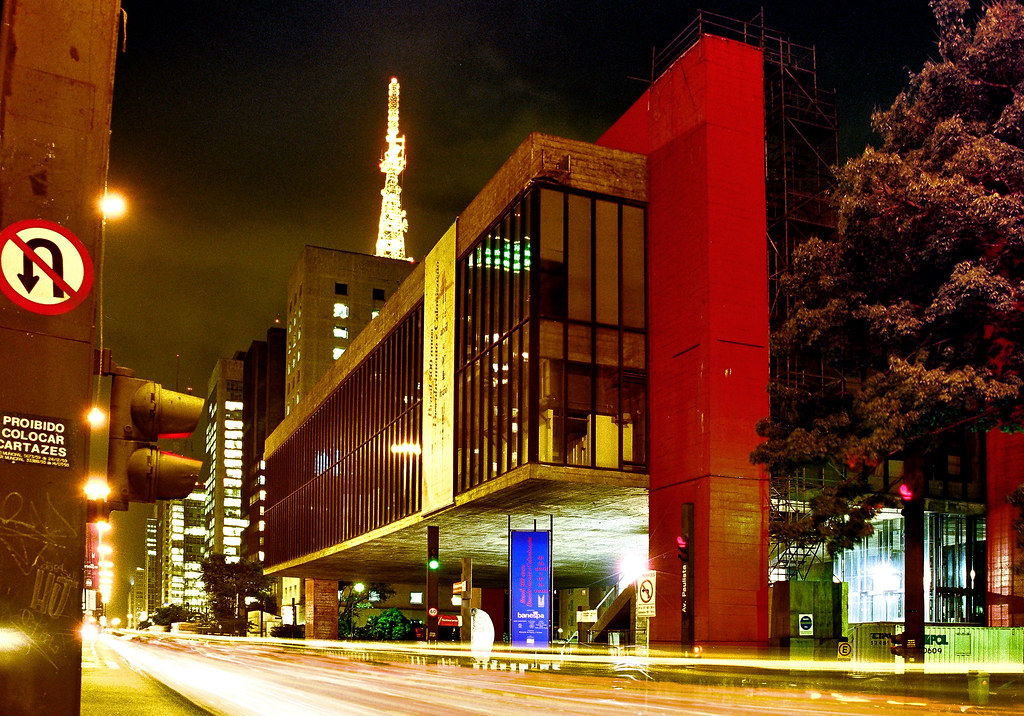
São Paulo, Brazil, boasts one of the finest art museums in the Southern Hemisphere, something to make its friends in Buenos Aires squirm.

MASP - Museu de Arte de Sao Paulo
Source: Flickr via Fernando Stankuns
Seal of Sao Paulo
Source: Wikipedia
Founded in 1947, or two years after the end of the Second World War, the Museu de Arte de São Paulo (MASP), acquired works by Old and New Masters alike until it can now brag that it holds more than 8000 objects in its collection.

Currently on display at MASP are portraits and self-portraits by the likes of Goya, Manet, van Gogh, Modigliani, Renoir and others of equal esthetic caliber.

Any desire to know more about these works—their history, their previous owners, past exhibitions, publications in which they appeared—leads to … nothing. Anyone curious to find out additional information must undertake the research using available tools… like the Internet.

Let’s see what we get:

Le Gamin au Képi, Vincent Van Gogh, 1888
Source: ArtFinder
On May 1, 1995, Christie’s in New York sold a painting entitled “Jeune homme à la casquette,” produced in November-December 1888, by Vincent van Gogh, for $13,202,500 as “the property of a European gentleman.” The provenance is fairly well fleshed out. It tells us that K. Neumann, from Barmen, acquired the painting from Justin Tannhauser on July 17, 1923. The next owner is Dr. Fritz Nathan, of Zurich, Switzerland, a leading art expert, appraiser and collector in his own right. He bought it in 1947 from K. Neumann. The K. Neumann most likely refers to Karl Neumann who, at the time, had owned another painting by van Gogh entitled, Landscape near Arles, which is now at the Indianapolis Museum of Art, in Indianapolis, IN. Neumann had sold this painting to Tannhauser between 1918 and 1927. This Mr. Neumann lived in a town called Barmen, outside of Wuppertal in Western Germany. The neighboring city of Wuppertal absorbed Barmen in 1930.

The only question to ask here is: how did Karl Neumann hang on to a van Gogh painting for the entire period of the Third Reich? We do know that the Nazi regime investigated all transactions by Jewish dealers, especially as regards to objectionable works like those by Impressionists, Post-Impressionists, and Expressionists.

Portrait of Suzanne Block, Pablo Picasso, 1904
Source: Wikipedia
Although the provenance is impeccable, the history of the painting is worth a short documentary. “Suzanne Bloch” was one of the first works to be acquired by the MASP in 1947, with financial assistance from Walter Moreira Salles, the founder of Unibanco. Sixty years later, on December 20, 2007, thieves made off with the painting. The Sao Paulo police recovered the painting undamaged one month later.

Walther Moreira Salles
Source: Instituto Moreira Salles

05 June 2011

Van Gogh's 1889 depiction of his mutilated self smoking a pipe--PR 144

In a catalogue of works from the private collection of Mary and Leigh Block of Chicago, IL, the first painting that one sees is an iconic work by Vincent van Gogh, the result of an unfortunate absinthe-laced binge which led to the legendary self-mutilation of the chronically depressed visionary Dutch-born artist's right ear. Known as the “Dutchman Smoking a Pipe [Hollandais à la Pipe]” or « l’homme à l’oreille coupée », the Block catalogue merely refers to it as « Self-Portrait, » which ironically is also the title given to it by the art historical staff of the Einsatzstab Reichsleiter Rosenberg (ERR) in 1944.
Autoportrait à l'orielle bandée, Vincent Van Gogh
Source: Wikipedia  

As is so typical of art catalogues, no hint of a work’s peculiar history is provided, especially when it involves something so egregious as a Nazi-organized theft. And yet, it was exhibited at Boston’s Museum of Fine Arts from February 2 to April 14, 1968.

Van Gogh’s “Self-Portrait”, executed in 1889, one year before his suicide, belonged to the world-class Parisian art dealer, Paul Rosenberg. In a preventive move to safeguard most of his priceless collections of modern works of art from the vagaries of an inevitable continental war in 1939-1940, Rosenberg shipped the works to various locations in the southwest of France, including a château that he had rented at Floirac and a bank vault at the Banque Nationale pour le Commerce et l’Industrie (BNCI) at Libourne.

PR 144
Source: ERR Project via Bundesarchiv
The “Self-portrait” was stored, unframed, at Libourne and bore Rosenberg’s inventory No. 2215. Following the Nazi takeover of half of France in May-June 1940, a specialized unit of German agents, informed by unscrupulous Paris-based art dealers, appeared at the BNCI branch in Libourne to remove more than 160 works belonging to Paul Rosenberg. They were first taken to the German Embassy's Paris depot on rue de Lille before being transferred to a storage area at the Louvre which had been set up to accommodate the initial seizures made by the Einsatzstab Reichsleiter Rosenberg (ERR) as well as those conducted by police units answerable to the German Ambassador, Otto Abetz.

Alois Miedl, one of Hermann Goering’s preferred bankers and intermediaries in illicit art acquisitions, was most famous for his role in the Aryanization and seizure of the Goudstikker Collection in Amsterdam. His relationship with Goering entitled him to gain access to choice pieces stolen from French Jewish collections including van Gogh’s “Self Portrait.” Together with a dozen other modernist works, Miedl shipped the stolen paintings to Switzerland by way of the German diplomatic pouch and the crate containing them was placed at the Volksbank in Zurich under the care of a Dr. Wiedekehr.

Subsequent to Miedl’s arrest in the late summer of 1944 as he tried to cross the Franco-Spanish border with his family, Allied intelligence operatives located the stolen works that he had sent covertly to Switzerland, leading to their eventual repatriation to Paris and subsequent restitution to Paul Rosenberg.

The only concrete evidence that we have of the painting’s presence at the Jeu de Paume is the card that the ERR staff typed under the number PR 144 as well as the photograph taken of the work.
PR 144
Source: ERR Project via NARA


The next time this painting is ever exhibited, the public might be interested in knowing the tortuous path that it followed from Paris to a bank vault in Libourne and from there to the German Embassy on rue de Lille, the Louvre, the Jeu de Paume, and finally Zurich, before returning to Paris and ultimately sold to a Chicago-based family.