Showing posts with label cultural heritage. Show all posts

01 November 2025

Rose Valland mania

by Marc Masurovsky

Many books have been published about Rose Valland, the unsung French heroine of WWII in her quest to recover and protect France’s cultural heritage. One might ask if her idea of cultural heritage also included works produced on French territory by Jewish artists who elected to live and work in France before ending up in the crematoria and gas chambers of the Final Solution. The answer to that question lies in the copious notes she left behind.

Regardless of how she felt (the subject of another text), it might be instructive to give you a quick overview of the many volumes and visual productions that have created a "persona" for Rose Valland as a creature of the French museum world who rose above the fray to do the unimaginable in times of war—put her life on the line to document the plunder of art collections during the Nazi occupation of France (1940-1944). She was passionately devoted to a certain idea of the cultural heritage of her nation, ready to defend it at any cost, even if it meant sacrificing her own life. Truly admirable.

Here is a brief recap of monographs published in French and English since 1961 when the “Front de l’Art (Art Front)”, Rose Valland’s account of her wartime defense of French cultural heritage appeared in its original French edition at Editions Plon. There followed two updated French editions of the “Art Front” in 1997 and 2014. The first English-language edition of the “Art Front” came out in 2024.

Books

1961 
Le front de l’art, défense des collections françaises, 1939-1945 Rose Valland, Plon, 262 pages

1997 
 Le front de l’art, défense des collections françaises, 1939-1945 Rose Valland, RMN 262 pages

2008 
 Rose Valland : Résistante pour l’art, Frédéric Destremeau

2009 
Rose Valland, Capitaine Beaux Arts, Tome 1 Claire Bouilhac, Catel, Emmaneul Polack

2014 
 Le front de l’art, défense des collections françaises, 1939-1945 Rose Valland, RMN (update of the 1997 edition), 403 pages

2016 
Le livre de Rose, Emmanuelle Favier (Editions les Pérégrines)

2024 
 L’espionne à l’œuvre, Jennifer Lesieur

2024 
The Art Front : The Defense of French Collections, 1939-1945, Rose Valland

Rose Valland’s notebooks are translated and annotated in an English-language version, courtesy of the Monuments Men and Women Foundation. 

2025 
The Train, John Frankenheimer

2014
 “The Monuments Men” starring George Clooney, Matt Damon, Cate Blanchett (in the role of Rose Valland).

2015 
Rose Valland, l’espionne aux tableaux (the Art Spy) by Brigitte Chevet. Aired on May 4, 2015, as an episode of La case de l’oncle Doc

Rose Valland mania spread to the French educational sector.

Schools and institutes named after Rose Valland

Collège Rose Valland, Saint-Etienne-de-Saint-Geoirs

Ecole élémentaire publique Rose Valland, Le Mans

Ecole Rose Valland

Institutes

Even a research institute bears her name in Berlin, Germany.

Rose Valland Institut, Berlin

Parting thoughts

We cannot cry over spilled milk. Strong-willed women (Evelyn Tucker, cultural advisor to the US zone of occupation in Austria, and Ardelia Hall, cultural officer in the US Department of State (1944-1961), Rose Valland, cultural officer in charge of recoveries of French cultural treasures) fought an uphill battle to implement Allied restitution policies so as to provide some measure of justice to the victims of National Socialism. 

Life is what it is. Words are one thing. Deeds are quite another.  Something that these three outstanding women found out and fought through in order to assert a policy that was quickly reneged by the very people who shaped them. Alea jacta est.

We haven't forgotten them and we honor them. Role models. We need them now more than ever.

Sources

Photo courtesy of "The Collector."


13 January 2017

What is to be done?

by Marc Masurovsky

Locating looted art in public and private collections, auction houses, galleries, is one thing; recovering these plundered objects is quite another.

The search for looted cultural assets is extremely tedious. Some people get lucky with “low-hanging fruits” like well-defined provenance information for objects being offered for sale or being displayed in a museum, which contains critical information that might lead to a match between the object and a plundered owner.

Those instances are rare.

The tedium of research concerns all other objects—weeks, months, sometimes years of research, often led by one or two people, most of the time on a part-time basis because there is no reliable source of money to underwrite such an investigative and analytical effort.

If progress has been made on documenting cultural losses at the hands of the Nazis and their collaborators over the past twenty years, there has been no progress in establishing a solid, long-term funding mechanism to ensure that research into the ownership histories of countless objects and their location is sustained over a long period of time.

To remedy this chronic shortage of funds for research into the looted cultural heritage of the Jewish people, historians, investigators, researchers, even curators, have tended to focus their attention on single collections and/or a small clutch of plundered objects. These efforts aim to clarify the history of objects coming from a single owner, or located in a single museum or collection. But even those efforts are lengthy, arduous, and end up yielding few fruits, for all sorts of reasons, the main ones being lack of capital and legal and logistical obstacles to gain access to relevant data.

How does one resolve this paltry state of affairs?

One cannot locate any looted object if one does not devote the needed resources to conduct solid, forensic, investigative research into its whereabouts, ensuring that it is the correct one, locating its potential owners, and if there are none, declaring the looted object to be heirless property.

What does one do with objects deemed heirless? Remember that heirless property is simply unclaimed property for which no owners have been found ---yet. Since there are no well-funded research organizations or institutions in the business of searching for these objects’ rightful owners, they remain to a large extent heirless, deprived of their history, their context and their identity.

For instance, Jewish museums are stocked with heirless objects, coming from communities that have been systematically erased from the face of the earth. But not all displaced objects in Jewish museums are heirless. The mission of Jewish museums is to safeguard these objects, not necessarily restitute them. Hence, when faced with a restitution claim, a Jewish museum is more likely to behave like most art museums by opposing the act of restitution which would require deaccessioning the claimed object from its collection.

Governments of nations that were subjected to the horrors of Nazi and Fascist policies and global war, hold untold numbers of objects which were “found” at war’s end.  So far, little to no information has been released which can help apprehend the true extent of this seventy-year old problem.

The Russian puzzle is the most egregious. So-called “trophy art” picked up by specialized Soviet military units in all territories that the Red Army “liberated” in the months before the end of WWII is stored in museums across the ex-Soviet Union. Most of the objects that the Red Army “repatriated” as compensation for Soviet losses are presumably concentrated in what is now the Russian Federation, Byelorussia and the Ukraine. But there is also looted cultural material belonging to exterminated Jewish communities in the custody of governments in Latvia, Lithuania, and Estonia, to name a few.

In an ideal world, the most logical way to address the question of researching and documenting the complete history of cultural plunder between 1933 and 1945 is to orchestrate a massive inflow of research monies and establish an international research and documentation infrastructure. Only in this way can one address systematically the full scope of looted cultural heritage (outside of Judaica which has attracted significant attention over the past decades) of the Jewish people, identify the location of plundered objects, figure out which ones have still not been restituted, match them with their rightful owners. If there are none, then the question of heirless property comes into the picture.

A vast international, even transcontinental, network or infrastructure of research institutions facilitated and nurtured by a mix of government agencies, independent organizations, and academic centers across the Americas and Europe should coordinate this effort. This is not a one-or three-person job. In order to get a handle on what was stolen, where, when, by whom, sold and resold to whom and where and when, one needs a small army of intelligent, motivated, educated, trained, PAID, worker bees.

There is a strong likelihood that “heirless” objects having once belonged to Jewish owners before the Holocaust era ended up in the permanent collections of museums, be they State-controlled or privately owned.

How does one persuade these cultural institutions to deaccession heirless objects which they argue were acquired in good faith and have no owner?

How does one convince governments which control cultural institutions holding such objects to return them? And to whom? Even in Israel, this policy is controversial.

The solutions to the above have always been complicated and laced with political overtones. Art makes people irrational. For an institution to part with an object is fraught with strong emotions and potent defenses against such an act, even it is for a good cause, even if restitution through deaccession is meant to heal wounds and provide a small gesture towards an act of justice. It goes against the grain of museum practices worldwide to restitute.

To end on a less negative note, it is worth exploring the different ways that exist to restore a modicum of justice to the victims of cultural plunder. But those approaches need to be anchored in victims’ rights, not in private property law and antiquated notions of cultural patrimony. In and of itself, such an approach could open new doors on how to manage in a more ethical way tomorrow’s museums and the global art trade.

And above all, a massive amount of money is needed in order to rewrite the history of looted objects, return them to their rightful owners, and establish much better practices in the global art market, the museums that display objects, the galleries and auction houses that buy, display, and sell, and the collectors and dealers who do the same.

Higher ethics, stringent due diligence, thorough provenance research and true transparency, transparently clear (as opposed to less opaque), like a sheet of cellophane or saran wrap, your choice. That is the goal.

25 May 2015

Monday afternoon rant: is cultural destruction in the 21st century inevitable?

by Marc Masurovsky
Palmyra
 As the world sits by and watches ISIS forces overwhelm the town of Palmyra, shudders go down our collective spines and dread overcomes us as we wonder: what will the fundamentalist warriors of the Daesh do to the archaeological treasures that lie beneath the surface of Palmyra?
"cradle of civilization"

The so-called “cradle of civilization” that we all grew up with has survived assaults for thousands of years, stemming from the rise and fall of previous caliphates, kingdoms and empires vying for influence in the Crescent.

The US Congress is readying to pass a law that enshrines an organic connection between national security and cultural heritage. If the law passes, the US will appoint, at no extra cost to the US treasury, an international coordinator whose job it will be to stay on top of the constant assaults against culture in conflict zones at the hands of “terrorists” and assess how those acts affect American national security and evaluate strategies on how to counter those assaults.  It is undeniable progress that the debate over cultural heritage has led to the explicit necessity to coordinate international efforts to protect cultural sites from destruction wrought by armed maniacs.

The secretary general of UNESCO, Irina Bokova, has shared her outrage about the events unfolding in war-battered Syria and its neighbor, Irak. How bad does it have to get when governments allow themselves to be eaten up alive and watch the legacies of thousands of years of culture vanish before their eyes on their own territories? Worse. What does it say about them? What does it say about us?

What does outrage alone do to stem the tide of destruction?

The German Minister of Culture, Monika Gruetters, expressed her own dismay that Germany had become a turnstile for “conflict antiquities” streaming from areas controlled by ISIS and other zones under the control of armed groups in the Mideast. She went as far as threaten to regulate the trade in antiquities by requiring a complete and detailed provenance for each item entering or exiting Germany, an effort that could lead to placing a chokehold on the illicit trade in “conflict antiquities” at least in Germany.

The trade has responded in kind reiterating its oft-proffered self-serving defense that it can police itself and its members are honorable and would never trade in anything illicit. If not them, who is?

We know by now that the global trade in looted antiquities operates on the same principle as the international narcotics trade. Where there is a demand, there is a ready supply. You don’t need to be a rocket scientist or a CIA hack or privy to the world’s darkest secrets to understand this truism. Why would anyone dig holes in the ground, extract from their matrix priceless artifacts that could help us understand the societies that produced them and for the thieves to go through all sorts of extra-legal gymnastics just to find out that there are no buyers? Most are not trained archaeologists, they seem to be guided by “scientists” and “experts”. They are under contract to perform a task whose aim is to supply looted antiquities in exchange for badly-needed money.

As it turns out, those who acquire looted antiquities are everywhere, the market can barely keep up with the demand from individuals with disposable incomes and deep pockets worldwide, generalists and specialists alike, who want these objects for reasons that we need not go into here. The international art trade and the antiquities market are fueling in part the ISIS strategy to overtake archaeological sites and pillage them, much like Chinese officials, desirous to sate their citizens' apparent addiction to ivory, are commandeering the mass killings of elephants and rhinoceroses in Africa.  Contract killing to fuel addictions with no regard for the environment and no respect for life on earth.  Like all addictions, they spread calamity everywhere. The collateral damage is irreversible.

What will the Chinese do when there are no sources of organic ivory left?

What happens when all the antiquities have been extracted? Will ISIS push into other countries like locusts and harvest more antiquities?

What kind of a world do we live in which tolerates such abuses? It’s as if history does not matter, we don’t matter anymore. Since the Nazi period, humankind has become far less human and has descended into a numbing tolerance and acceptance of the worst abuses that people could dream up against others. Actually, it’s not clear anymore what the word “human” actually means.

It’s as if the past does not count any longer except for the messages and images that ooze through our smartphones or other digital pop culture delivery mechanisms. There will always be pictures of Palmyra to enjoy and glean in quiet admiration and respect for what once was and is no longer. Sigh! So should we weep if the real thing disappears? After all, we always have Instagram.

Cowardice, cynicism and indifference fuel the ISIS strategy. The ISIS bullies on the Middle Eastern block are winning because they are well aware of our own impotence to act, much like the Serbian forces did during the Bosnia crisis of the early 1990s and the orchestrators of the genocide in Rwanda  in spring 1994, to name but a few human rights disasters, no, human, man-made disasters.

Perhaps history does not count anymore. Let’s just watch Palmyra turn into Swiss cheese and explain to the children that it’s ok.

If Palmyra does disappear or is transformed into a maze of mole-like tunnels denoting systematic looting, we all let it happen.  Is it logical then to promote armed intervention as the only viable solution to protect Palmyra and other remnants of the “cradle of civilization”?  Are we ready to die for the cause of world culture and our past heritage?

We have reached a breaking point where our current national leaders the world over do not want to risk global war over the destruction of cultural sites but they sure are willing to do so because one country might or might not have a nuclear bomb.

None of this makes any sense.
Let’s drink some tea, play cards, watch the sun set and indulge in idle chatter. It’s safer that way.

Or let's act. But how?


18 October 2012

Revisiting Senate Bill 2212—Part One

By Nikki Georgopulos, special to “plundered art”

There has been a great deal of opining and sounding off recently among lawyers, professors, art historians, and art-related organizations as to whether the Foreign Cultural Exchange Judicial Immunity Clarification Act, otherwise known as Senate Bill 2212 (S.2212), should be passed into law. Currently stuck in the Senate Judiciary Committee, the fact that no decision has been made has seemed only to increase the agonizing among those concerned.

The bill, introduced to the 112th Congress in its second session in March 2012, would amend the judicial code concerning property rights and the protections of objects of “cultural significance” that is imported into the United States for the purposes of “temporary exhibition or display.” The key to understanding this relatively brief bill (it consists of less than 500 words) is to examine the other sections of US law with which it interacts. The most notable instance of this is the Immunity from Judicial Seizure Statute, otherwise known as Section 2459 of Title 22 of the US Code (commonly referred to as 22 USC 2459). Under the jurisdiction of the State Department, 22 USC 2459 “protects from seizure or other judicial process certain objects of cultural significance imported into the United States for temporary display or exhibition.”

The statute acts to guarantee foreign lenders (such as museums, private collections, educational institutions, etc.) that if they loan a cultural object to an institution within the United States, the lender is protected from any other claims of custody. That is to say, the object in question is protected by US law and granted immunity from seizure. The perceived benefit of 22 USC 2459 is that it encourages foreign lenders to send their cultural objects to the United States for exhibition, insofar as they can feel secure in the guarantee that the objects will be safely restored to their custody. This benefits museums and the American public in many obvious ways, and appeals to the “art as ambassador” argument that holds that the exchange of cultural objects supports cross-cultural understanding and cooperation. The problem, as many have pointed out, is that this protects objects that were obtained illicitly, whether by theft, looting, or illegal trade.

The proposed bill would act in accordance with the Immunity from Judicial Seizure Statute, but with one condition that has come to be known as the “Nazi exception.” The bill declares:

‘(2) NAZI-ERA CLAIMS- Paragraph (1) [which reiterates the protections provided under the Immunity from Judicial Seizure Statute] shall not apply in any case in which—

‘(A) the action is based upon a claim that the work was taken in Europe in violation of international law by a covered government during the covered period;

[…]

‘(3) DEFINITIONS- For purposes of this subsection--
‘(A) the term ‘work’ means a work of art or other object of cultural significance; and

‘(B) the term ‘covered government’ means--
‘(i) the Nazi government of Germany;
‘(ii) any government in any area occupied by the military forces of the Nazi government of Germany;
‘(iii) any government established with the assistance or cooperation of the Nazi government; and
‘(iv) any government that was an ally of the Nazi government of Germany; and

‘(C) the term ‘covered period’ means the period beginning on January 30, 1933, and ending on May 8, 1945.’.

To summarize, the so-called Nazi exception allows for suits to be filed that are based upon claims that the work in question was illegally obtained by the Nazi government or any Nazi-affiliated government during what the bill would define as the “Nazi Era” (January 30, 1933 to May 8, 1945). In other words, victims of Nazi theft and their heirs ostensibly retain the right to file a claim against a foreign lending institution in order to obtain their object.

Upon first glance, this would seem to not only make sense, but also be beneficial to those victims of the Nazi-era and their heirs who are seeking restitution. As it turns out, this is where things become seriously problematic. Many, such as cultural heritage lawyer Rick St. Hilaire, believe that S.2212 sufficiently protects both claimants and lending institutions, reaffirming the US’s commitment to protecting the cultural objects of foreign lenders. St. Hilaire’s points about the need to reassure foreign lending institutions, thus encouraging further lending, are well taken, and are commonly expressed in the art world today. However, other figures in the cultural heritage protection community are not so sure. According to a post on the website of the organization Saving Antiquities for Everyone (SAFE), the bill “sends an awful message that is in complete opposition to the U.S. commitment to cultural protection and preservation.”

SAFE rightly points out that the bill does not protect antiquities that were illegally excavated and exported from their countries of origin. This might be overlooked if there wasn’t staggering evidence that illicitly obtained antiquities have permeated the licit art trade in large quantities (Part Two of this article will cover this aspect in more detail), such as the recent scandal that overtook the J. Paul Getty Museum.  

Another concern is one that strikes many as ethically questionable, as the bill seems to create a sort of hierarchy of atrocities. In a post by Catherine Sezgin on the Association for Research into Crimes Against Art’s blog, HARP co-founders Marc Masurovsky and Ori Z. Soltes both expressed concern that while the bill seemingly protects against Nazi-era claims, other instances of wartime looting are overlooked. Masurovsky further expressed his frustration in a New York Times piece, asking, “How can you excuse 28 different kinds of plunder and only outlaw one subset of one subset? What is the point here? The only people who have anything to gain are the museum directors. So we’re basically saying it’s fine to plunder?” Indeed, to say that losses sustained during the Second World War are the only ones worth protecting is not only ethically remiss, but also legally problematic.

Setting aside the concerns of many about the exclusive nature of the bill, one is forced to ask, how effective is the bill in protecting Holocaust-era victims and their heirs? The language of the bill allows for many loopholes and exclusions that would prevent those seeking restitution from successfully filing claims. Reading through the bill, the first and perhaps most consequential item of concern comes in section A of Paragraph 2: “[Judicial immunity] shall not apply in any case in which […] the action is based upon a claim that the work was taken in Europe in violation of international law […].” The problem here is that while many of the thefts committed by the Nazis and related bodies have been deemed in violation of international law, there remains a gray about which national governments cannot seem to reach an agreement: that of forced sales.

While the bill covers property confiscations and estate seizures, there remains the question of those objects that were sold under duress by those trying to flee Europe for fear of persecution. The history is clear on this account; many prominent Jewish business people, particularly art collectors, dealers, and gallerists, had to sell off their belongings and collections in order to garner the funds necessary to escape Nazi Germany, France, and other Axis-controlled countries. Additionally, this extends to those who were not involved in the art community. Many German Jews, for example, faced serious economic hardship due to forcible exclusion from participating in the local economy. As a result, they were forced to sell family heirlooms in order to raise money for leaving the country and to provide for themselves and their families.

One possible explanation for why the forced sales question is so difficult to pin down is that it is difficult to provide evidence for what constitutes a sale under duress versus a normal sale. Because of this perceived ambiguity in cases of forced sales, there is no unifying policy that would fall under the category of “international law” to protect the rights of claimants filing for restitution of objects lost to forced sales.

The other major red flag in the bill comes directly after the aforementioned clause: “[Judicial immunity] shall not apply in any case in which […] the action is based upon a claim that the work was taken in Europe in violation of international law by a covered government during the covered period […]” (emphasis added). Paragraph 3 provides the definitions of the covered governments and period:

‘(B) the term ‘covered government’ means--
‘(i) the Nazi government of Germany;
‘(ii) any government in any area occupied by the military forces of the Nazi government of Germany;
‘(iii) any government established with the assistance or cooperation of the Nazi government; and
‘(iv) any government that was an ally of the Nazi government of Germany; and

‘(C) the term ‘covered period’ means the period beginning on January 30, 1933, and ending on May 8, 1945.’.

The bill makes it very clear that it is targeting those affected by the Nazi or otherwise Axis-associated governments. This overlooks a key group of claimants: those whose possessions were taken by Allied military agents. The unfortunate truth is that while the Allies, specifically the US, were responsible for preserving many of the art objects looted by the Nazis and related organizations, so too were they responsible for thefts of their own. Many soldiers took home what they may have considered to be harmless keepsakes. Some scholars posit that Jewish soldiers took Judaica as an act of protest or anger. In any case, a vast number of art objects were poorly protected and were easily targeted. Due to the fact that S.2212 specifies that only those claimants who will be considered are those who were affected specifically by Axis governments, Allied-looted objects remain protected. Additionally, there is evidence that looting by Axis forces continued after May 8, 1945 as German troops were returning home (particularly from Italy). This further weakens the bill’s claim to protecting victims of World War II-era losses.

Though ostensibly well intentioned, S.2212 has obvious weaknesses and carries immense consequences for not only claimants but also the rest of the art community. Part Two of this piece will feature multiple voices who will chime in to help tease out those consequences. It will also examine more closely the antiquities market and how S.2212 will interact with it if passed into law, as well as the potential interaction of the bill with the State Department’s application system for judicial immunity for cultural objects. Among the most troubling of these consequences is the potential for obfuscation of provenance of art objects that are crossing US borders under the aegis of this bill.

In the meantime, if you find yourself in the D.C. area, there is a discussion that is scheduled to take place tomorrow, October 19, 2012, that will cover S.2212 and related legislation featuring Marc Masurovsky. He will give a lecture entitled “Art, Antiquities & War: Is Our Obsession to Possess Art Above the Law.” The lecture and discussion will also be covered in Part Two of the article. For more information and advance ticketing, visit the event page.'


25 September 2012

The AAMD in search of new markets

It’s not every day that one finds archival gems on the Internet, especially coming straight from the  Association of Art Museum Directors (AAMD).
Flash back to February 11, 2009:
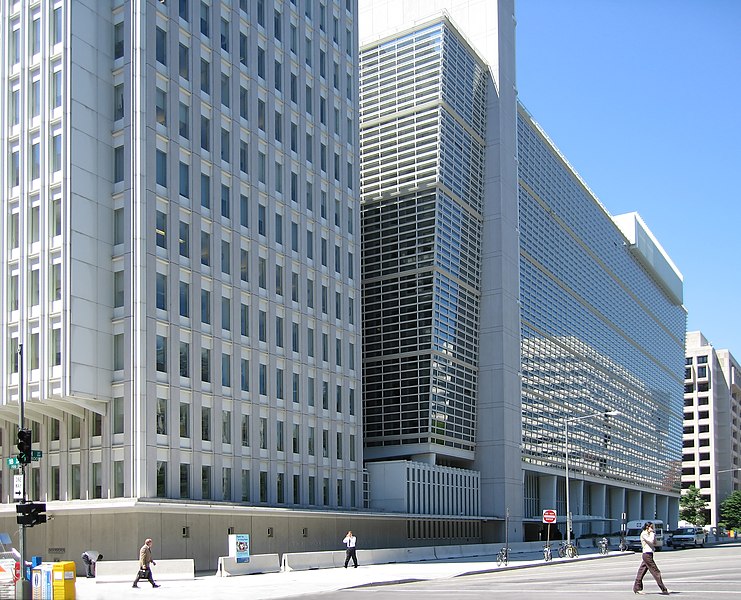
World Bank
Source: Wikipedia
A delegation from the AAMD met with World Bank officials in Washington, DC.

The AAMD contingent included:
  • Andy Finch, director of policy (now co-director of government affairs) for the AAMD
"Josh" Knerly
Source: Courtesy of Hahn Loeser
The AAMD delegation met with Stephen Karam, a senior urban economist, and Christina Johnnides, a World Bank official involved in gender equality projects around the globe.

The ostensible purpose of the meeting was to explore new markets for American museum directors, collectors and dealers specializing in antiquities. The AAMD delegates expressed concerns about how the international antiquities trade suffered from “self-imposed restrictions” especially as a result of laws in the United States that placed hindrances to the free flow of antiquities. They voiced the hope that relations might improve with source countries rich in archaeological treasures and in particular develop productive “legal antiquities markets” in countries where such markets were not as well developed.

The World Bank representatives apparently balked at the idea of being part of a plan to develop new markets for the international antiquities trade. In their view, the AAMD’s desires would be viewed in source countries as being insensitive to questions of “cultural heritage”. In essence, the AAMD was naïve to think that it could foster and improve “legal markets” in the antiquities trade without taking into account the concerns of source countries about looting and preserving their cultural patrimony.

The AAMD delegation left the meeting somewhat irked. The overall impression that they took away with them was that the World Bank, which is responsible for projects “in 185 countries,” was far more interested in catering to the needs of source countries than in promoting new markets for Western interests, read American.
How frustrating!
Fast forward to 2012: This is the same organization that is attempting to sway the Senate Judiciary Committee into passing a law, currently referred to as Senate Bill 2212, that promotes the free trade of cultural objects in and out of the United States, without due concern for the origin of those objects—licit or illicit. Most perniciously, SB 2212 would bar any legal claims against any cultural object entering the United States, regardless of the taint of plunder and theft that it might carry with it while on display in an American museum or other cultural institution.

One must congratulate the AAMD for single-handedly pressing to liberalize the trade in cultural objects worldwide under the misleading and downright patronizing flag of KULTUR.