04 May 2022

Myrtil Frank’s wartime record in German-occupied Holland

by Marc Masurovsky

[Editor’s note: This survey is based almost exclusively on Allied documents, reports, and investigations into the wartime art market in the Netherlands and the plunder of Jewish collections under the auspices of Dienststelle Mühlmann.]

After the Germans completed their occupation of Dutch territory, Myrtil Frank offered his assistance as well as paintings to the Dienststelle Mühlmann, based at Sophialaan 11 Den Haag. Headquartered in the Hague, its main figures were Eduard Plietzsch, the Dienststelle’s official representative or “fondé de pouvoir” and Dr. Franz Kieslinger, administrator of confiscated Jewish property who presumably brought Plietzsch into the organization as expert and purchasing agent in Holland, Belgium, France, for the Dienststelle Mühlmann. Plietzsch and Kieslinger were responsible for, among other things, targeting Jewish collections the Dienststelle wished to confiscate. The Dienststelle’s office manager was Dr. Joseph Ernst.

Although not a well-known art expert, Myrtil Frank proved himself to be a quick study enough so to “fulfill the desires of Eduard Plietzsch.” He thus became a “most important intermediary of the Dienststelle.”

Some of Frank’s contacts and collaborators at and close to the Dienststelle Mühlmann included:

-Adolf Weinmüller, a Munich-based art dealer and auctioneer of confiscated Jewish property, with close ties to Mühlmann’s operations in both Austria and the Netherlands,

-Dr. Herbst with whom Frank dealt from 1942-1944 during his brief tenure as an administrator of the Dienststelle;

-Dr. Schmidt, SD official responsible for travel permits [Ein-und Ausreisestelle] whom Frank had befriended and who allegedly gave him cover from anti-Jewish decrees in wartime Holland,

-Dr. Vitale Bloch whom Frank solicited in his capacity as a purchasing agent for Mühlmann.

-Karl Legat, Zeestraat 59, Den Haag, a German-born art dealer based in Holland, with whom Frank did extensive business during and after WWII,

-Jaguenau, art dealer

-J. Vermeulen, art dealer

-d’Autresch, art dealer active in the Noordeinde. Mühlmann interceded on his behalf to free his son partly in recognition for his services to secure works of art for the Dienststelle.

- Muelder, tied to Dr. Herbst and Weinmüller who did business with the Dienststelle Mühlmann through Myrtil Frank,

-Parry [Parri], who also cooperated with dealers Hoogendijk and Pieter de Boer.

Myrtil Frank acquired a number of works for the Dorotheum auction house in Vienna which were sold to Hitler’s Linz Museum project. Most of these transactions occurred in 1943. Dr. Herbst confirmed these transactions in April 1946.

How should we then view Myrtil Frank in wartime Holland? Somewhere between collaboration, duress and persecution?

Shortly after WWII ended, Dr. Alfred Stix, director of State Art Collections in Vienna, in a letter to the US occupying forces in Austria, described some of Mühlmann’s activities in Holland during WWII. He indicated that local Jewish art dealers were forced to act as agents to Mühlmann in order to help him procure paintings. Stix argued that “these Jews told a lot of things to buy their lives in that way.”

A scholarly assessment produced by Anita Hopmans of the RKD over the disputed ownership of paintings at the Boymans Museum buttressed Stix’s argument. It suggested that art dealers like Myrtil Frank had acted under duress. On the other end of the spectrum, Dr. Anna-Carolin Augustin echoed the Allied investigators’ suspicions when she described Myrtil Frank as a “Nazi collaborator” in an article published in 2011 in Medaon, an online journal.  In its Provenance Research Database, the German Lost Art Foundation noted Myrtil Frank’s inclusion in a master list of art looting suspects drawn up by the Art Looting Investigation Unit (ALIU) in 1946.

Where do these contrasting views and events leave us with respect to Myrtil Frank? In some ways, we need to be very careful with how we record Myrtil Frank’s wartime activities and behavior. Simple, almost Manichean views where everything is either black/white, good/bad, ethical/unethical, may not render proper justice to Jewish art dealers like Frank who remained in the Netherlands after the Germans invaded. His actions proved that he did his utmost to protect his family (in that, he succeeded!), while he engaged in activities that favored the interests of the enemy.

In a broader context, we may need to revisit what duress really means in these instances where physical survival blended with the pursuit of commercial activities with the occupier. Did Frank go beyond the call of duty in his relationship with the “Dienststelle Mühlmann”? The answer to this question depends on how one defines “beyond the call of duty”, a notion closely tied to the threshold beyond which one’s wartime activities in territories occupied by the Nazis become acts of collaboration with the enemy. Similar debates in countries like France may shine a light on this discussion.


Primary sources:

Reports:

Vlug Report, 25 December 1945.
Art Looting Investigation Unit (ALIU), Final Report, Strategic Services Unit, May 1946.
Consolidated Interrogation Report #2, The Goering Collection, 15 September 1945, p. 79

Selected documents:

Dr. Alfred Stix note to Major Miller, USFA, Vienna, 9 April 1946, RG 260 M 1926 File R&R 51 Roll 150 NARA.

Secondary accounts:

Augustin, Anna-Carolin,  “Nazi Looted Art in Israel: Kulturguttransfer nach 1945 und Restitution heute,” Medaon (2011), p. 9.

Hopmans, Anita  “Disputed ownership. On the provenance of two works by Jan Toorop at the Boymans Museum…” pp. 13-14. 

Myrtil Frank: An introduction

by Marc Masurovsky

1945 Holland

At the end of WWII, the Allied powers investigating crimes against humanity committed by Nazi agents and their supporters had to contend with the enormity of the human losses inflicted on the Jewish communities of Europe and the sheer scope of their material losses. A subset of these material losses consisted of millions of artistic and cultural objects forcibly taken from the Nazis’ preferred victims—namely Jewish owners—which were then set aside for private or public collections, sold at auction, displayed in galleries and recirculated through intricate networks branching throughout Europe and their overseas tendrils. Thus, the problem of locating plundered goods having once belonged to Jews persecuted by the Nazi regime, became global; Allied investigators and researchers were not equipped to apprehend its fullest measure.


The art market and its many players-- merchants, dealers, collectors, auctioneers—provided the Nazi occupiers with the networks needed to disperse confiscated Jewish property as long as there was a general willingness in the European art world to do their bidding—inside the Reich, in occupied territories, and even in and through the so-called “neutral” countries which opted not to side with the Allies or the Axis, instead did business with both, often favoring one over the other when it suited them to do so.


One persistent problem was to identify those men and women responsible for aiding and abetting the plunder of the Nazis’ victims. The Allies had to ascertain their degree of involvement with the Nazis as agents and participants.  


This is the context in which Myrtil Frank, a German-Jewish businessman turned art dealer, operated during the years of German occupation of Holland (1940-1945).   


Myrtil Frank’s case is peculiar because he is Jewish.  For the Allies, that seemed secondary since they were chiefly interested in understanding what his activities were during the German occupation of Holland and how he survived four years of brutal Nazi rule, what he did to achieve that result and emerge untouched with his family after war’s end.


It would be easy to succumb to 20-20 hindsight and call Myrtil Frank a collaborator of the Nazis. But we know better.  The reason why we chose to tell Frank’s story is because there were many like him who, because of their faith, had a target on their front and back. But they managed to survive those years of persecution, oppression and exploitation, highlighted by the betrayal of their neighbors and business associates, not knowing who to trust from one day to the next, while staying safe and ensuring the survival of one’s family.


Myrtil Frank was a secondary figure in the constellation of individuals who cast their lot with Nazi plundering agencies. For that reason, he has fallen under the radar of inquiry of most researchers and historians who have simply ignored him except when his name appears in the provenance of an object which may have been looted. Even the Dutch Restitution Committee was unaware of his importance in the machinery of plunder established in Holland by Nazi agents. 


Who was Myrtil Frank?


Myrtil Frank was born on 27 December 1893 in Breitenheim, in the Rhineland-Palatinate region of Germany. After serving in the German Army during WWI he married Flora Marburger in Frankfurt in 1919  (Flora was also known as Flory and was born October 23, 1895, in Frankfurt am Main).  In those days, Frank sold equipment used in dentists’ offices. The Franks’ daughters, Dorrit and Sybil, were born respectively in 1920 and 1925. Myrtil Frank died in 1968 and his wife Flory in 1981.  According to Myrtil Frank’s grandson, Gordon Sander, he had been a wealthy grain merchant living in Berlin, Germany although a 1945 Allied report described him as “a German Jewish refugee who had made money in the Rheinland in the textile industry.”


It is unclear when Myrtil Frank’s interest in the art trade became more than just a hobby. By the time the Germans invaded Holland on May 10, 1940, Myrtil Frank seemed well-acquainted with art dealers and collectors in his midst. The Frank family first lived at Mechelsestraat 6 in Scheveningen, on the outskirts of Den Haag (The Hague).  They then moved to Frans Halslaan 18, in Hilversum.


According to Gordon Sander, the Franks were eventually forced to move to Amsterdam. Sander argues that Myrtil Frank saw the proverbial writing on the wall and made plans for him and his family to hide from Nazi persecutions and deportation to the East.  He contacted Anie van der Sluis, a Dutch teacher who had taught Dutch to the Frank family after their arrival in the Netherlands.  A July 1942 notice (more like a summons) for Frank’s daughters, Dorrit (22) and Sybil (17), to report to the transit camp of Westerbork, accelerated the process and the family went into hiding on or about 14 July 1942 (Pieter van den Zandenstraat 14). Was Myrtil with them?


Kajetan Mühlmann,
courtesy of europeana.eu
On 15-18 November 1945, a person named Myrthel Frank was questioned by Allied interrogators investigating the activities of the so-called “Dienststelle Muhlmann” which had overseen the plunder of Jewish assets and especially cultural and artistic objects in occupied Holland.  Frank was described as “one of the most important persons interrogated” aside from the innermost circle of the group’s founder, Kajetan Mühlmann.  Myrthel (Myrtil) Frank was under suspicion of having used his knowledge of the Dutch art trade to aid the Dienststelle Mühlmann until he lost its protection in 1944 and was forced to hide in order to avoid being arrested by the SD and deported “nach dem Osten.” 


Was Myrtil Frank forced to abet the Nazis’ search for art and Jewish art collections? Depending on what sources you consult, there are two scripts needing to be reconciled: Myrtil Frank, the Jewish victim of Nazi persecution desperately trying to stay one step ahead of his persecutors, and Myrtil Frank the dealer who made himself useful to the Nazi plunderers working side by side with Dutch art dealers who did consistent business with the Germans and their agents from 1940 to 1944.


Sources: 

2.05.303_71_Muhlmann, NIOD, Den Haag, Netherlands, 

Police report on Myrtel Frank, CABR inv.nr: 91578 file 32657, Central  Archives Special Justice, Den Haag

www.fold3.comRG 239 M 1944 Roll 8 NARA; RG 260 M1946 Roll 121 NARA

https://www.gordonsander.com/the-frank-family-that-survived


07 January 2022

Duress revisited

by Marc Masurovsky

Duress should be a no-brainer. It’s a tangible manifestation of State-sponsored persecution and marginalization exercised against a specific group of individuals, namely the Jews in Nazi Germany. A forced sale is not conceivable without duress. It is the duress environment that makes the sale of Jewish-owned property an inevitability and a logical outcome of a Jew’s loss of prerogative in making day-to-day decisions that affects her life and her future and that of her family. Although duress is not a difficult concept to grasp, it is characterized by a loss of individual freedom in making practical and existential decisions and loss of control over one’s resources and property fueled by an oppressive regime which extolled the racial inferiority of an entire group of people (the Jews) as a basis for using all the necessary levers of State power to oppress and marginalize them. Duress foreshadows the Holocaust.

Here are some examples of duress which were highlighted during restitution proceedings over the past decade or so.

Max Stern, Düsseldorf
Max Stern

In December 2007, in a case that pitted the heirs of Max Stern, a Jewish gallery owner based in Düsseldorf, against Maria-Louise Bissonnette, a resident of Providence (Rhode Island), US District Judge Mary Lisi ruled in favor of the late Max Stern’s estate with a landmark judgment in which she equated forced sales with looting and an act of theft. She justified her decision in part on the fact that Max Stern had never received any compensation for the 1937 forced sale of his gallery’s inventory, including a painting by Xaver Winterhalter which Ms. Bissonnette had acquired. In Max Stern’s case, the duress began as soon as he received an official notification from the Nazi-sponsored Reich Chamber of Fine Arts shortly after he had inherited his father’s gallery. The Reich Chamber asserted that as a Jew he was not qualified to run such a business and he should proceed expeditiously with the liquidation of the gallery’s inventory through an approved point of sale, in this case the Lempertz auction house in Köln. Max Stern had no other choice but to proceed with the liquidation. The absence of payment was an egregious manifestation of his persecution. (See 2008sternvbissonnette)

Are price and value essential guideposts to determine whether a Jew living in Nazi Germany was subject to acts of duress? Not necessarily. In fact, if one looks solely at value and price without appreciating the importance of the socio-economic and historical context surrounding the events that produced the state of duress, one may end up deciding the fate of a contested object without giving due attention to the “why”, “how” and “when” of the sale of a claimed object.

Max Emden, Munich
Max Emden
We see this in the case of the late Max Emden, a German Jewish department store magnate. The Nazis made Emden’s life increasingly difficult as noted by the German Advisory Commission (so-called Limbach Commission) when commenting on the 1938 sale of his three Bellotto paintings to Hitler’s Linzmuseum project, a sale that was brokered by a Munich-based dealer named Anna Caspari: “[the sale] was not undertaken voluntarily but was entirely due to worsening economic hardship… deliberately exploited by potential buyers…” However, the Houston MFA where one of the Bellotto works ended up, remained unflappable. It disagreed with the Commission’s assessment noting that Emden had obtained a fair price for the three paintings.

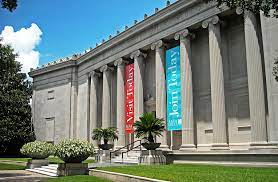
Houston Museum of Fine Arts

By solely looking at the price realized by the sale of 1938 and ruling it as reasonable given the time period and quality of the works, Houston essentially ruled out all other facts in making its determination, therefore implicitly denying that Emden had acted out of duress. Regardless of where one stands on the Emden case—for or against restitution—the fact is that Emden had to part with much of his property before leaving Nazi Germany. The German Advisory Commission (ex-Limbach Commission) reached this conclusion based in part on the facts surrounding the forced sale. The “worsening economic hardship” that Emden experienced as the main factor prompting the forced sale had become the bane of most Jews living under Nazi rule, especially in 1938.

Fritz Grünbaum, Vienna and Dachau
Fritz Grünbaum

In the case of Fritz Grünbaum who died at Dachau in January 1941, once arrested in Vienna by the Nazis in 1938, he lost control over his property and assets, including a rather significant collection of modern works of art. Four months after his transfer to Dachau, he was forced to sign a power of attorney, thereby effectively finalizing under duress the surrender of his art collection as a direct consequence of prevailing circumstances—racially- and politically-motivated incarceration, physical and emotional abuse. (See Bakalar v. Vavra).

Lilly Cassirer Neubauer, Munich
Lilly Cassirer Neubauer

In a complaint filed against the Thyssen-Bornemisza Collection Foundation in 2019, the heirs of Lilly Cassirer Neubauer argued that their great-grandmother “was forced to transfer [a painting by Camille Pissarro] to Jakob Scheidwimmer, a Nazi art appraiser [in Munich], in order to obtain exit visas for herself and her husband, Otto. Scheidwimmer transferred 900 RM [or 360 US dollars in 1939] in payment for the painting which he deposited in a blocked account as Ms. Neubauer was of Jewish descent and subject to Nazi anti-Jewish discriminatory laws since the advent of National Socialism in Germany on January 1933. 

Thyssen-Bornemisza Foundation
As an art market player in Munich, Mr. Scheidwimmer was very much a part of the Nazi machinery for recycling confiscated Jewish cultural assets as attested by his direct participation in high-level meetings with local, Bavarian and Reich officials around the time of Kristallnacht (9-10 November 1938) during which thousands of Jewish apartments were raided and their male occupants corralled and interned into camps, in part, to force them to disgorge their assets and leave Germany. Ms. Neubauer did not stand a chance against Scheidwimmer and was forced to relinquish the Pissarro painting.


Are there different shades of duress like a palette of colored hues ranging from very light to very dark? Or is there just one universal expression of duress, plain and simple, equally applied to all Jews living in Nazi Germany at all times between 1933 and 1945? Was it less severe in some parts of Germany? How quickly did Jews feel the paralyzing and oppressive nature of Nazi rule in all its petty manifestations? Can we periodize duress? Did it wax and wane like the tides or was it always dispensed in equal amounts to all Jews in Germany, regardless of status, class, income and geographical location? The question may seem unfair but it goes to the heart of how we view duress in Nazi Germany and the forced sale of cultural assets by Jewish owners desperately seeking to flee Germany at all cost. Unfortunately for the heirs and descendants of Jewish victims of the Nazis, their detractors in museums, auction houses, and private collections nitpick to death the “quality of the duress” that their families experienced as if to find a flaw in their argument, implying that they might be exaggerating the circumstances under which their ancestors sold works of art. This debasement of the experience of Jewish families in Nazi Germany has led to restitution claims being denied, thus allowing current possessors to retain the object(s) in their collection. The unwillingness of cultural officials to accept and acknowledge the circumstances of a family’s duress under Nazi rule is tantamount to revisionist and constitutes an implicit recasting of the Jewish experience under Nazi rule.

We have seen this scenario unfold many times since 1945.

It is essential to study and compare all forms of duress sustained under oppressive regimes like that foisted by the Nazis on the citizens of Germany and later on most of Europe. We need to deduce, outline, define and publicize the complex manifestations of duress in the daily lives of Jews using witness statements, contemporaneous reports, legal and governmental proceedings. Duress and forced sales are real phenomena that haunted Jews from the advent to power of the Nazis in Germany in late January 1933 to their forced exit from Nazified Germany with little or nothing left to their name.


05 January 2022

Is Switzerland changing the way it views Nazi looted art?

by Marc Masurovsky 

Here we are in the early days of 2022, looking back at 2021 and wondering if anything good came of it, notwithstanding the pandemic, the million plus deaths from COVID-19 alone, the repeated closures of public and private institutions, the inability to travel safely, the high-stakes gamble everyone of us faces when we go shopping, mingle in public places, take public transportation in order to escape from our confinement at home while we dodge the wily virus. It knows no borders, harbors no partisan bias and treats everyone equally without due regard to age, gender, occupation, faith and political affiliation.

What’s going on in Switzerland? 

In December 2021 alone, a number of developments have reshaped the restitution map in Switzerland as reported in the Swiss and international press. Two names have largely taken over center stage in the Nazi looted art story and the way it permeates life in Switzerland: Gurlitt and Bührle. The former has been ubiquitous since the transfer to the Kunstmuseum Bern of the estate of the late Cornelius Gurlitt who bequeathed his collection to the Bern Museum—the remnants that he had inherited from his father, Hildebrand Gurlitt. The estate consisted of more than 1400 works, mostly on paper, which Gurlitt, Sr., had amassed throughout the Nazi era and in the immediate postwar years (he died in 1956). Gurlitt, Jr., gradually dissipated its contents as his sole source of income with which he eased himself into old age.
Kunstmuseum Bern
Cornelius Gurlitt
Since 2014, the Kunstmuseum Bern has weathered international criticism over its acceptance of the Gurlitt estate. Could it have turned down the bequest? The Gurlitt collection, it must be said, has been a toxic affair from the get-go as Bern has had to learn to coexist with the indelible Nazi taint that accompanied the works. Its only way out was to take the bull by the horns and to make a conscious and very public attempt at researching the origins of each work—an exercise in due diligence, something we expect from any museum, large or small. Even more frightening was the possibility that tainted items had to be restituted, something that Swiss museums have been loath to do since the late 1940s, with few notable exceptions, using the stale but highly effective of “good faith” to justify the non-return of loot. 

Emil Georg Bührle
December 2021 has turned out to be a very busy month in the Swiss world of museums and art restitution. First off, a Social Democratic lawmaker, Jon Pult, introduced a parliamentary motion to establish an independent commission in Switzerland that would make recommendations on Nazi-era claims. A cross between the UK’s Spoliation Advisory Panel and France’s CIVS with a smidgeon of Austria’s Provenance Research Commission. This motion was prompted (the proverbial straw that broke the camel’s back) following the news that the Kunsthaus Zurich had agreed to put on display 203 works from the collection of Emil Georg Bührle, a Swiss arms manufacturer who owed his fortune to his wartime dealings with the Axis powers and who frolicked on the international looted art market, buying up choice pieces confiscated from Jewish dealers in Western Europe. 

Kunsthaus Zurich
Several days after the announcement of Pult’s motion, the Zurich museum garnered headlines which should have prompted its director to hit the schnapps bottle. The Bührle incident triggered an international storm of disapproval and at least one Swiss Jewish artist demanded that her works be removed from the museum. Once the winds subsided, the museum ordered a group of experts to look into the wartime history of the paintings in Bührle’s collection. The kind of effort that had already been conducted in part or in whole by numerous researchers over the past several decades, including the New York-based Commission for Art Recovery. Will their findings be shared with the Kunsthaus experts? We don’t know but we sure hope so. 

Before Xmas 2021, the Kunstmuseum Bern announced that it would part with 29 works from the Gurlitt collection with a view to returning them to the rightful owners. Will it actually restitute them? Or will the museum seek a “fair and just solution” in order to retain custody of the objects under contention? 

As we get used to the humdrum of 2022 which strikingly resembles the din of 2021, let’s hope that Bern and Zurich come to their senses and forge an irreversible path towards a more ethical treatment of their collections.