In deference to the slain free thinkers of the Charlie Hebdo staff in Paris, we take this moment to honor their memory, their irreverence, their humor, their ability to laugh at themselves and at everyone, in good cheer, to remind ourselves that this freedom that we so cherish has to be exercised and not simply mouthed.
In the case of Charlie Hebdo, they paid the worst price, an unacceptable price in this time and age.
Stand tall.
Stand firm.
In solidarity.
JE SUIS CHARLIE
JE SUIS CHARLIE
JE SUIS CHARLIE
JE SUIS CHARLIE
JE SUIS CHARLIE
JE SUIS CHARLIE
JE SUIS CHARLIE
JE SUIS CHARLIE
JE SUIS CHARLIE
JE SUIS CHARLIE
JE SUIS CHARLIE
JE SUIS CHARLIE
08 January 2015
04 January 2015
HARP and the Hopi Tribe
by Ori Z. Soltes, President, the Holocaust Art Restitution Project, Inc. (*)
 |
| Protest outside Hotel Drouot auction house in Paris |
The Holocaust Art Restitution Project (“HARP”) was founded in 1997 to perform research pertaining to cultural property that was plundered during the Nazi period and never recovered by its original owners. This was by definition a mandate with expandable parameters. The contexts of plunder and its aftermath prove variable: while most works were stolen by the Nazis, the Soviet “Trophy Brigades” notoriously plundered from the Germans without concern as to whence the Germans had gotten such loot—for the USSR, which suffered quantitatively and qualitatively beyond what most others, certainly Americans, can imagine, whatever they brought back to their own museums was small compensation for what they had lost in lives and cultural property destruction—and allied soldiers more than occasionally walked off (or in the most egregious case, that of Joe Tom Meador, sent home in plain-wrapped boxes) with important artifacts, most often from German sites. Objects ended up not only in museums, but—thanks to an art market that flourished throughout the war without thought as to the fate of those individuals, families, galleries or museum collections from which the objects had come—in private galleries and in turn private hands and homes.
 |
| 42nd "Rainbow" Division in all its glory |
The common denominator in all of this is the manner in which greed can and did blind so many plunderers and their accomplices, both during and for decades after the war. It offers a parallel to the larger truth regarding the human species: that we can be and have historically been immeasurably destructive, that we alone turn torture into an art and killing into a science. We who can be so extraordinarily creative—who produce drawings and paintings and sculptures and edifices, as well as poetry and music, theater and dance—have an intensely dark side; the Taliban and ISIS destroy cultural property; Hitler and his minions destroyed, but also hoarded, traded and sold unprecedented quantities of it—and there was a host of enablers both then and since then for whom the possibility of direct or indirect profit or simple selfishness means that the issue of Nazi-plundered cultural property continues to be before us 70 years after the last wartime guns were fired.
For HARP, the common denominator in our research has been the desire, during the past 15 years, to offer some counterweight to these forces, to push the scales of justice toward some balance in the manner of continuing the sort of work—done in the immediate aftermath of the war, but with insufficient resources and for too brief a period of time—that can restore cultural property to those individuals from whom and those institutions from which it was forcibly taken, whether at gunpoint or at pressure point. It has been and always will be a daunting task; the issue is scaled as biblical Goliath was said to have been facing David, here HARP.
Our taste for justice, however, is not limited. There is a peculiar logic to our having taken up a cause that apparently has nothing to do with the Holocaust, but everything to do with that taste, inherent in a mandate such as ours. Sacred objects belonging to the Hopis and, as the issue has expanded, to Navajos and Zunis—and no doubt other Native American groups—have, like other sacred objects from diverse cultures across the planet, been plundered, destroyed, transferred, sold, purchased by museums and private individuals motivated by the same sort of impulses that motivated Nazi plunderers and their gallery and museum accomplices during and after World War II, Soviet hoarders and American GI thieves. The emergence during the past two decades of an awareness of this unsolved problem has followed a growing awareness of the importance of recognizing the integrity of indigenous peoples everywhere and of protecting their cultural and religious rights. Thus the two “types” of plunder injustice have finally become linked. They are linked, too, by a common principle: those with the power and experience to hold onto what they have taken (or others have taken on their behalf) use that power and experience to maintain a tenacious hold on their booty against the attempts of the plundered to regain possession of their property.
Twice now, within the past six months, an auction house in Paris and its regulatory oversight body, have ignored history, justice and the ethics that they pretend to uphold as civilized champions of culture, placing scores of sacred objects plundered from the Hopis and other American Indian tribes up for sale. The auction house ignored the question of provenance, (in the second auction going so far as to deliberately mislead would-be buyers by announcing in its catalogue that no objects up for sale had any provenance questions or problems attached to them), the issue of the indigenous peoples’ cultural and religious rights—and in the case of its regulatory oversight body, the French Conseil des Ventes, (“Board of Auction Sales”) offered its ruling on this matter, in favor of the auction house, by denying the standing, i.e. the legitimacy and indeed the very existence, as such, of the Hopis and other American Indian tribes as other than a vague group with a name apparently not found in the French dictionary.
That HARP should have taken up this cause on behalf of the Hopi tribe, to use our experience and our expertise to argue on their behalf that the auction of such artifacts not take place—the first time as an advocate, the second time as an advocate with the Power of Attorney to represent the Hopis and their Chairman—falls well within the bounds of our larger mission of seeking justice for those whose cultural property (and in this case, religious property) has been plundered and never returned to them. The same greedy motivation impelled and impels the auction house and the participants in its process, including the French Government, of continuing to despoil a particular group of its possessions and its heritage, without concern for how and when and why such artifacts were taken from their original locations in Arizona. The same desire to offer some balance to this stance that impels HARP’s interest in Nazi-plundered art has motivated HARP’s participation in fighting to get the artifacts off the market and on a trajectory back to those who made them and use them for cultural and religious purposes.
There is a particular and somewhat ironic feature in this: the French have a rather spotty, if not appalling record with regard to returning Nazi-plundered cultural property to families from which it came when holes in the national museum collections could be nicely filled by some of that property. That they have, in this latest instance of moral blindness, twice ignored their own stated position as part of the Western world regarding the reality and rights of indigenous peoples and instead have stood on the edge of legal technicalities to avoid pursuing an ethical course echoes the perspective that led so many Holocaust-era objects—from Louis XIV furniture to paintings—to remain in state museums.
HARP will continue, when asked to do so, to push those who pretend that cultural and religious property taken from its original owners ceases to have a connection to those owners simply because it has passed from hand to hand and now hangs in a public museum or is displayed in an auction house or has been purchased by a buyer who chose and/or chooses not to ask questions as to where his or her prize came from and how it left its original home.
(*) Ori Z. Soltes teaches at Georgetown University across a range of disciplines, from theology and art history to philosophy and political history. He also is the former Director of the B’nai B’rith Klutznick National Jewish Museum in Washington, DC, where he curated exhibitions on a variety of subjects from archaeology to ethnography to contemporary art. He has taught, lectured and curated exhibitions across the country and internationally. He also is the author of over 230 articles, exhibition catalogues, essays and books on a range of topics. Recent books include The Ashen Rainbow: The Arts and the Holocaust; Our Sacred Signs: How Jewish, Christian and Muslim Art Draw from the Same Source; Searching for Oneness: Mysticism in Judaism, Christianity and Islam; and Untangling the Web: A Thinking Person’s Guide to Why the Middle East is a Mess and Always Has Been. Ori, along with HARP’s team, was also involved in a number of restitution matters, such as providing the historical research and background with regard to Egon Schiele’s “Portrait of Wally” case, as well as the restitution of “Odalisque”, a painting by Henri Matisse, to the Paul Rosenberg family.

20 July 2014
Book Review: Risk and Uncertainty in the Art World
co-posted with ARCAblog
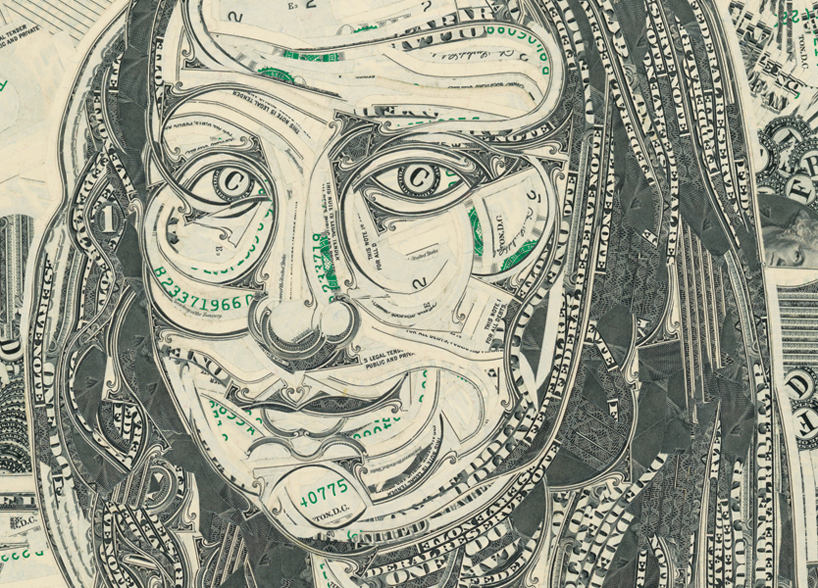 |
| Detail of Mark Wagner's Currency College of the Mona Lisa Source: DesignBoom |
Risk and Uncertainty in the Art World (ISBN: 9781472902924) is a notable attempt at compiling into cohesive curricula research by scholars such as Marina Bianchi, Tom Christopherson, Neil De Marchi, Elroy Dimson, Tom Flynn, Daiva Jurevičieně, Arjo Klamer, Roman Kräussl, Javier Lumbreras, Fleur Maijs, Benjamin Mandel, Clare McAndrew, Jianping Mei, Michael Moses, Laurent Noel, Anders Peterson, Rachel Pownall, Olivia Ralevski, Steve Satchell, Jaketrina Savičenko, Aylin Seçkin, Kyle Sommer, Christophe Spaenjers, Nandini Srivastava, Hans Van Miegroet, Thorstein Veblen, Olav Velthuis, and Luca Zan.
Published by Bloomsbury, it is edited by Anne Dempster (Sotheby's Institute of Art). Contributors include Tom Christopherson (Sotheby's Europe), Anders Petterson (ArtTactic), Olav Velthuis (University of Amsterdam), Hans J. Van Miegroet and Neil DeMarchi (Duke University), Marina Bianchi (University of Cassino), Rachel Pownall (University of Tilburg/University of Maastricht), Elroy Dimson (London Business School), Steve Satchell and Nandini Srivastava (Cambridge University), Christophe Spaenjers (HEC Paris), Laurent Noel (Audencia Nantes School of Management), and Arjo Klamer (Erasmus University).
The book takes a multidisciplinary approach, through alternative investments, art history, behavioral economics, cross-cultural studies, due diligence, macro- and microeconomics, Modern Portfolio Theory, emerging markets, provenance research and many other topics. It is highly recommended to anyone with an interest in the international art market.
Petterson’s discussion of how the Internet has changed the art market was robust. His description of the art market ecosystem and how it is adapting in light of online galleries, artist portals, social media, blogs, online auction/art fairs, online inventory management, price databases, indices, investors, art funds and wealth management, showed that there is both a new audience and desire for transparency. In creating a more educated consumer, both traditional and upcoming entities have nothing to lose and everything to gain. Petterson’s article is a treatise against all those that desire not to adapt to provenance standards in the market.
Flynn’s discussion of the role of government and private corporations in art commissioning showed that more needs to be done in regards to authentication of art in the public space. What was striking about the article was that it showed a dissonance between corporate views on art and the industry, itself. A clear conclusion was that, in desiring to imagine itself as an ‘exception’ to business, the art world has only done itself more harm. As both a lecturer with the Association for Research into Crimes against Art and also in hosting a blog titled ArtKnows, Flynn, continues to be frontier of these discussions.
Satchell and Srivastava’s derivations about wealth and utility, adding upon Pownall’s essay, showed that there is still much more to connect between mathematical models, financial markets, and the art world. Integration of Veblen’s Theory of the Leisure Class, the price and wealth effects of Marshallian demand, attempts at indexation – whether through the Financial Times All Shares (FTAS) and the London All Art price index or the Mei-Moses index – the Miller-Modigliani capital structure theorem, and the aesthetic dividend, make the reader wonder if the time is here for further data integration with the Standard & Poor’s and Thomson Reuters of the financial world.
The most disappointing was Christopherson’s essay that showed some dissonance against “testosterone-fuelled bond traders” (Risk and Uncertainty 65). The main discussion on legal title, authenticity, issues of attribution comparisons, condition, and valuation was vague. In discussing the Foreign Corrupt Practices Act, Artists Resale Rights, and Bribery Act, Christopherson described a desire to return to an imaginary past. The ultimate lesson learned appeared that he merely seems unsatisfied with changing business models in the art market.
The book leaves much to build upon; taking the theory to reality is clearly the next step forward.
12 July 2014
Should museums stop using technical defenses to prevent restitution of looted art? The debate rages...
Nicholas O’Donnell’s article on Ronald Lauder’s Editorial on Stolen Art and Museums Fails the Common Sense Test
By Pierre Ciric*
In his article titled “Lauder Editorial on Stolen Art and Museums Fails the Glass House Test,”[1] Nicholas O’Donnell attempts to respond to Ronald S. Lauder’s editorial published in the Wall Street Journal on June 30, 2014, titled “Time to Evict Nazi-Looted Art From Museums.”[2]
O’Donnell attempts to find legal shortcomings in Lauder’s editorial, which simply expresses the need for art museums to act responsibly by returning Nazi-looted artwork instead of raising technical defenses and mere pretexts to deny the rights of the claimants.
In his article, O’Donnell refers to the ongoing case brought by Léone Meyer against the University of Oklahoma, among other defendants, to obtain the restitution of “La bergère rentrant des moutons” (Camille Pissarro, 1886), currently on permanent display at the Fred Jones Jr. Museum of Art in Norman, Oklahoma.
Although O’Donnell—counsel to David Findlay, Jr. Gallery, a defendant no longer involved in the case—recognizes that the recent court decision is limited to whether the Oklahoma defendants could be sued in New York, he repeatedly brings up a 1953 Swiss court decision involving Camille Pissarro’s La Bergère as grounds for why Léone Meyer’s claim should fail, and why Mr. Lauder’s argument is baseless.
O’Donnell’s argument fails the common sense test. First, no one disputes that the Nazis stole La Bergère from Léone Meyer’s family.
Second, the 1953 Swiss court decision was not decided based on a late claim, as O’Donnell argues, but was decided against Léone Meyer’s father because he could not prove the “bad faith” of the art dealer who acquired La Bergère after it crossed the Swiss border from France.
Third, prior Swiss decisions involving looted art have long been held as doubtful or baseless in several U.S. jurisdictions. Even the Swiss government itself recognized in 1998 that the deck was stacked against claimants who wanted to file art restitution claims in Switzerland after World War II. New York courts have found/determined that “Swiss law places significant hurdles to the recovery of stolen art, and almost ‘insurmountable’ obstacles to the recovery of artwork stolen by the Nazis from Jews and others during World War II and the years preceding it." See for instance, Bakalar v. Vavra.[3]
Finally, O’Donnell misses the point of Mr. Lauder’s editorial. As French government officials have recently stated in a public forum dedicated to France’s efforts to track and restitute looted art, the time for “clean museums” has come. Hiding behind technicalities and procedural loopholes to delay basic justice, i.e. restitution of looted property, is not morally appropriate, even less so when public institutions are involved.
Ronald Lauder is right. It is time for museums to do the responsible thing. It is time for museums to “clean” their collections of any tainted artwork by returning Nazi-looted artwork.
By Pierre Ciric*
In his article titled “Lauder Editorial on Stolen Art and Museums Fails the Glass House Test,”[1] Nicholas O’Donnell attempts to respond to Ronald S. Lauder’s editorial published in the Wall Street Journal on June 30, 2014, titled “Time to Evict Nazi-Looted Art From Museums.”[2]
O’Donnell attempts to find legal shortcomings in Lauder’s editorial, which simply expresses the need for art museums to act responsibly by returning Nazi-looted artwork instead of raising technical defenses and mere pretexts to deny the rights of the claimants.
 |
| Fred Jones, Jr. Museum of Art |
Although O’Donnell—counsel to David Findlay, Jr. Gallery, a defendant no longer involved in the case—recognizes that the recent court decision is limited to whether the Oklahoma defendants could be sued in New York, he repeatedly brings up a 1953 Swiss court decision involving Camille Pissarro’s La Bergère as grounds for why Léone Meyer’s claim should fail, and why Mr. Lauder’s argument is baseless.
O’Donnell’s argument fails the common sense test. First, no one disputes that the Nazis stole La Bergère from Léone Meyer’s family.
 |
| "La Bergère rentrant des moutons," Camille Pissarro |
Third, prior Swiss decisions involving looted art have long been held as doubtful or baseless in several U.S. jurisdictions. Even the Swiss government itself recognized in 1998 that the deck was stacked against claimants who wanted to file art restitution claims in Switzerland after World War II. New York courts have found/determined that “Swiss law places significant hurdles to the recovery of stolen art, and almost ‘insurmountable’ obstacles to the recovery of artwork stolen by the Nazis from Jews and others during World War II and the years preceding it." See for instance, Bakalar v. Vavra.[3]
Finally, O’Donnell misses the point of Mr. Lauder’s editorial. As French government officials have recently stated in a public forum dedicated to France’s efforts to track and restitute looted art, the time for “clean museums” has come. Hiding behind technicalities and procedural loopholes to delay basic justice, i.e. restitution of looted property, is not morally appropriate, even less so when public institutions are involved.
Ronald Lauder is right. It is time for museums to do the responsible thing. It is time for museums to “clean” their collections of any tainted artwork by returning Nazi-looted artwork.
* Pierre Ciric is
a New York attorney, the founder of the Ciric Law Firm, PLLC, and a board
member of both the French–American Bar Association and the New York Law School
Alumni Association. He currently
represents Léone Meyer against the Board of Regents of the University of
Oklahoma in her quest to obtain the restitution of “La bergère rentrant des moutons”
(Camille Pissarro, 1886), currently on permanent display at the Fred Jones Jr.
Museum of Art in Norman, Oklahoma.
[3] Bakalar
v. Vavra, 619
F.3d 136, 140 (2d Cir. 2010); see also In
re Holocaust Victim Assets Litigation, 105 F. Supp. 2d 139, 159 (E.D.N.Y.
2000)
Subscribe to:
Posts (Atom)