24 December 2011

First anniversary of "plundered art"

Happy holidays!

The “plundered art” blog just passed its first anniversary.

This might be a good time to revisit its reason for existence.

It’s not that simple to decide one day: “Oh! Let’s write about the restitution of art objects looted by those Nazis and Fascists during the 1930s and 1940s and how so much of it was never returned to the rightful owners and why the current owners of those objects look for every way under the sun not to return those objects and why governments pretend that there is no problem.”

This blog is certainly not about settling scores, old and new.

It’s actually a complicated beast.

At first, I was very shy about putting anything in writing about an issue that has already absorbed several decades of my life. Truth be told, the initial motivation for this blog was to share the story of the Holocaust Art Restitution Project (HARP), how it came into existence and what it was able to accomplish.

The telling of HARP’s story has not been a simple affair and is still incomplete.

It runs afoul of important and enduring taboos:
  • the unwillingness of postwar Jewish organizations in the Americas, Europe, and the Middle East, to press for a complete accounting of the cultural losses suffered by Jewish owners during the 1930s and 1940s;
  • the unwillingness of State-controlled cultural institutions across the globe to produce a complete inventory of cultural assets that entered their collections since the 1930s which might have been acquired illegally;
  • the unwillingness of governments to come clean about the extent, scope, and breadth of cultural plunder in their respective nations and their efforts to produce complete inventories of those looted cultural assets in State-owned collections;
  • the unwillingness of governments to come clean about the total number of looted cultural assets present in State-owned collections;
  • the unwillingness of national and international groups to address the question of cultural rights, the sovereign right of individuals to culture and to the ownership of cultural assets over those of States, the question of cultural patrimony, cultural property, and cultural heritage, and how those abstract notions interfere with and are used against the right of individuals to recover and own looted cultural assets which are rightfully theirs. Those non-governmental organizations include but are not limited to: the United Nations, the United Nations Educational, Scientific and Cultural Organization (UNESCO), the International Council of Museums (ICOM) and many other organizations and agencies, supranational and national which are specifically concerned with cultural rights, and the protection of cultural assets;
  • the unwillingness of law enforcement, police and security agencies—civilian and military—to repress and suppress the illicit international trade in looted cultural assets, including and especially the millions of objects that changed hands illegally against the backdrop of genocide, mass conflict and slaughter in the 1930s and 1940s and beyond;
  • the unwillingness of cultural institutions, universities, colleges, institutes, foundations, and other cultural establishments to teach and educate young and old about the phenomenon of cultural plunder, the cultural rights of individuals, and ask the fundamental question as to who owns culture when discussing the illicit removal of art objects from the hands of their rightful owners and the attempts of the latter—mostly vain—to recover them as their own.
As of now, the following items remain unanswered, more than sixty-five years after plunder was denounced at the International Military Tribunal at Nurnberg as a crime against humanity and a war crime:
  • the true extent, scope, and breadth of thefts of cultural assets during the 1930s and 1940s for racial, political, and other reasons;
  • the actual number of lost cultural assets, by type, by owner, by country;
  • the actual number of cultural assets recovered;
  • the actual number of cultural assets restituted to their rightful owners;
  • the actual number of cultural assets that were recovered but never restituted;
  • the actual number of cultural assets that were looted and never restituted—by type, by owner, by country.
  • the identity of the thieves;
  • the identity of those who agreed to trade in these looted cultural assets;
  • the identity of those who currently own these looted cultural assets.
To make a long story short, for now, the telling of HARP’s story ran afoul of these unanswered questions and the overwhelming taboo that endures today as strongly as it did two decades ago of venerable institutions that seek to educate the world about the Holocaust and genocide and yet refuse out of principle—yes, OUT OF PRINCIPLE!—to avoid at all costs any discussion, any debate, any addressing in any way, shape or form, of the question of cultural plunder, despite the fact that millions of members of the Jewish community suffered unspeakable losses, physical, material, and spiritual—among them, the loss of objects that tied them to culture—their own and that of others.

Let’s be clear about one thing: it is far easier to ignore the problem than to address it. And for those who seek to address it absent any filters, any caveats, any disclaimers, any compromises, the road is long, steep, and lonely. But every time progress is made, however small, even the mere existence of this blog, justifies the desire to induce even the slightest change in society’s approach to the question of cultural rights, cultural ownership, and cultural restitution.

The second year of the “plundered art” blog opens on a renewed commitment to speak, document, critique, applaud, proclaim, advocate and document, document, and document more. Because transparency is the only way by which we can grasp the full breadth and scope of the problem, a problem made so complicated by those who oppose restitution. Those who refuse to address it are simply acting as accomplices, aiding and abetting in the crime of rewriting history by denying its existence.

I wish to thank you, our readers, listeners, observers, and critics alike, for checking into “plundered art.” I invite you to continue.

Year two promises to explore cultural plunder in other realms, like the Far East, the universality of cultural rights and its nemesis, cultural plunder; and the search for enduring, long-term solutions to remedy the ills of cultural thefts anchored in mass conflict, genocide, ethnocide, and other forms of wholesale persecutions perpetrated by a State or a group against individuals because of who they are and what they are.

Works and objects will be discussed with dubious ownership histories which are displayed, bought, and sold, across the globe.

And, of course, there is no shortage of historical information on plundered objects that have either been restituted or remain out of reach of their rightful owners.

Until next time…

21 November 2011

"Christ carrying the cross," by Girolamo di Romano

Christ Carrying the Cross Dragged by a Rogue, Girolamo Romano
Source: New York Times, Arts Beat
Mary Brogan Museum of Art and Science (Tallahassee, FL)
Source: Wikipedia
Shortly after noon, on November 4, 2011, a group of Immigration and Customs Enforcement (ICE) agents entered the Mary Brogan Museum of Art and Science in Tallahassee, Florida. Armed with a seizure warrant signed by US Attorney, Pamela Marsh, the agents removed a painting by Girolamo di Romano (also known as “Romanino”) entitled “Christ carrying the cross”, on suspicions that the painting was stolen property belonging to the heirs of Federico Gentili di Giuseppe, an Italian Jewish patriarch who had lived in France and had died there in 1940 shortly before the German invasion of May 1940.


The painting was part of a major loan exhibit from the Pinacoteca di Brera in Milan, Italy, that had graced the walls of the Tallahassee museum since March 2011 until the show closed on September 4. All the works returned to Milan except for the Romanino.

Anonymous ICE Official at Seizure
Source: ICE
The Pinacoteca had acquired the Romanino painting on the private art market in 1988, obviously without due consideration for the provenance of the work itself.

In 2001, the Gentili di Giuseppe heirs petitioned the Italian government and the Pinacoteca to return the painting to their family, in vain. Aware that the painting was being exhibited in the United States, Gentili di Giuseppe’s grandson, Lionel Salem, contacted Chucha Barber, director of the Mary Brogan Museum, to discuss the painting and to notify her of his belief that this was the same painting that had been illegally sold by the Vichy government in 1941 and was thus subject to restitution.

Several comments are needed here:

Pinacoteca di Brera (Milan, Italy)
Source: Wikipedia
Firstly, no one in the press has pointed out that the Pinacoteca and the Italian government had been aware for over a decade of the questionable origin of the Romanino painting. Hence, when the Pinacoteca agreed to send the painting to Tallahassee, the Italian government authorized its export, despite the fact that a potentially stolen cultural asset was leaving the borders of Italy, entering United States territory and thus transferring the risk to the host, the Mary Brogan Museum of Art and Science.

Secondly, neither the Pinacoteca nor the Italian government deemed it necessary to alert Ms. Barber that there might be some complications arising from the presence of the Romanino painting on its walls. A sign of arrogance? Who knows?

Let’s turn to the case itself:

In 1941, the Fascist government of Benito Mussolini became concerned that the property of its nationals of Jewish ancestry was falling into the hands of the Vichy government so that the French government could liquidate it and pocket the proceeds of the sales. Mussolini’s diplomats in Vichy repeatedly petitioned the Pétain government to lay off the assets of its nationals and to allow Italy to initiate proceedings for repatriating Italian Jewish property back to the homeland. In other words, the Fascist message to Pétain was clear: don’t mess with our Jews.

The Gentili di Giuseppe family was among those listed whose confiscated assets should be repatriated to Italy. That did not happen.

Hence, the proof of confiscation is explicit since, one way or another, the Gentili di Giuseppe family’s belongings were targeted both by Vichy and by Fascist Italy.

Fast forward to the present:

In July 2010, I had the extraordinary pleasure of chatting informally with Italy’s State Attorney Maurizio Fiorilli, after a conference held in Amelia, Italy, regarding illicit cultural property. To be honest, I spotted him at a local restaurant where I was finishing up lunch. Fiorilli was seated nearby. I took a deep breath, introduced myself and requested the pleasure of asking several questions, which he agreed to do. At first, he spoke in Italian and a woman at his table translated his words into English. Soon, he switched to English once we discussed the Gentili case.

Paraphrasing his words, Fiorilli indicated that even if the Gentili di Giuseppe family was able to get its painting back—the Romanino!-- it had to remain in Italy, as cultural property.

Cultural property? Does that mean that a XVIth century Italian painting is treated like an antique vase dug up from Roman ruins? How does that happen? Cultural property applies to cultural objects and artifacts extracted from the earth, not to Holocaust-era cultural assets that were forcibly removed from the homes and businesses of Nazi and Fascist victims. In other words, Fiorilli was playing a dangerous game, using cultural property laws to prevent Holocaust victims from recovering their assets.

Could it be that Fiorilli considers the Romanino painting as part of Italy’s patrimony—patrimonio culturale, patrimoine culturel, cultural heritage? If that is the case, the Italian government is pre-empting the rights of individuals to recover what is rightfully theirs, by invoking abstract concepts of cultural heritage and the greater good of the nation.

Both arguments—cultural property and cultural heritage—are self-serving, opportunistic gambits to ignore individual rights to ownership of cultural assets. Hence, the Tallahassee case extends far beyond the restitution of an Italian Old Master painting to the rightful heirs of Gentili di Giuseppe. It brings into question the dubious practices of governments in preventing restitution of stolen cultural assets by invoking abstract and ill-defined concepts of cultural heritage and misusing notions that apply to antiquities by conflating them with Holocaust-era losses.

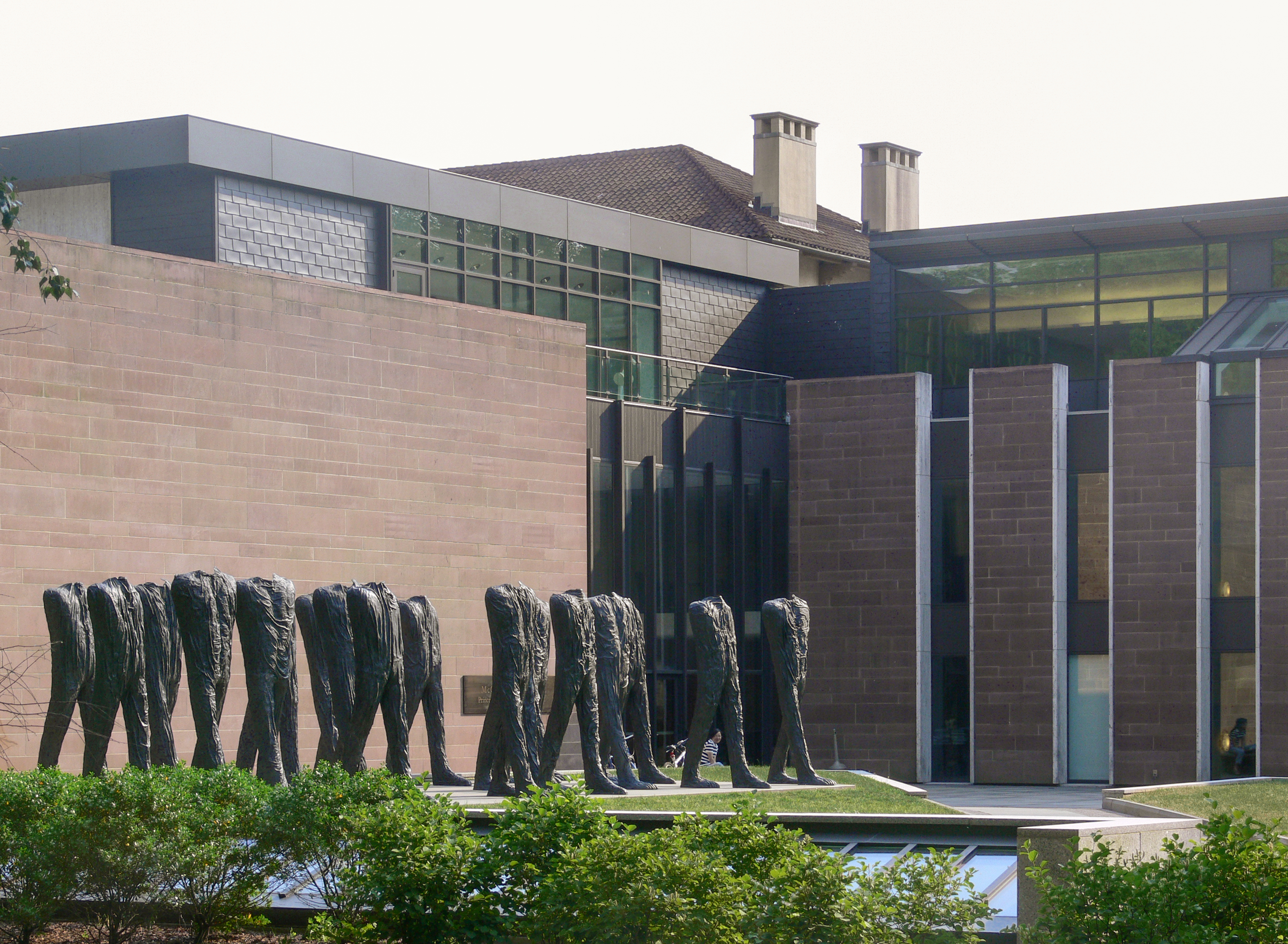
As far as we know, the Gentili di Giuseppe family has had a rough time dealing with American museums. The compromises that it was forced to accept with cultural institutions such as the Princeton Art Museum were not aimed at returning their property to them, but at negotiating financial settlements to allow those museums to maintain so-called good title to the Gentili property. ICE’s action might be the first step in a long process that might actually give the Gentili di Giuseppe heirs a taste of justice on American soil and maybe teach the Italian government a lesson or two about the Holocaust and restitution.

Princeton University Museum of Art
Source: Wikipedia

Maurizio Fiorilli's comments at the 2010 ARCA Conference in the Palazzo Petrignani in Amelia, Italy:


Maurizio Fiorilli, ARCA 2010, Part I 
Association for Research into Crimes against Art (ARCA), 2010
http://www.youtube.com/watch?v=97SvrwtfTVo


Maurizio Fiorilli, ARCA 2010, Part II


Maurizio Fiorilli, ARCA 2010, Part III
Association for Research into Crimes against Art (ARCA), 2010
http://www.youtube.com/watch?v=C7LPJTm7BXc


Maurizio Fiorilli, ARCA 2010, Part IV
Association for Research into Crimes against Art (ARCA), 2010
http://www.youtube.com/watch?v=7DO7hn3hKPY


20 November 2011

Pearls from Brazil

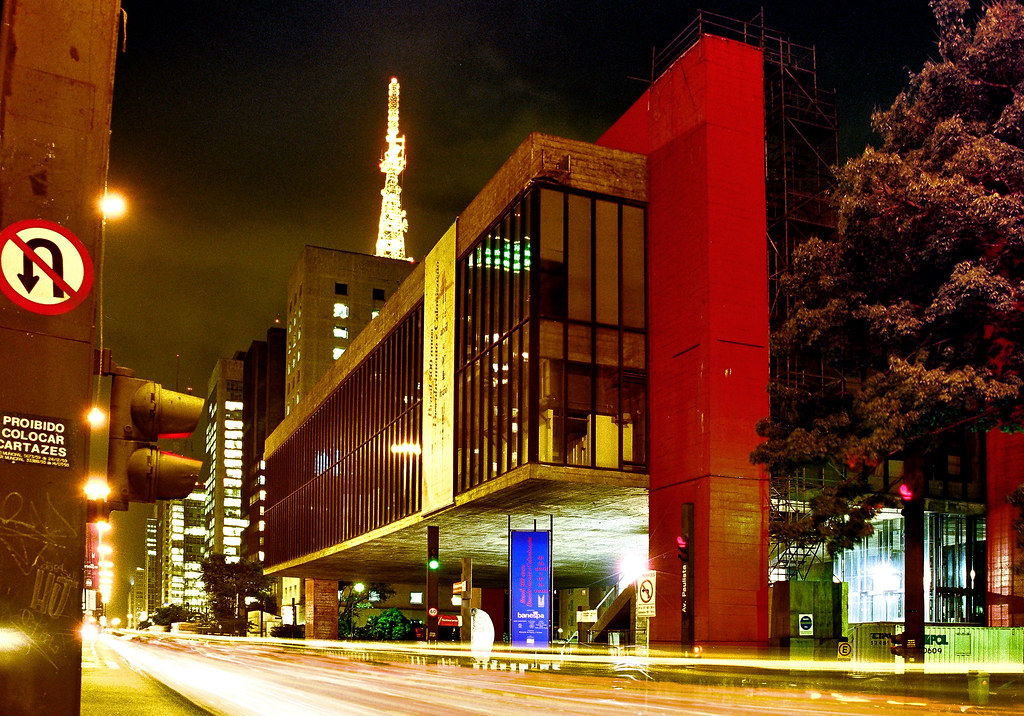
São Paulo, Brazil, boasts one of the finest art museums in the Southern Hemisphere, something to make its friends in Buenos Aires squirm.

MASP - Museu de Arte de Sao Paulo
Source: Flickr via Fernando Stankuns
Seal of Sao Paulo
Source: Wikipedia
Founded in 1947, or two years after the end of the Second World War, the Museu de Arte de São Paulo (MASP), acquired works by Old and New Masters alike until it can now brag that it holds more than 8000 objects in its collection.

Currently on display at MASP are portraits and self-portraits by the likes of Goya, Manet, van Gogh, Modigliani, Renoir and others of equal esthetic caliber.

Any desire to know more about these works—their history, their previous owners, past exhibitions, publications in which they appeared—leads to … nothing. Anyone curious to find out additional information must undertake the research using available tools… like the Internet.

Let’s see what we get:

Le Gamin au Képi, Vincent Van Gogh, 1888
Source: ArtFinder
On May 1, 1995, Christie’s in New York sold a painting entitled “Jeune homme à la casquette,” produced in November-December 1888, by Vincent van Gogh, for $13,202,500 as “the property of a European gentleman.” The provenance is fairly well fleshed out. It tells us that K. Neumann, from Barmen, acquired the painting from Justin Tannhauser on July 17, 1923. The next owner is Dr. Fritz Nathan, of Zurich, Switzerland, a leading art expert, appraiser and collector in his own right. He bought it in 1947 from K. Neumann. The K. Neumann most likely refers to Karl Neumann who, at the time, had owned another painting by van Gogh entitled, Landscape near Arles, which is now at the Indianapolis Museum of Art, in Indianapolis, IN. Neumann had sold this painting to Tannhauser between 1918 and 1927. This Mr. Neumann lived in a town called Barmen, outside of Wuppertal in Western Germany. The neighboring city of Wuppertal absorbed Barmen in 1930.

The only question to ask here is: how did Karl Neumann hang on to a van Gogh painting for the entire period of the Third Reich? We do know that the Nazi regime investigated all transactions by Jewish dealers, especially as regards to objectionable works like those by Impressionists, Post-Impressionists, and Expressionists.

Portrait of Suzanne Block, Pablo Picasso, 1904
Source: Wikipedia
Although the provenance is impeccable, the history of the painting is worth a short documentary. “Suzanne Bloch” was one of the first works to be acquired by the MASP in 1947, with financial assistance from Walter Moreira Salles, the founder of Unibanco. Sixty years later, on December 20, 2007, thieves made off with the painting. The Sao Paulo police recovered the painting undamaged one month later.

Walther Moreira Salles
Source: Instituto Moreira Salles

17 November 2011

Landscapes of cultural plunder revisited

by Marc Masurovsky

Today’s truism: history is geographic. Every event can be broken down into an infinite number of particles that become data points which can be translated into a longitude and a latitude.
So what?
So what???
Viewed through another lens, the study of history is as complex as you want it to be. Depending on the scale at which you approach it, it can be lofty and very top-down, “small-scale” as geographers would put it, or extremely “granular”, from the ground up, or “large-scale” if described by our friends in geography departments.

When working with loot, plunder, and its inevitable yield, each looted or plundered item is a potential data point. How can that be?

If you ask the following questions, you might actually begin to understand:
  1. Where was it when it was stolen?
     
  2. How was it moved?
     
  3. Where was it taken?
     
  4. Where did it go from there?
Each one of these questions produces a location. Space separates each location. The stolen object moves from one location to another and, by so doing, evolves through space and across time. All of a sudden, the stolen object adopts a spatio-temporal personality.
Now what?
We have an object, which moves through space and time. Each movement can be assigned a longitude and a latitude. Each coordinate can be anchored in a time frame. Hence, we can see the object evolve across a time line and a landscape.

Within each location, there is granularity. For instance, was the seized object inside an apartment or a house? If so, what room? What floor? Where was it? On the wall? On the floor? Inside a drawer? The level of detail can be excruciating, but for each level of detail, there is a corresponding scale, which allows the geographer to produce a visualization.

Once the object is removed from its original location, it must reach another site, more often than not a storage facility. How does it reach that destination? The itinerary alone invites all sorts of questions which we can or cannot answer.
Is that useful?
It all depends on what you are looking for.

For example, let’s take the database of objects that transited through the Jeu de Paume. 

You’ll notice that, in addition to object-based information, there are locations and dates assigned to it. That was a deliberate attempt to anchor each object in space and time.

One statistic might interest you: a random study of 18th century French furniture confiscated from apartments across Paris indicated, not too surprisingly, that more than half of this highly-prized period furniture came from five ‘arrondissements’ of Western and Central Paris. None came from lower middle class and working class neighbors. Again, it might seem obvious to you, but mapping taste can yield a fresh look at the historical and art-historical data.

In the future, whenever that moment might come, we will ‘visualize’ the peregrinations of stolen cultural objects by type, by author, by medium, throughout the wartime period and even the postwar era. What use does that have for us?

This intellectual exercise produces an instant snapshot of esthetic preferences, the geographic distribution of objects according to taste, the uses and disuses of specific locations for processing and storing looted art, the temporal incongruities by object type and by artist. The visualization of cultural plunder will open new vistas of research and understanding that will inform and revise the current state of research in this emerging field as well as promote new lines of inquiry.

Revised on 15 October 2025