08 November 2011

Nazi looted art conference at Lafayette College, October 26-28, 2011: a debriefing (I)

From left to right: Rachel Davidson, Diane Ahl, Radu Pribic
It has now been close to two weeks since Lafayette College in quaint Easton, PA, hosted a first-ever conference on Nazi looted art. Starting from scratch, the organizers of the conference, Professors Diane Ahl and Radu Pribic, brought together a group of speakers who represented different perspectives on the issue of looted art and art restitution.

Day 1: October 26, 2011

The conference opened on a screening of “The Rape of Europa”, a freewheeling adaptation of Lynn Nicholas’ landmark work of same name which detailed the Nazi-orchestrated plunder of works and objects of art across Europe, while focusing most of its attention on the Allied—read American—civilian and mostly military response to those exactions and the means taken to repair the damage caused by Nazi thefts.

This was my third viewing of “The Rape of Europa” The first time was on television, the second time was at the National Gallery of Art in Washington, DC, during a Jewish Film Festival. That screening was memorable only because I ran into Lynn Nicholas looking a bit lost in the line of viewers waiting to see the film being shown in the East Wing. When I asked her what she was doing there, she said simply that she wanted to be there in case anyone had questions about the movie. What? You mean you weren’t invited to speak at your own movie? No, was the answer. The third screening was in Easton. At the second screening, I noticed three things:

  1. someone intimately involved with production and scriptwriting decided to go for the schmaltz factor by inserting several high points of art restitution in the United States—the return of Marie Altmann’s famed paintings by Gustav Klimt, and the recovery of a painting by François Boucher from a Utah museum which had belonged to a member of the Paris-based heavily splintered Seligmann family. The true schmaltz occurred when a German citizen was featured as self-anointed rescuer of Judaica from his small town, the name of which escapes me completely. Not having anything to do with the “Rape of Europa,” it did, however, take on a life of its own by injecting the personal into the political, thus illustrating how a complex topic such as cultural plunder can transform daily lives into a quest for justice and, for others, redemption.
     
  2. the Russians were very emotional and steadfast about their desire to equate their policy of no-return of so-called ‘trophy art’ and the humanitarian catastrophe wrought upon them by the Wehrmacht, the SS, and the Luftwaffe against the former Soviet Union, especially during the years-long siege of Leningrad. Interestingly, and memorably, one of the hard-line ministers of culture who was interviewed in what is now Saint-Petersburg dropped a portentous hint, indicating that his countrymen would be willing to discuss the return of trophy art in 20 years or so. Since the movie was produced in the late 1990s, that would place a potential return date… within six to eight years. Now, that’s a sign of hope!
     
  3. the “Rape of Europa” spends an unnecessarily long, long time on the siege of Monte Cassino in Italy. That accursed monastery drew hellfire for weeks without harming German defenses, but managing to erase a major cultural monument and killing close to a thousand civilians huddled for safety in what they had rightfully viewed as a ‘sanctuary’ from the horrors of war. Needless to say, I cannot blame your average GI Joe for wondering why ten thousand men had to die for that rock.

The third screening reaffirmed what I had long suspected, that the subject of art looting per se was given short shrift throughout this award-winning documentary. Although well-illustrated in its broadest possible strokes, the “Rape of Europa” goes very light on the very complex and very heavy on the not-so-clear. To wit: the actual plunder of collections in occupied Europe was a complicated affair brought about by conflicting interests within the Nazi hierarchy (Goering, Hitler, Himmler, Goebbels, Rosenberg, von Ribbentrop, to name a few) and the plethora of local opportunists that the Nazis encountered in countries that they occupied, who were only too willing to provide their assistance, support and expertise in exchange for a cut of the booty. Too heavy on the not-so-clear is evidenced by the French episode on the Jeu de Paume and Rose Valland, the iconic heroine of art restitution in France on the verge of attaining sainthood should anyone pay close attention to the myths that have been designed around her career as an unwitting curator of the Musée du Jeu de Paume in downtown Paris during the period of German occupation and as the lead postwar restitution officer for a succession of failed French governments up until the early 1960s. 


Myth #1: Rose Valland volunteered for her mission to spy on the Germans at the Jeu de Paume; myth number two: she risked her life every day while taking copious notes on the ins and outs of looted works entering and leaving the Jeu de Paume; myth number three: no one knew that she spoke German. These are some of the many details that have filtered out into postwar revisionist history of cultural plunder in France.

Producers of "Rape of Europa": Richard Berge, Nicole Newnham, and Bonni Cohen
Source: Rape of Europa
On the plus side, I was delighted to finally meet up and converse with Nicole Newnham, one of the producers of the “Rape of Europa” who spoke candidly of her experiences making this beautifully-filmed and edited documentary on a subject that resonates even more today than it did a decade ago and which, for some corny reason, brought me close to tears, more so because we are still so far away from reaching a far-reaching solution to the long-term effects of the continental-wide plunder of cultural items during the Third Reich and the postwar occupation of Germany and Austria by Allied forces. It’s not so much the Rape of Europa as it is the rape of the cultural heritage of the victims of Nazism and Fascism, writ large.

01 November 2011

Confessions of an art looting “expert” (II)

Here’s a question: How did I get here?

Well, I will do my best to answer this impudent query of mine.

Main Gate at Birkenau
Source: Wikipedia
My story begins in the summer of 1967 when I visited Auschwitz-Birkenau with my parents while trekking through Poland in a red 2 CV Citroen, which was a real hit amongst our esteemed Polish friends. While I was astounded and fascinated by the massive concentration camp, my parents wanted to leave as quickly as possible. Needless to say, I was marked for life. I should take a short break here and tell you that both my parents are/were American expatriate artists who sought the Bohemian life in 1950s Paris after escaping from New York City and their respective families. They settled down in and around Montparnasse on the left bank and spent their lives painting, drawing, socializing, and plying their craft until death did them part.

Fast forward to the 1970s: I spent my adolescent years cutting my teeth on the hardscrabble political turmoil of the Parisian student movement. Not much needs to be said about three long years dodging nasty neo-Fascist gangs. That was enough for my political awakening and a constant reminder that some people take their Fascist politics very seriously even three decades after the death of Adolf Hitler and the onset of the Cold War.

In 1980, several years after graduating from Antioch College, in Yellow Springs, Ohio, I became a consultant for the Office of Special Investigations at the US Department of Justice in Washington, DC. Although my main duties were to help with lawyers’ investigations into the past activities of war criminals living in the United States—mostly Belorussians—I also focused on the postwar recruitment of Nazi war criminals by Allied intelligence, and especially American agencies. I found myself more often than not sifting through documents in the dusty stacks of the National Archives at 7th street and Pennsylvania Avenue, NW, in downtown Washington. There, every day, I would peruse documents drafted by agents and analysts of the Office of Strategic Services describing how war criminals were escaping detection in the mid-to late 1940s and finding freedom and refuge in safe havens across Europe, the Middle East and the Americas. This was my first introduction to looted art—the trading of plundered art by Nazi criminals and collaborators to obtain exit papers, visas, forged identities, passports, so that they could enjoy the fruits of their plundering ways in faraway places. I was hooked, I was fascinated, I could not stay away.

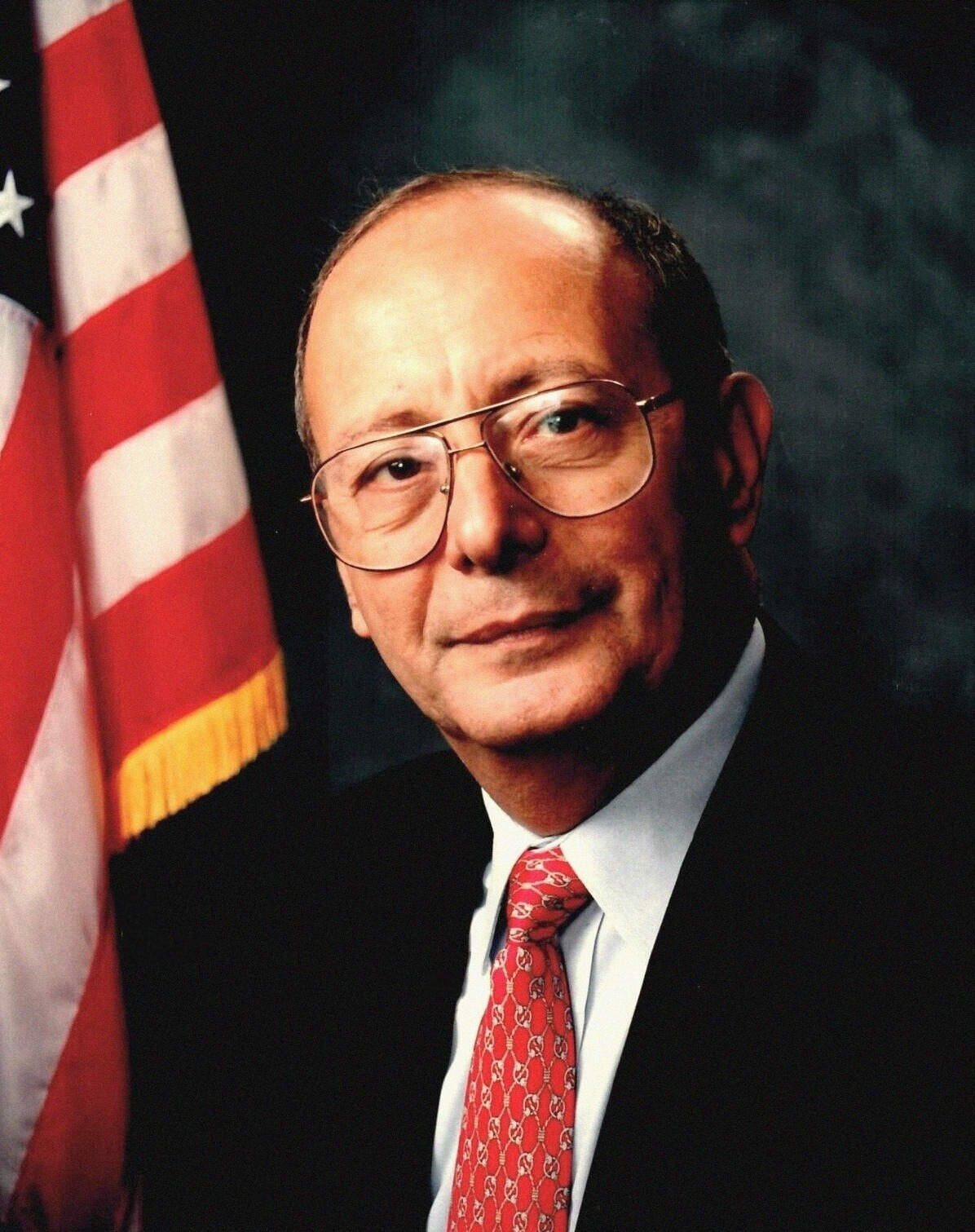
Alphonse d'Amato
Source: Wikipedia
Fast forward to 1995: The Swiss banks are being pummeled by Edgar Bronfman, the scion of the Seagram’s fortune and a leader of the American Jewish community. He has recruited Senator Alphonse d’Amato to lead the charge against these banks for their systematic misappropriation of funds and assets deposited by individuals of Jewish descent during the 1930s and early 1940s in the vaults of hundreds of financial institutions across Swiss territory. Many of the account holders died during the Holocaust or never reclaimed their accounts and the bankers made away with their money and valuables. The Swiss bank litigations re-opened the wounds of the failed restitutions of the postwar era. And they paved the way for art restitution claims. A key element of the negotiations with the Swiss banks was the exclusion of cultural assets deposited in those banks from any settlement reached between the plaintiffs’ lawyers and the banks’ representatives. I joined a committee of experts at the law firm of Cohen, Milstein, Hausfeld and Toll, to come up with a realistic estimate of the Swiss banks’ liability towards Holocaust victims. I was in good company: Willi Korte, the doyen of looted art investigations in the US; Sydney Zabludoff, a former CIA analyst specializing in black markets and money laundering; Fritz Oppenheimer, a Swiss banking specialist who taught us how to bill law firms; and Cees Wiebes, a Dutch expert on corporate cloaking during the Second World War. Three months of hard work yielded the following result: Swiss banks would have to pay 10 billion dollars in compensation to Jewish victims. The ultimate settlement reached several years after our finding: $1.25 billion. In other words, a toothbrush settlement.

In the spring of 1997, Willi Korte and I thought it would be a great idea to house a looted art database project at the US Holocaust Memorial Museum in Washington, DC. The answer that we received was a resounding “NO” qualified as: “This project does not fit within the mandate of the US Holocaust Memorial Museum.” Dejected but not defeated, we turned to Ori Z. Soltes, then director of the Klutznick National Jewish Museum at B’nai B’rith. We met with his board members and they greeted us with open arms. What a relief! The Holocaust Art Restitution Project (HARP) was born.

Robert Morgenthau
Source: Wikipedia
No sooner had we announced publicly in early September 1997 HARP’s creation than Ronald Lauder made a similar announcement and established the Commission for Art Recovery (CAR) under the auspices of the World Jewish Congress, of which he was the Secretary-Treasurer. Four months later, Lauder, in his capacity as chairman of the board of the Museum of Modern Art, faced the wrath of two Jewish families whose paintings were on loan from the Leopold Collection in Vienna, for an exhibit of Egon Schiele’s works at MOMA in late 1997. In early January 1998, spurred by HARP’s research into the provenance of those works and the odd way in which the show had been mounted, the New York Police department was ordered by then District Attorney of Manhattan, Robert Morgenthau, son of the late Henry Morgenthau, Roosevelt’s Treasury Secretary, to seize the two incriminated paintings by Egon Schiele—Night City III and Portrait of Walli—and prevent them from leaving the United States so as to give the aggrieved families a fair hearing and a reasoned shot at pleading their case for restitution.

The Walli case dragged on for another 13 years while Night City III returned to Austria. However, the seizure of the two paintings struck the Austrian government broadside and provoked an unprecedented debate about cultural plunder and restitution in the homeland of Ruth Jarai, rightful owner of “Walli” and of Marie Altmann, rightful owner of “Portrait of Adele Bloch-Bauer” by Gustav Klimt. The seizure led to the enactment of a series of restitution laws aimed at righting some of the wrongs of Austria’s post-Anschluss Nazi past.


"Of course I'm back: I just nipped out for a bit of wall decoration"
Art Theft, Stanley Arthur Franklin, 1967
Source: The Book Palace


Direct action—Drastic circumstances require drastic remedies even if it means forcing the hands of foreign governments, shaking up the international art market but not enough to rattle it into compliance. After several years, the status quo returned quickly, all was well, the fear of subsequent seizures waning as lawyers and diplomats ran roughshod over the renewed debate on restitution of looted cultural assets.

Although the Washington Conference of December 1998 had convened representatives and delegates from more than 47 countries to discuss how to resolve these decades-old problems of property returns to Jewish victims, the pundits went home, satisfied that they had done their duty to pledge to ‘do something.’ National commissions emerged in many European countries to investigate the wrongs of that war with limited impact on the quest for historical truth and the imposition of equitable remedies for spoliated families and their heirs. In the absence of meaningful public policies aimed at righting those historical wrongs, national governments across Europe and the American government, left it to the ‘market’ to adjudicate the merits of Holocaust-era cultural claims, thus handing over to the legal community an inherently political debate requiring political solutions. In the United States, the Clinton Administration was beholden to its donors and was reluctant to investigate the ill-doings of American museums during the life of the Presidential Advisory Commission on Holocaust-Era Assets (PCHA) which had been voted into existence by an act of Congress in June 1998. The Commission proved quickly to be ineffectual in carrying out its Congressional mandate and, in essence, violated the terms of the legislation that had empowered it, content to rehash the usual mantras of wartime plunder and avoid the thorny questions of looted cultural assets entering the United States. Those stolen, unrecovered assets entered countless museums, which receive substantial Federal fiscal advantages in the form of tax-exemptions. A largess unmatched in the rest of the world where cultural institutions are mostly run by national governments. Surprisingly, the PCHA ruled that there was no looted art problem in the United States and that further research would be needed to ascertain the opposite. How convenient! The Commission went out of business in the spring of 2000, as quietly as it had come into existence.

Fast forward to the Holocaust-era Assets Conference of June 2009 in Prague: this follow-up to the 1998 Conference in Washington, DC, was born to fail, especially as pertains to the question of looted art. Pre-conference planning was secretive, heavily politicized, did not involve claimants and their representatives, nor did it tap into the pool of international experts in art restitution matters, relying instead on government representatives overseeing questions pertaining to looted art or trophy art in their respective countries. Hence, despite some token input from groups like the European Commission on Looted Art (ECLA), the fate of claimants’ cultural assets rested almost exclusively in the hands of museums’ representatives and government civil servants with international Jewish organizations unwilling to commit themselves to a meaningful strategy aimed at restituting looted cultural assets. Not a pretty picture. The end result is well-known: a diluted declaration of intent known as the Terezin Declaration which serves as a basis for future discussions. It is left up to each conference stakeholder (governments and NGOs) to interpret and apply the Declaration as they see fit, which is not saying much at all.

Hopeless? Maybe. Really hopeless? Not quite. But much time and energy has been lost in endless, sterile debates which do not address the core issues centered on the identification and restitution of looted cultural assets.

The offspring of the June 2009 Prague Conference is the European Shoah Legacy Institute (ESLI), based in Prague and overseen by the Czech Ministry of Foreign Affairs. After muddling along for two years, ESLI has finally gotten a sense of itself as an organization with a mission that has 46 foreign stakeholders and NGOs to bring about proposals for lasting solutions to reach some form of closure regarding the compensation of Holocaust victims, the restitution of looted art and Judaica, the provision of care to needy survivors, and the settlement of immovable property questions especially in Eastern Europe.

Source: WRJO

Its advisory council is comprised of five working groups that address those areas, including one for looted cultural assets and one for Judaica. The mission of ESLI is open-ended and it will be as effective as its participants are willing to make it despite the fact that there is great skepticism as to its capacity to survive and make any meaningful contribution to the general state of things.

At this point, ESLI is the only organization of its kind in the world which can address issues pertaining to Holocaust-era looted property within the framework of an international forum. Its reach can be wide and extensive only if its members allow it to be. We will see.

Meanwhile, restitution efforts continue to be focused on expensive works of art, a small unrepresentative percentage of the vast numbers of works and objects of art still to be identified and located around the world.

True, it is true that for the past ten years or so dozens of very expensive works of art have been returned to their rightful owners. More often than not, though, settlements have been reached with the current owners who retained title to those stolen cultural items with cash allotments to the victims’ families as compensation. Hence, the new justice, cloaked under the pretense of restitution, has become a vehicle for accommodating current owners at the expense of the claimants’ rights to recover their property. That’s what happens when governments fail in their fiduciary and humanitarian duties to come to the aid of those who need it the most.

Here we are in late 2011 wondering if mechanisms can be put into place to ensure that victims of Nazi thefts of cultural assets can and will have their day in court to recover what is rightfully theirs.

The complication lies mostly in the identification of those looted cultural items. Indeed, with the passage of time and the disappearance of those who witnessed or suffered directly from the thefts, the subsequent generations have lost the knowledge that their families had owned works of art, objects of art, furniture, accessories that had been forcibly removed from former residences in troubled Europe. Thus, the tables have turned. It is not so much up to claimants to speak up about their losses, but instead, the onus falls on those whose task it is to research those cultural crimes and uncover the identity of the stolen objects. In other words, the knowledge of these crimes has waned from the memories of the victims and the responsibility to ensure that those crimes are documented and brought to justice falls on those whose specialty it is to uncover the evidence and study the circumstances under which those crimes were committed, the paths taken by those objects from owner to owner and the possible whereabouts of those stolen objects. The research is overwhelming and cannot be accomplished by lone individuals. It must be grounded in an institutionalized, international undertaking whereby archival materials are systematically searched, analyzed, and relevant data are extracted from them and placed in digital repositories which allow for sophisticated searches of objects, owners, collectors, perpetrators, locations of thefts, dates, and descriptions, to name a few of those categories.

In other words, the future of art restitution efforts lies in systematic historical research and analysis. The research produces the information on unrestituted objects of art which triggers investigations and the search for victims’ heirs. Until such research efforts are put into place, the most effective tools of restitution at the disposal of claimants, at least in the United States, is for Federal authorities to intervene on their behalf, seize objects from current owners and return them to the rightful owners, assuming, of course, that the research underlying the cases is flawless.

An uncompromising position, you might say? What is the alternative then? More of the same? Upholding the sacred rights of current possessors when everyone knows that theft does not convey good title to the next owner? As Steven Bibas wrote in his thoughtful 1994 essay on statutes of limitations, traditional legal defenses as invoked by current owners only abet art thefts at the expense of the rights of claimants. Justice trumps all other considerations when it comes to righting the wrongs wrought by acts of genocide more than seven decades ago. There is no statute of limitations on genocide or any other forms of mass slaughter and crimes against humanity. That’s the plain truth.

Confessions of an art looting “expert” (I)

by Marc Masurovsky I must apologize for not having contributed anything to this blog in over two months. The reason is simple: a generic failure to think that there was anything meaningful to write about after having hatched more than 110 pieces for you to peruse at your leisure.

Why expose myself in this way to perfect strangers? It’s the 21st century thing to do, I guess. But in my case, I feel the urge to ‘out’ my private self enough so that you know with whom you are dealing. Writer’s block has not been the issue these past few months; instead, I have been bruising my head time and time again against a philosophical rock—to wit, the rock of restitution of cultural assets looted during the Nazi/Fascist years and recycled over the past seven decades through private hands and State-controlled entities with no likelihood that these objects will ever be identified, located, recovered, and returned to their rightful owners.

Why bother? The “mission” to locate and restitute looted cultural assets stolen during the Nazi years is so thankless at times that it is even painful to muse over its future. Our past is indeed our prologue but our present might just be our future unless we do something radical to transform it from complacent indifference and lethargy into a dynamic machine fueled by ethics, transparency, search for truth, a truth, a historical truth, the truth about these thefts, about the deliberate misappropriation of millions of cultural objects from the hands and homes of tens of millions of people during twelve long years of oppression, persecution, ostracism, incarceration, exploitation, impoverishment, eviction, expropriation, and more often than not, physical liquidation.

Why bother? That is the question that I ask myself every day when I wake up from a frazzled sleep. There are databases to expand and complete, there are new files to read and analyze, from which information must be gleaned, synthesized and shared with others. There are students to educate, there are faculty members to enlighten out of their impoverished understanding of cultural plunder, the complexities of the illicit trade in looted art and the perplexing paradoxes inherent to the quest for restitution. There are government officials to shake out of their slumber who are too afraid to move their limbs in a forward motion to make some progress, any progress, even infinitesimal progress, just enough progress so that we can say that there is progress in the international arena, of course, where else. Because in the United States, just as an example, there is a continuing state of stasis that makes it so convenient for the so-called “experts” to do the strict minimum and claim that “alles gut”—all is well—that we are making progress, geostationary progress that is—this is true across the board whether it be in the art world writ large, or among well-connected art historians with deep ties in private museums and elite circles who have claimed to be such experts in “Nazi confiscations” and “restitution” and other well-established academics, pundits and political pinheads, bureaucrats of all stripes spanning all agencies and institutions—for the most part, they are well-meaning but fundamentally ignorant and passive, always living in fear of the people upstairs whose scythes might sweep their heads off their fragile shoulders as soon as they make some progress forward on issues which should simply be ignored. The exception is the Office of Holocaust Issues at the US Department of State under new leadership. Most importantly and urgently, there are the rightful owners, the heirs and descendents of the victims themselves who seek an accounting by way of restitution.

Worst of all, there are those specialized bureaucracies that are finely tuned to the cause of remembrance, memory and education about the Holocaust and which are outspokenly silent about the taboo, the unspeakable, unmentionable, untouchable, mystifying topic of cultural plunder. God forbid that any such institution might wish to put a timid foot in front of the other and venture into the dark abyss of Nazi confiscations, Aryanizations, forced sales, expropriations of property, and the recycling of Jewish-owned wealth into ‘Aryan” hands as the fundamental pre-requisites of the dehumanization of entire Jewish communities, the final step before mass annihilation. God forbid that anyone would want to share that thought with the general public. My goodness, where would we be? What would happen to us? Would the sky fall on our heads? Would anti-Semites come crawling out of the ground and scream bloody murder against the Jews? Not really. It’s a bit like the story of Henny Penny, the hen who was convinced that the sky was falling on her head. It’s all in her head. It’s all in their minds. But until the Holocaust education and remembrance community of specialists and administrators signs up for mass therapy sessions, please do not hold your breath. Their august institutions are not likely to promote any programs that would enlighten the general public as well as themselves---they know so much already!—about the economics of the Holocaust and the fundamental tenet which declares unabashedly that one of the root causes of anti-Semitism is economic resentment of the ‘other.’

Did you ever stop and wonder why there are fewer than ten attorneys—yes! Ten attorneys in the entire nation of the United States of America who agree to represent victims of Nazi/Fascist cultural plunder. TEN! Not eleven, not twelve, not twenty. TEN…

Did you ever stop and wonder why there is not a single law firm in the United States that has a pro bono practice (free legal assistance) specifically aimed at Holocaust claimants who wish to reclaim looted cultural assets regardless of the monetary value of the looted asset proper?

Did you ever stop and wonder why there is not a single academic program in the United States which teaches students about plunder, economic crimes against persecuted populations during times of war, especially when acts of genocide accelerate the elimination of millions of men, women, and children from the face of the earth thanks to the active collaboration of countless individuals who see in the disappearance of the Jews a crime of opportunity, an opportunity for personal betterment, improvement and enrichment?

Did you ever stop and wonder why the museum community has not seen fit to establish professional training programs to enhance, refine, and improve the critical research skills of museum professionals in the esoteric arts of provenance research—the investigation into ownership histories of objects in their collections—rooted in a historical understanding of the displacements of cultural assets between 1933 and 1945?

Well, I’d be curious to know if you have answers to the aforementioned questions. If I have erred, I hope—no, I insist—that you point out my deviant ways so as to edify our reading public. But if you cannot correct me, then ask why we are at this stage of the game, two years after the Prague Conference of June 2009 on Holocaust-era assets, thirteen years after the Washington Conference on Holocaust-Era Assets of 1998 and the subsequent formulation of the sacred texts known as the Washington Principles?

There is no easy answer, is there? I didn’t think so. And I don’t blame anyone for not finding an easy answer.

Here I go again wondering: what to do? Is there an end in sight? Are we really going to achieve some modicum of progress, some truly measurable result which fosters research and restitution, transparency and ethics, higher learning and understanding, so-called “best practices” in the cultural arena? After all, the whole point of this ‘mission’ or ‘campaign’ is to close the books on the Second World War and the Nazi years, to clean up the mess left untended by thousands of officials and administrators in the Americas and in Europe who were focused precisely on recovering stolen objects and returning them, more often than not, to nations, not rightful owners. And yet, why should we care? Well, we do. Just like others care about climate change, the plight of penguins in the South Atlantic Ocean or polar bears in the Northern regions, we care about historical wrongs anchored in cultural plunder and the righting of those wrongs. C’est la vie….

02 September 2011

Seeking guidance from INTERPOL

The words vary but their meaning does not.

Plunder, looting, theft, spoliation, misappropriation, pillage—call it what you wish, it all comes down to the same thing: someone somewhere has committed a theft of cultural items either under cover of an international military conflict, a domestic uprising or insurrection or major civil unrest, or simply has broken into someone’s home, place of business, or public institution to commit the crime of art theft.

Lawyers will have a field day arguing that each word connotes something slightly different. But as one famous unnamed general said at the end of the Second World War, “Theft does not convey title”. Period.

Since 1945, much has been said but little has been done to address in absolute terms the global problem of cultural theft, especially when it has been fueled by considerations of race, ethnicity, belief, and/or greed and lucre.

INTERPOL
Source: Wikipedia
No global solution to the problem of cultural property theft, cultural plunder and looting, can be achieved without the full and engaged participation of international organizations, especially since the founding of the United Nations in 1945.  As part of an on-going effort to spark more interest in the role of the organized international community of experts and officials who take at least a nominal interest in questions of art crime, let’s take a brief look at one institution—INTERPOL—and its pronouncements between 2004 and 2007 regarding international art crime.

First off, we paid a visit to INTERPOL’s website datelined 2007 and found these remarkable items under the rubric of “frequently asked questions” or FAQs” :

  • “In fact, it is very difficult to gain an exact idea of how many items of cultural property are stolen throughout the world and it is unlikely that there will ever be any accurate statistics. National statistics are often based on the circumstances of the theft (petty theft, theft by breaking and entering or armed robbery) rather than the type of object stolen. To illustrate this, every year, the Interpol General Secretariat asks all member countries for statistics on thefts of works of art, information on where the thefts took place, and the nature of the stolen objects. On average, we receive 60 replies a year (out of 186 member countries), some of which are incomplete or inform us that no statistics exist.”
  • To the question, “Which countries are most affected by this type of crime?”, the answer is…….

    France
    Italy
    Russia
    Germany
  • The most sought after items by thieves as reported by law enforcement agencies are:

    Paintings
    Sculptures and statues
    Religious items
  • INTERPOL’s General Secretariat devised the following tools “to tackle the traffic in cultural property”:

    A "wanted" poster:

    In 1986, INTERPOL published “THE 12 MOST WANTED WORKS OF ART’ poster.  The following year, the poster was renamed “THE MOST WANTED WORKS OF ART", printed in black and white and updated twice. Since 1998, the poster has been printed in COLOR!

    A database of stolen works of art:

    As of 2007, Interpol’s computerized database contained 26,000 stolen works of art. The main caveat for eligibility to be entered into the Interpol Stolen Works of Art database is that the object be “fully identifiable.”  The most astounding development occurred in 2010 when, for the first time, INTERPOL agreed to publish a series of paintings stolen from Max Stern, a German Jewish art dealer once based in Duesseldorf whose business was liquidated by the Nazi government and he was forced to flee to Canada.  At his death, Concordia University became the executor of his estate and launched a unique program under the guise of the "Max Stern Foundation" to publicize the cultural losses suffered by Max Stern and promote the identification and restitution of his cultural property, with some measure of success, thanks in part to the crucial role played by the Immigration and Customs Enforcement (ICE) unit of the Department of Homeland Security in the apprehension and restitution of some of Stern's works from private collections in the United States.
Max Stern in Germany, c. 1925
Source: National Gallery of Canada, Library and Archives, Fonds Max Stern via Max Stern Art Restition Project, Concordia University
Since INTERPOL is comprised of representatives from police forces the world over, it is well-positioned to make recommendations that allow its law enforcement members to do their job more efficiently and curb the global crime wave of art theft.

When reading these recommendations, please keep in mind that we are now in the year 2011. Our planet has suffered through two global wars since 1914 which accounted for combined human casualties of close to 80 million individuals and massive thefts of cultural property. Since 1945, there has been at least one international military conflict in some part of the globe. Each conflict has produced its fair share of cultural plunder.

INTERPOL believes that the following conditions need to be met in order to achieve lasting long-term solutions to the problems of global art crime:
  1. bring in laws to protect cultural heritage and regulate the art market. 
  2.  become party to international conventions (1970 UNESCO Convention and the 1995 UNIDROIT Convention)
  3. prepare inventories of public collections using standards which will make it possible to circulate information in the event of theft
  4. develop a computerized database along the lines of those currently in use, to avoid duplication of effort. 
  5. circulate information on thefts as rapidly as possible
  6. raise public awareness with regard to the cultural heritage both in the country and abroad
  7. set up specialized police units to tackle this type of crime
  8. hold training courses for the police, other law enforcement services and customs, with the support of cultural institutions.
In order to appreciate the tedium of political discourse at the international level and the degree to which raising international awareness can best be compared to La Fontaine’s fable of the “Turtle and the Hare” (We know who won the race, right?), here are some highlights of meetings convened by INTERPOL between 2004 and 2007:

Meeting place: Sinaïa City, Romania 
Date: September 7-9, 2004
Title: 4th International Conference on the Illicit Traffic in Cultural Property Stolen in Central and Eastern Europe
The participants acknowledged that there were serious problems east of the Oder River “concerning the protection and documentation of cultural property”.

They recommended the following:
  • “To monitor the art market including the increasing sales on the Internet.”
  • “To encourage the completion of inventories including photographs of cultural property for public and private collections using international description standards such as Object ID.”
Castelul Peles, Sinaia, Romania
Source: Wikipedia
Meeting place: Washington, DC
Date: May 23, 2005
Title: 3rd Meeting of the Interpol Tracking Task Force to Fight the Illicit Trafficking of Cultural Property Stolen in Iraq
The participants realized that the Internet is becoming a favorite venue for the sale of cultural items stolen in Iraq.
Meeting place: Lyon, France
Date: June 21-23, 2005
Title: 6th International Symposium on the Theft of and Illicit Traffic in Works of Art, Cultural Property and Antiques
The participants recommended the adoption of a “model export certificate for cultural property jointly developed by UNESCO and the World Customs Organization.”

More importantly, albeit very diplomatically, the participants invite their members to “consider adopting legislation and developing procedures that require proper examination of appropriate documentation for all cultural goods entering their country.” Remember, we are now in 2005, not in 1955.

The participants agreed to provide “relevant law enforcement agencies” around the world access to Interpol’s Stolen Works of Art database.

This one is the clincher:

The participants asked that the governments of their respective nations should “consider whether their cultural heritage legislation should include a provision for proof of ownership of cultural property prior to their trade.” In other words, was there no requirement until 2005 to prove the ownership of a cultural item before it entered the art trade?

Other recommendations included:

“Countries seeking the return of their cultural property provide adequate relevant documentation detailing the date and place of the theft with a full inventory of the stolen objects including descriptions and photographs. For incidents of looting, date and place with documented justification of the provenance of the items should be provided.”

“Establishment of minimum documentation for all cultural objects and use of the Object ID checklist for this purpose.”
Meeting place: Lyon, France
Date: March 7-8, 2006
Title: 3rd Meeting of the Interpol Expert Group (IEG) on Stolen Cultural Property
The participants admitted that they needed the assistance of “art market professionals in the trade in cultural objects” in order to enable law enforcement agencies to locate stolen cultural items more effectively. Interesting… Should one surmise that the international art trade has not had to worry about the heavy arm of law enforcement until very recently?

As a result of high-profile looted art cases which required years of litigation and tentative outcomes, the participants focused on alternative dispute resolutions as one way of facilitating the restitution of stolen art to countries of origin.

Not only did they propose that “law enforcement agencies extend their co-operation efforts to art market professionals as valuable partners and sources of information,” but, in the same breath, the participants suggested that “creative solutions” be found to facilitate the “return of cultural objects.” These solutions might include: arbitration, conciliation, mediation or negotiation procedures. More worrisome is the notion that long term loans could be used as an acceptable compromise to achieve the return of coveted stolen objects. Worrisome in light of the deals struck by the Metropolitan Museum of Art, the Wadsworth Atheneum in Connecticut, the Getty Museum in Los Angeles. These institutions have sufficient clout, despite their egregious behavior concerning the harboring of looted art and antiquities, to convince the injured parties—in these instances, foreign nations—to accept complex deals whose outcome is to dilute the responsibility of the institution responsible for benefiting from the misappropriation of a cultural object.
In other words, the aiding and abetting of art crimes has a way of turning into a profitable moment for all parties concerned, fueled for the most part by commercial and financial incentives at the expense of ethics. Let's hope that INTERPOL and other like-minded well-intentioned organizations do not fall into this gilded trap.  Theft is theft, no matter how you look at it and cultural institutions that profit from it should be held accountable even if it costs them an exhibit or two and the ill-gotten items that they have acquired.